
Sphaeropsis rot
Sphaeropsis malorum
Description
How to identify
Sphaeropsis rot is a fungal disease caused by the pathogen Sphaeropsis malorum (also known as Botryosphaeria obtusa). It is a widespread phytopathogen classified within the Ascomycota division.
The fungus produces small, black, spherical fruiting bodies called pycnidia on the surface of infected plant tissues. These structures contain numerous spores that serve as the primary source of infection.
This pathogen is highly persistent, capable of surviving in dead wood, bark crevices, and mummified fruits left on trees or the orchard floor throughout the winter.
Identification is confirmed by observing the characteristic black pycnidia, which look like tiny black dots scattered over the dead, necrotic surface of affected bark or fruit.
The fungus is notorious for its ability to attack different plant parts, causing both fruit rot and systemic cankers on branches and trunks.
What it damages
The primary hosts of Sphaeropsis rot are pome fruits, particularly apples and pears. The disease significantly impacts all parts of the plant, including leaves, flowers, fruit, and woody limbs.
On fruits, the infection starts as small brown spots that expand rapidly, eventually covering the entire fruit. The tissue becomes firm, brown, and eventually black, leading to mummification.
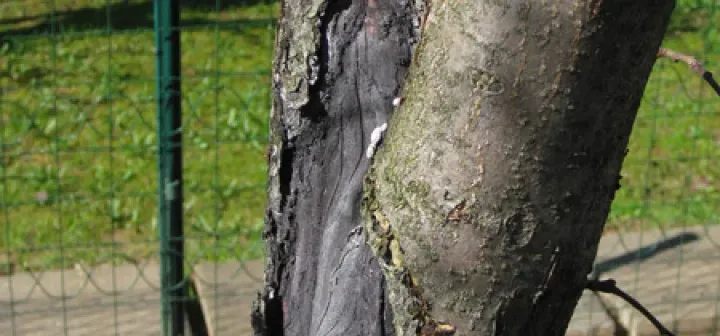
On branches and trunks, the pathogen causes black rot cankers. The bark becomes dark, cracked, and sunken, exposing the wood and often killing the branch above the infection site.
Leaf infection appears as small reddish-brown spots with distinct margins. Severe infestations lead to defoliation, which weakens the tree's vigor and reduces the photosynthetic capacity.
The damage to blossoms and young fruit clusters results in significant yield loss and affects the overall vitality of the tree during the growing season.
When it appears
The infection cycle begins in early spring when spores are released from pycnidia in response to warm, wet weather and splashing rain.
The pathogen is most active during periods of high humidity and moderate temperatures. Rainfall is the main carrier for spreading spores throughout the orchard canopy.
Summer conditions, particularly fluctuating weather patterns, promote the infection of developing fruits, often through lenticels or small mechanical injuries.
In autumn, the fungus continues to colonize weakened or damaged tissue, preparing the orchard for potential overwintering of the pathogen.
Winter survival is ensured by the presence of mycelium and pycnidia within the infected bark and the accumulated debris of rotted, mummified fruits.
Signs of infestation
One of the earliest signs is the appearance of slightly depressed, dark spots on fruits that grow steadily in size and develop internal rot.
Bark symptoms include the development of purplish-brown lesions that enlarge and turn dark brown or black. The bark eventually splits, revealing the underlying woody tissue.
The hallmark of the disease is the development of visible black pycnidia in concentric circles on the surface of both rotted fruits and necrotic bark areas.
Trees affected by systemic cankers exhibit dieback of branches, thinning foliage, and poor growth vigor compared to healthy trees.
- Dark, sunken lesions on fruit
- Black pycnidia dots on bark or fruit surfaces
- Bark cracking and canker formation
- Mummified fruits remaining on branches
- Premature leaf drop and branch dieback
Control measures
Cultural control is the most effective strategy. This includes regular pruning of dead and diseased branches, ensuring cuts are made into healthy, clean wood.
Sanitation is vital; all mummified fruits and diseased plant debris must be collected and removed from the orchard or buried/burned to eliminate the inoculum source.
Maintaining tree health through proper fertilization and watering helps the tree resist infection, as healthy trees are less susceptible to pathogen colonization.
Effective pest management is essential because injuries caused by insects create entry points for the fungal spores to penetrate the protective bark layer.
Chemical control involves applying protective fungicides, typically copper-based or systemic products, during the green tip stage and throughout the bloom period to prevent infection.
Causes diseases · 1
Discussion
No discussions yet — be the first.