
Potato leafroll virus
Potato leafroll
Potato leafroll virus (PLRV) is a member of the genus Polerovirus in the family Solemoviridae. It is a severe pathogen that causes significant economic losses in potato production worldwide.
What the section contains
Potato leafroll virus
The virus particle consists of a single-stranded RNA genome enclosed in an icosahedral capsid, which is specifically adapted to persist within the phloem of host plants.
PLRV is an obligate parasite and is not transmitted mechanically by physical contact between plants or through soil, relying instead on specific insect vectors for dissemination.
Aphids, particularly the green peach aphid (Myzus persicae), are the primary vectors. The virus is transmitted in a persistent, circulative manner, meaning the aphid remains infectious for its entire lifespan after acquiring the virus.
Accurate identification usually requires diagnostic tests such as Enzyme-Linked Immunosorbent Assay (ELISA) or molecular methods like Polymerase Chain Reaction (PCR) to confirm the presence of the pathogen.
While potatoes are the primary commercial host, the virus can infect other solanaceous crops like tomatoes, peppers, and various weeds that act as symptomless reservoirs.
The virus restricts the movement of sugars through the phloem, causing starch accumulation in leaves and significant reductions in tuber yield, often exceeding 50% in sensitive varieties.
Tubers from infected plants are typically smaller, fewer in number, and frequently display a condition known as "net necrosis," characterized by internal brown spotting.
Infected crops show signs of severe decline or "running out," which necessitates the frequent replacement of seed stocks to maintain agricultural productivity.
Beyond yield loss, the quality of potatoes is heavily degraded, making them unsuitable for fresh market sales, processing, or use as high-quality seed tubers for the following season.
The spread of PLRV is tightly linked to the seasonal migration and population dynamics of aphid vectors, which typically occurs during the middle and late stages of potato development.
Primary infections occur when winged aphids move into potato fields, while secondary infections arise from planting already infected seed tubers that sprout and spread the virus to neighbors.
Warm and dry seasons tend to favor faster aphid reproduction, leading to higher levels of virus transmission and more widespread outbreaks throughout the fields.
Symptoms are often delayed, and plants infected late in the season may show no outward signs, allowing the virus to persist in harvested tubers undetected until the next planting season.
Monitoring the flight activity of aphids using yellow sticky traps is a critical management practice for timing insecticide applications during peak seasonal migration.
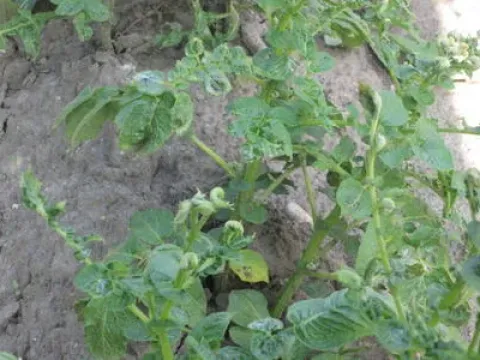
The hallmark symptom is the upward rolling of leaflets, particularly on the lower leaves, which become stiff, leathery, and may develop a chlorotic or reddish-purple tint.
Plants resulting from infected tubers show stunted growth, shortened internodes, and an upright, rigid growth habit, making them easy to distinguish from healthy, vigorous plants.
Internal symptoms within the tuber include net necrosis, which manifests as dark brown streaks or spots in the vascular tissue, a diagnostic feature for many commercial potato cultivars.
Roots and overall plant biomass are drastically reduced, leading to an overall failure to thrive, particularly under stress conditions like drought or poor soil fertility.
- Upward curling of leaflets (rolling).
- Leathery texture and discoloration of leaves.
- Stunted plant development.
- Internal tuber net necrosis.
- Reduced yield of small, stunted tubers.
The use of certified, virus-tested seed potatoes is the most effective strategy to prevent the initial introduction of the virus into a production area.
Aggressive roguing of symptomatic plants during the growing season is essential to minimize the source of inoculum for aphid vectors within the field.
Strategic application of systemic insecticides is necessary to control aphid populations, particularly during the early vegetative stages when plants are most vulnerable to infection.
Maintaining a clean field environment by removing solanaceous weeds prevents the virus from persisting in the vicinity of the potato crop between growing seasons.
Practicing early haulm destruction (desiccation) at the end of the season reduces the risk of late-season aphid colonization and subsequent translocation of the virus into the tubers.