
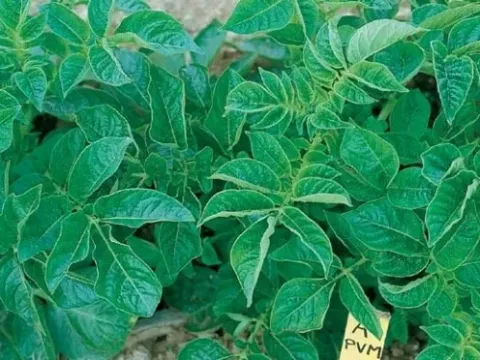
Potato latent virus
Potato latent
Potato latent virus (PLV) is a plant pathogenic virus belonging to the genus Carlavirus within the family Betaflexiviridae. The virus is known for its ability to persist in plants often without producing conspicuous symptoms.
What the section contains
Potato latent virus
The virions are filamentous, typical of carlaviruses, and contain a single-stranded positive-sense RNA genome. It acts as an obligate parasite, fully dependent on the host cell machinery for replication.
Diagnosis is challenging because the infection remains latent. Detection relies on molecular or serological techniques such as ELISA (Enzyme-Linked Immunosorbent Assay) or RT-PCR.
The virus is intracellular, circulating through the phloem of the host plant to spread throughout the entire system, eventually concentrating in the tubers.
It remains viable in tubers through the dormant period, which is the primary mechanism for its survival and transmission to the next generation of crops.
The primary host is potato (Solanum tuberosum). The virus can also infect other solanaceous plants, which serve as reservoirs in the field environment.
Transmission occurs through mechanical contact, such as farm equipment during handling, and via aphid vectors in a semi-persistent manner.
While the virus does not always kill the plant, it contributes to overall variety degeneration. Cumulative infection leads to reduced vigor and lower tuber yields.
Infected plants exhibit a lower tolerance to stress factors and show increased susceptibility to other fungal or bacterial diseases commonly affecting potatoes.
Economic damage is often indirect, as the accumulation of the virus over multiple seasons leads to a significant decrease in the quality and size of harvested tubers.
Infection begins at the start of the season when virus-infected seed tubers are planted. The pathogen spreads systemically during the early stages of plant growth.
Secondary spread by aphid vectors typically peaks during mid-season, specifically from June to July, depending on the local climate and pest population dynamics.
Field operations such as weeding, hilling, and irrigation can cause mechanical wounds, facilitating the spread of the virus between adjacent plants.
Environmental conditions that favor the rapid reproduction and migration of aphid populations are critical for the seasonal spread of this pathogen.
As the season progresses and the plant matures, the virus is translocated to the newly developing tubers, ensuring the cycle continues into the next year.
The defining characteristic of Potato latent virus is the absence of visible diagnostic symptoms. Most infected potato plants remain asymptomatic throughout their growth.
In some susceptible cultivars, minor leaf mottling or vein clearing may occur, but these are often overlooked or attributed to other environmental stressors.
Symptoms are more likely to appear when the potato plant is co-infected with other viruses, which can lead to stunted growth or more obvious leaf mosaic patterns.
Tuber tissues do not show any internal or external discoloration, making it impossible to identify the presence of the virus through visual inspection during storage.
- No obvious foliar malformation.
- Normal canopy appearance in the field.
- Lack of visible signs on tuber surface.
The use of certified virus-free seed potatoes is the most effective management strategy. Tubers should be derived from tissue culture and meristem-tip propagation.
Regular roguing or the removal of symptomatic plants is essential to reduce the viral load within a production field throughout the growing season.
Vector management is crucial, involving the application of insecticides to control aphid populations, particularly during the period of peak insect activity.
Sanitation practices for farm equipment and tools are vital. Disinfecting tools between fields prevents the mechanical spread of the virus via sap contact.
Implementing spatial isolation between seed potato plots and commercial potato fields helps prevent cross-contamination from local insect vectors or neighboring crops.