
Potato spindle tuber viroid
Peru tomato
Description
How to identify
Potato spindle tuber viroid (PSTVd) is a subviral pathogen consisting solely of a short, circular, single-stranded RNA molecule without a protein coat. It is categorized within the Pospiviroidae family.
The viroid lacks the ability to encode its own proteins. It relies entirely on the host plant's transcriptional machinery, particularly DNA-dependent RNA polymerase II, to replicate its genetic material.
PSTVd is highly infectious and is primarily transmitted mechanically. Handling of plants, contact between foliage, and the use of contaminated tools are the most common routes of infection in commercial fields.
Once inside the host, the viroid migrates through the phloem to various parts of the plant, causing systemic infection. It is capable of infecting a wide range of Solanaceae species, including wild weeds.
Identification is difficult as the pathogen often remains latent. Many infected plants show no visible symptoms, which allows the viroid to spread silently throughout the production chain.
What it damages
Primary hosts include potatoes and tomatoes. However, it also affects peppers, eggplants, and several ornamental plants like petunias, which act as significant reservoirs for the pathogen.
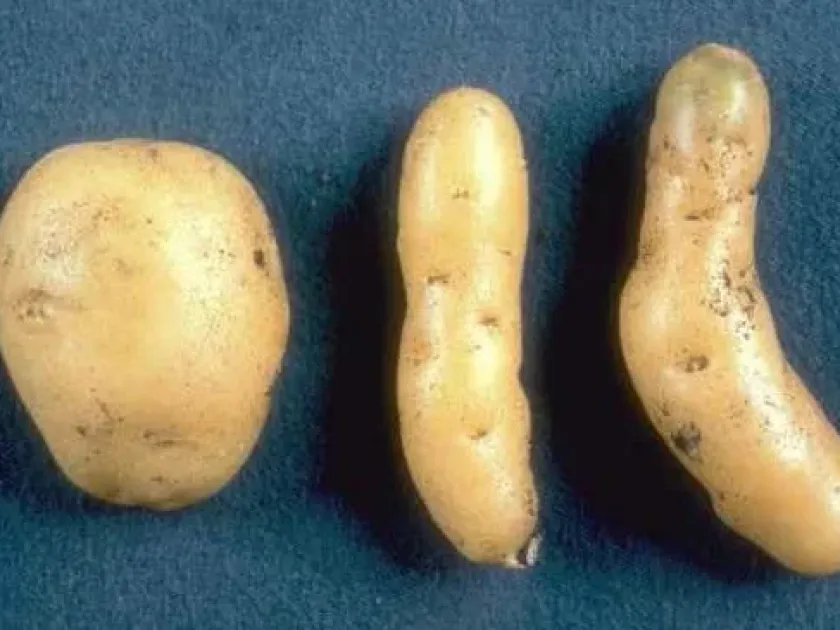
In potatoes, the infection causes the characteristic spindle-shaped, elongated, and cracked tubers. This reduces market value and processing quality, leading to substantial economic losses for growers.
Tomato crops suffer from severe stunting, leaf curling, and the production of small, deformed fruits. In cases of early infection, fruit set is often severely impaired or completely absent.
The pathogen severely limits the yield and vigor of the host plant. Since the viroid is seed-borne, it poses a long-term threat to the integrity of crop production cycles and seed certification.
Beyond physical damage, the presence of PSTVd triggers strict quarantine regulations, which may result in the destruction of entire harvest batches or the total loss of export licenses for producers.
When it appears
The life cycle of the viroid is intrinsically linked to the growing season of the host plant. It overwinters in dormant tubers, rhizomes, and botanical seeds, ready to activate upon germination.
During the growing season, the viroid spreads rapidly during routine agricultural activities. Pruning, weeding, and mechanical harvesting provide constant opportunities for transmission between plants.
Higher ambient temperatures, typically above 25 degrees Celsius, facilitate faster replication of the viroid. This is why symptoms often become more evident during the peak of the summer heat.
While insects like aphids are sometimes suggested as minor vectors, mechanical transmission remains the dominant force driving the spread of the viroid within an agricultural landscape.
The pathogen accumulates steadily throughout the vegetative period, reaching high concentrations in the stems and leaves, which significantly increases the efficiency of transmission later in the season.
Signs of infestation
Infected potato plants often appear upright and stunted. The leaves are typically smaller than normal and may show a darker, rigid appearance with altered angles between the stems and leaf stalks.
Tuber symptoms include elongation (spindle shape), prominent or flattened eyes, and localized cracking or wrinkling of the skin. These physical changes are diagnostic but may be absent in some potato varieties.
Tomato plants infected with PSTVd exhibit leaf rugosity, chlorosis, and severe stunting. The upper part of the plant may look like a "witches' broom" due to shortened internodes and bunched growth.
Given the high frequency of latent infections, visual inspection is insufficient. Molecular diagnostic tools, such as RT-PCR or hybridization assays, are required to detect the viroid accurately.
Differentiating PSTVd from other viral diseases like Potato Leafroll Virus (PLRV) is critical. Laboratory confirmation is the only way to ensure the plant is indeed carrying the spindle tuber viroid.
Control measures
The use of certified virus-free seed stock is the most important control measure. Growers must source materials only from reputable suppliers who conduct regular diagnostic testing.
Strict sanitation protocols are essential. This includes the regular disinfection of all tools, equipment, and hands with recognized virucidal agents (e.g., sodium hypochlorite solutions) to prevent spread.
Immediate rogueing of symptomatic plants is vital. Once an infected plant is identified, it should be carefully removed, including its root system, and destroyed outside the field to prevent contamination.
Weed management is critical. Many solanaceous weeds serve as silent hosts for PSTVd. Keeping field margins clean prevents these weeds from harboring the viroid throughout the winter months.
Enforcing rigorous quarantine protocols for the movement of plant material across regions and countries prevents the introduction of new strains of the viroid into unaffected areas.
Causes diseases · 1
Discussion
No discussions yet — be the first.