
Potato mop-top virus
Potato mop-top
Description
How to identify
The Potato mop-top virus (PMTV) is the type species of the Pomovirus genus within the Virgaviridae family. It is a rod-shaped virus characterized by tripartite single-stranded RNA.
Transmission of PMTV is strictly dependent on its vector, Spongospora subterranea, the causative agent of potato powdery scab. This biotic association is critical for the long-term survival of the virus in soil environments.
What it damages
Potato is the primary host, but the virus is also known to infect other Solanaceae species, including tomatoes and various nightshade weeds. It significantly impacts the market value of potato crops.
Internal damage, known as spraing, renders tubers unsuitable for fresh consumption and processing. The presence of necrotic arcs makes the crop commercially unviable for standard retail chains.
When it appears
The disease cycle begins early in the growing season. Cool, moist soil conditions facilitate the release of zoospores from the resting spores of the vector, leading to the infection of developing tubers.
Environmental factors such as high soil humidity and temperatures between 12°C and 18°C are optimal for virus spread. Once the plant is systemic, the virus moves into newly forming daughter tubers.
Signs of infestation
Foliar symptoms may include stunted growth, shortened internodes (the 'mop-top' effect), and mosaic patterns on leaves. However, these symptoms are often inconsistent and weather-dependent.
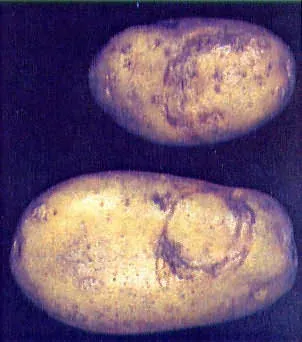
Tuber symptoms, often called 'spraing', manifest as brown rings, arcs, or blotches in the flesh. These symptoms are more frequent in certain susceptible potato cultivars and under specific stress conditions.
Control measures
Integrated management includes planting certified, disease-free seed tubers. Avoiding high-risk fields with a history of powdery scab is a primary preventative practice.
- Implement long crop rotations to reduce soil inoculum levels.
- Improve soil drainage to minimize the conditions favored by Spongospora.
- Select resistant or tolerant potato varieties adapted to local conditions.
- Sanitize machinery to prevent the movement of contaminated soil between fields.
Causes diseases · 1
Discussion
No discussions yet — be the first.