
Potato late blight
Potato
The causative agent of the disease is Phytophthora infestans, an oomycete belonging to the kingdom Chromista. This microorganism is considered one of the most destructive agricultural pathogens, known for causing widespread epidemics.
What the section contains
Potato late blight
Biologically, the pathogen acts as both a soil-borne and air-borne agent, capable of rapid dispersal through spores (zoosporangia) carried by wind, rain splashes, and contact between plants.
The life cycle includes an asexual stage involving the production of zoospores and a sexual stage, which ensures survival under adverse conditions and contributes to genetic diversity.
The pathogen overwinters as mycelium in potato tubers, in plant debris, and potentially in the soil if oospores are formed, which can remain viable for several years.
In the field, the infection begins from primary foci on lower leaves, from where spores spread to adjacent plants, covering vast areas in a very short amount of time.
Late blight affects potatoes and other solanaceous crops, including tomatoes, eggplants, and wild species, causing severe foliage dieback and tuber rot.
The economic impact of this disease is immense: under conditions favorable to the pathogen, farmers can lose up to 70–80% of their total yield within just a few weeks.
Infected tubers become unsuitable for long-term storage as secondary bacterial infections rapidly break down the tissues, turning the crop into a mass of rotten matter.
The reduction of the plant's photosynthetic surface leads to stunted tuber growth, smaller size, and a significant decrease in the overall quality of marketable products.
The disease's harmfulness is compounded by the high cost of control measures, requiring frequent fungicide applications throughout the entire growing season.
Disease development is triggered by a combination of moderate temperatures (from 15 to 22°C) and high air humidity (above 90%), along with the presence of free water on leaf surfaces.
Infection outbreaks often occur during the period of canopy closure, when the lower part of the plant creates a microclimate with high humidity and poor air circulation.
Fog, heavy dew, and persistent rain during mid-summer provide ideal conditions for active sporulation and the immediate spread of zoospores across the field.
In dry and hot weather, the progression of late blight slows down or stops; however, the infection reactivates immediately upon the return of cooler, rainy weather.
Monitoring weather conditions allows growers to forecast the arrival of the disease and apply preventive treatments before visual symptoms manifest.
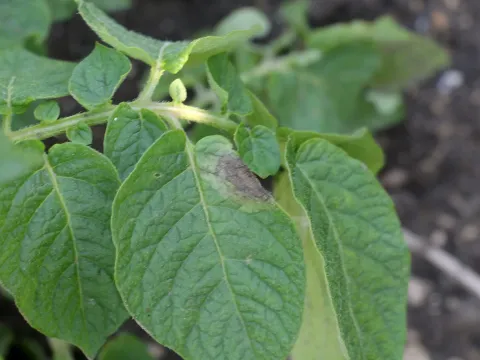
The first symptoms appear on leaves as dark, diffuse spots that rapidly expand in size, eventually turning brown or dark grey in color.
On the underside of the leaf in the infected area, especially after rain or early in the morning, a characteristic white, fuzzy growth appears — this is the pathogen's sporulation.
Infected tubers exhibit slightly sunken, firm spots with a lead-grey or brown hue; when sliced, the flesh reveals a rusty-brown, granular rot.
Affected stems blacken, become brittle, and dry out quickly, leading to the complete collapse of the plant's aerial parts and the cessation of tuber development.
- Appearance of dark brown leaf spots
- White fuzzy mold on the leaf undersides
- Tuber rot both in the soil and in storage
- Rapid dieback of foliage and stems
The primary control strategy involves using high-quality, certified disease-free seed tubers and selecting potato cultivars with known resistance to late blight.
Good agricultural practices include the deep burial of plant residues, crop rotation to avoid planting solanaceous crops consecutively, and maintaining optimal planting density.
Chemical control relies on the application of systemic and contact fungicides, which should be used preventively based on disease forecasting models and critical growth stages.
It is crucial to hill the potatoes properly to provide a soil barrier that prevents spores from washing from the surface onto the developing tubers.
Post-harvest hygiene is essential: remove and destroy all infected plant debris, and ensure that tubers are dried properly before being placed into cool, well-ventilated storage facilities.