
Potato aucuba mosaic
Potato aucuba
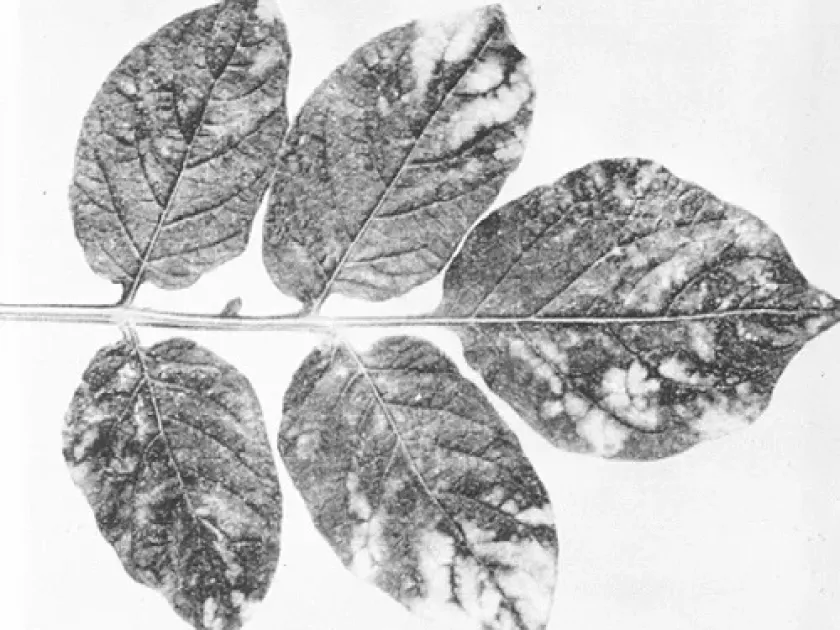
Description
How to identify
The causative agent of the disease is the Potato aucuba mosaic virus (PAMV), which belongs to the genus Potexvirus. It is a filamentous plant virus that is primarily transmitted through mechanical contact.
The virus is known for its high stability and persistence in potato tubers, which allows it to remain infectious in planting stock for several years if not properly managed.
Unlike some other potato viruses, PAMV does not rely on insect vectors like aphids for its transmission, making contact-based spread the primary concern for agricultural producers.
Molecular diagnostics, such as ELISA (Enzyme-Linked Immunosorbent Assay) or RT-PCR, are the gold standard for identifying this pathogen, as field symptoms can often be confused with other mosaic viruses.
The virus persists in the tuber tissues, leading to chronic infection that reduces the vigor of the cultivar over successive generations of cultivation.
What it damages
Potato (Solanum tuberosum) is the main host plant affected by this pathogen, which causes systemic infection throughout the entire plant structure.
The virus has a broader host range within the Solanaceae family, meaning that wild nightshades and other weeds can act as reservoirs for the virus, complicating field management.
Economic damage is substantial, primarily due to the reduction in total tuber yield and the degradation of the quality of the harvest for commercial sale.
Internal tuber necrosis caused by the virus often makes the produce unsuitable for storage or processing, leading to high post-harvest losses for farmers.
Weakened plants show reduced photosynthetic activity, which leads to stunted growth and lower starch content in the tubers at the end of the season.
Signs of infestation
The hallmark sign of the infection is the development of bright yellow or golden spots on the foliage, which resemble the appearance of Aucuba japonica leaves.
Leaves may show yellow mottling, necrosis, or generalized chlorosis, which eventually leads to the premature senescence of the foliage during the vegetative stage.
Tuber symptoms include visible brown spots or rings on the surface, which correlate with necrotic tissue found deep within the potato flesh upon cutting.
Symptom expression is highly dependent on environmental conditions and the specific potato variety, with cooler temperatures often enhancing the visibility of the mosaic patterns.
In severe cases, plants may exhibit severe stunting and leaf distortion, which significantly diminishes the overall health of the crop in the field.
Control measures
The most effective strategy is the use of certified virus-free seed potatoes produced via meristem culture to ensure the initial planting material is clean.
Strict phytosanitary practices, including the regular removal and destruction of infected plants during the growing season, are essential to prevent the spread of the virus.
Sanitation protocols must be implemented for all farming tools; disinfecting knives and machinery prevents the mechanical transmission of the virus from diseased to healthy tubers.
Weed management focused on eliminating solanaceous weeds near potato fields helps to reduce the potential for secondary virus infections in the crop.
Implementing a proper crop rotation plan, ensuring a gap of at least 3-4 years before planting Solanaceae species in the same field, helps to reduce long-term disease pressure.
Causes diseases · 1
Discussion
No discussions yet — be the first.