
Potato spindle tuber viroid
Short
Description
How to identify
The causative agent is the Potato spindle tuber viroid (PSTVd), a member of the genus Pospiviroid. It is a subviral pathogen consisting of a short, single-stranded circular RNA molecule devoid of any protein coat.
PSTVd lacks the ability to code for its own proteins, relying entirely on the host plant's transcriptional machinery to replicate within the nucleus. This unique biology makes it a resilient and highly transmissible pathogen.
Field diagnosis is challenging because symptoms are often subtle or mistaken for environmental stress. Accurate identification requires advanced laboratory techniques such as RT-PCR or ELISA testing.
Because the pathogen is significantly smaller than viruses or bacteria, it cannot be visualized under a standard light microscope, necessitating careful handling of all plant materials.
Its extreme persistence in the environment and high contact-based infectivity make it a significant quarantine organism in international agriculture.
What it damages
While the primary host is the potato, the viroid also infects a wide variety of solanaceous crops, including tomatoes, peppers, and eggplants.
The economic damage is most severe in seed potato production, where infection can lead to the complete condemnation of seed lots, resulting in massive financial losses.
Infected crops suffer from severe physiological disruption, leading to stunted growth, reduced photosynthetic efficiency, and significant yield losses.
Weed species act as asymptomatic reservoirs for the viroid, allowing it to persist in the field environment between growing seasons and posing a constant threat to new plantings.
The infection is systemic and permanent; once a plant is infected, it remains a source of the pathogen for the duration of its life, necessitating immediate removal.
When it appears
The viroid spreads throughout the growing season primarily through mechanical transmission, where contaminated tools or physical plant-to-plant contact occur.
Agricultural operations such as pruning, de-suckering, and harvesting create fresh wounds that facilitate the entry of the viroid into healthy tissue.
Environmental conditions that favor rapid plant growth and high levels of human activity in the field correlate with higher rates of pathogen transmission.
The cycle begins with the planting of infected tubers, which serve as the primary inoculum for the development of the disease during the new season.
The persistence of the pathogen in debris or contaminated surfaces means that infection can occur at any stage, from early sprouting to late-season tuber development.
Signs of infestation
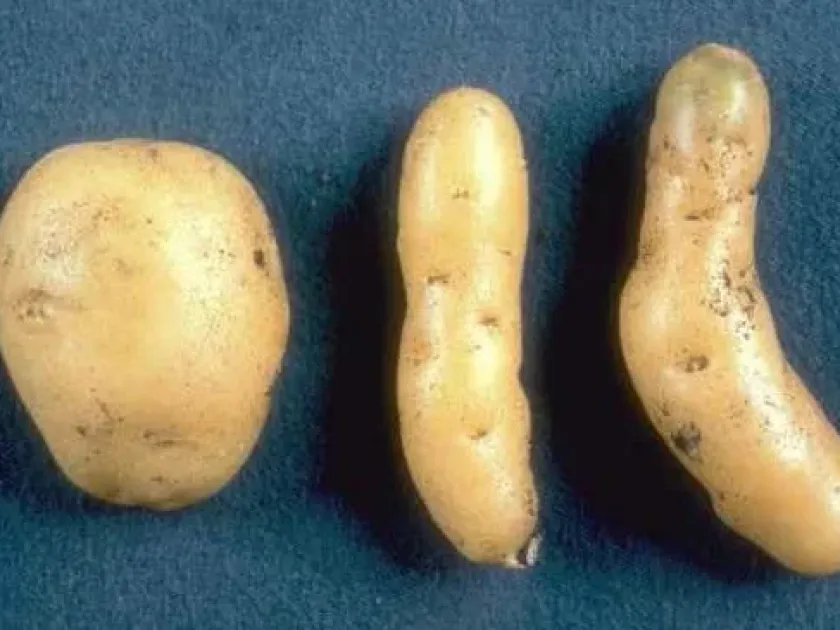
Tubers exhibit a distinct spindle, cylindrical, or dumbbell shape, often appearing smaller and more elongated than healthy potatoes.
The skin of infected tubers may appear rough, cracked, or show prominent, enlarged eyes, significantly reducing market quality.
The foliage of infected plants is typically characterized by dwarfism, smaller-than-average leaves, and an upright, bushy growth habit.
In severe cases, flowering may be delayed or suppressed, and the overall plant vigor is significantly diminished, leading to poor tuber bulking.
- Spindle-shaped or deformed tubers.
- Stunted plant development.
- Upright foliage growth.
- Cracked tuber skin and prominent eyes.
Control measures
The cornerstone of management is the use of high-quality, certified, viroid-free seed tubers obtained from reliable breeding programs.
Strict sanitation protocols for all tools, equipment, and footwear are essential to prevent the mechanical transmission of the viroid between plants.
Rogueing, or the removal and destruction of symptomatic plants, must be performed immediately upon detection to break the chain of infection.
Effective weed management is vital to eliminate potential alternate hosts that could harbor the viroid in or near production areas.
Maintaining proper spatial isolation between potato fields and other solanaceous crops helps mitigate the risk of spreading the infection across the farm.
Discussion
No discussions yet — be the first.