
Potato spindle tuber viroid
Solanum apical
The Potato spindle tuber viroid (PSTVd) is a small, single-stranded circular RNA molecule without a protein coat, classified within the Pospiviroidae family.
What the section contains
Potato spindle tuber viroid
Unlike viruses, the viroid is extremely simple in structure, lacking genes for protein synthesis, and relies entirely on the host plant's replication machinery.
The viroid replicates within the nuclei of host cells, utilizing the host's DNA-dependent RNA polymerase II to copy its genome, causing severe systemic infections.
Due to its high stability, PSTVd can persist for long periods on surfaces, tools, and in the debris of infected plants, making its eradication quite challenging.
It is primarily transmitted through physical contact, which includes mechanical injury to the plant, pruning, and the use of contaminated agricultural machinery.
The primary host for this pathogen is the potato, but it also causes significant economic damage to tomatoes, eggplants, and peppers, leading to major production losses.
Infected crops exhibit stunted growth and reduced yields, while the quality of the harvested tubers and fruits is severely compromised for commercial use.
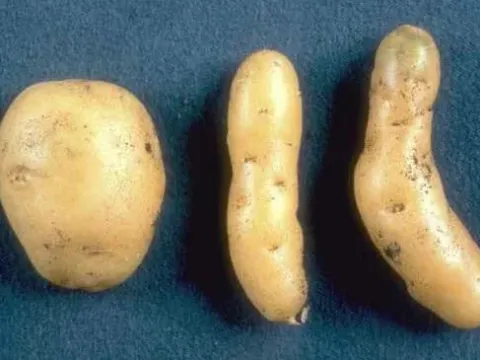
Potato tubers become deformed, showing cracks and irregular shapes that make them undesirable for consumers and unsuitable for processing industries.
In tomato production, the viroid leads to severe leaf distortion and reduced fruit set, which can devastate the yields in greenhouse settings.
The economic impact extends to the destruction of seed lots, as infected tubers must be discarded to prevent the spread of the pathogen in following seasons.
The infection cycle typically begins when an infected tuber is planted, allowing the viroid to spread systemically throughout the developing plant.
During the growing season, mechanical operations such as hilling, weeding, and pest control create opportunities for the viroid to move from plant to plant through sap contact.
High environmental temperatures often exacerbate symptom expression, making it easier for agronomists to identify and rogue out diseased plants during the summer.
Harvesting serves as a major transmission period, as handling both healthy and infected haulms allows for rapid cross-contamination of healthy tubers.
The viroid remains latent within the tuber during the storage season, ensuring that the pathogen survives until the next planting window commences.
Tubers affected by PSTVd typically become spindle-shaped, cylindrical, or pear-shaped, and often develop longitudinal cracks along their surface.
The foliage of infected potato plants exhibits a characteristic upright, stiff habit, with smaller-than-normal leaves and shortened internodes.
Plants affected by the viroid may appear stunted and darker in color, often showing a distinct "bunchy" or compact appearance compared to healthy plants.
Tomato plants infected with the viroid show epinasty (downward curling of leaves) and chlorosis, followed by a general decline in the plant's overall vitality.
- Spindle-shaped or cylindrical tuber deformity.
- Longitudinal cracking on the tuber skin.
- Stunted growth and shorter internodes.
- Epinasty in tomato leaves.
The use of certified virus-free seed tubers, obtained through tissue culture and thermotherapy, is the most effective way to prevent the disease.
Rigorous phytosanitary measures, including regular field inspections and the immediate roguing of any plants showing suspicious symptoms, are essential.
Disinfecting all agricultural tools and machinery is critical, especially after contact with infected crops, using appropriate sanitizing agents.
Implementing strict hygiene protocols for greenhouse and field workers helps minimize the mechanical transfer of the viroid via hands or clothing.
Proper crop rotation, avoiding the replanting of Solanaceous crops in infested soil for several years, helps reduce the risk of secondary infections.