
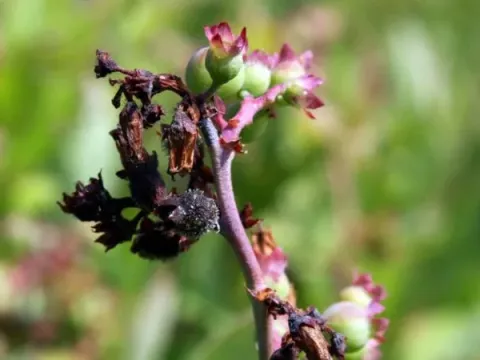
Phomopsis twig blight
Phomopsis vaccinii
The disease is caused by the fungus Phomopsis vaccinii, which belongs to the kingdom Fungi and the phylum Ascomycota. This pathogen is a serious threat to highbush blueberry and cranberry plantations worldwide.
What the section contains
Phomopsis twig blight
The fungus survives primarily in infected stems, old canes, and plant debris. It spreads through spores (conidia) that are disseminated by rain splash, wind, and contaminated pruning tools during routine garden maintenance.
Identification is confirmed by the presence of small, dark, pycnidia on the surface of dead or dying stems. Microscopic examination is often required to distinguish this pathogen from other fungi that cause similar stem dieback.
Optimal conditions for infection include warm, moist periods. The pathogen is most active during late spring and summer, especially when rainfall is frequent and temperatures stay within the 18–25°C range.
Infection usually occurs through wounds, including those created by pruning or winter frost injury. This makes orchard sanitation and protective measures essential for maintaining plant health and longevity.
The primary damage caused by Phomopsis vaccinii is the dieback of shoots and canes. The fungus clogs the vascular system of the blueberry plant, which prevents water and nutrients from reaching the upper foliage.
Yield reduction is significant, as infected branches fail to produce healthy berries. If the infection reaches the main crown or base of the shrub, the entire plant can wither and die, causing substantial economic loss.
Damaged tissues are highly susceptible to secondary pathogens, which can exacerbate the decline of the plant. This cumulative effect makes it difficult for the shrub to recover from severe infection cycles.
Farmers often experience losses due to the necessity of removing large portions of the bush during pruning, which disrupts the age structure of the plantation and decreases annual berry output.
Fruit quality on infected canes is poor, with berries often being small, shriveled, or having a bitter taste, making them unsuitable for fresh market sale or industrial processing.
The first symptom is the sudden wilting of the shoot tips. These tips quickly turn brown and die, and the foliage attached to them often turns yellowish and wilts before eventually dropping off.
Affected stems exhibit areas of necrotic, sunken bark. Upon close inspection, you may see tiny, black, pimple-like fruiting bodies (pycnidia) arranged in rows or clusters on the dying bark surface.
A classic sign of Phomopsis twig blight is the progression of the necrosis. The dieback typically moves downward from the tip of the twig, whereas root-related diseases usually cause whole-plant wilting.
Cross-sections of affected stems show a distinct browning of the internal vascular tissue. This wood discoloration confirms that the pathogen has successfully invaded the host's structural integrity.
In rainy weather, a milky-white or yellowish spore mass may exude from the pycnidia. This mass can be spread by splashing water, leading to new infections on lower branches or neighboring plants.
Sanitation is the most critical component of control. All infected branches should be pruned out, cutting at least 15 cm below the visible necrosis, and removed from the field to be burned or disposed of safely.
Disinfecting pruning tools between bushes is vital to prevent the spread of the pathogen. Alcohol or hydrogen peroxide solutions are commonly used to sanitize blades and saws during work.
Preventative fungicide applications are recommended in early spring, particularly during bud break. Proper coverage is necessary to protect vulnerable tissues from initial spore germination.
- Regular removal and burning of infected branches.
- Sterilization of pruning equipment between shrubs.
- Selection of resistant or less susceptible blueberry cultivars.
- Avoidance of over-fertilization with nitrogen to reduce succulent growth.
- Good canopy management to ensure proper air circulation and quick drying of foliage.
Maintaining a balanced nutritional program and monitoring irrigation to avoid excess humidity around the crown will help keep the plants vigorous and less attractive to fungal colonization.