
Phomopsis stem canker
Phomopsis helianthi
Description
How to identify
The pathogen Phomopsis helianthi is a mitosporic fungus that causes one of the most destructive diseases in sunflower production. It is a highly aggressive parasite capable of causing rapid plant decline.
The fungus survives the winter as mycelium and pycnidia on infected plant debris, in the soil, and occasionally within the seed. Once conditions are favorable, pycnidia release conidia.
These spores are primarily disseminated by wind and rain splashes. They land on the leaf surface, germinate, and penetrate the host tissue through the stomata, initiating the infection cycle.
The disease development is heavily influenced by high humidity and moderate temperatures ranging from 20°C to 25°C. Excessive rainfall during early summer is a key driver for disease outbreaks.
The incubation period varies, but in warm and humid conditions, initial signs of infection can appear within a week or two after the pathogen reaches the host plant.
What it damages
The disease affects all aerial parts of the sunflower plant, but stem necrosis is the most severe symptom. The fungal hyphae destroy the internal pith, causing structural weakness.
As the internal stem tissue degrades, the plant loses its ability to transport water and nutrients. This leads to severe wilting, chlorosis, and, eventually, premature death of the sunflower plant.
Lodging is a common consequence of stem canker, as the weakened stems break easily under wind pressure or the weight of the developing seed head.
Yield losses are substantial, often ranging from 30% to 60%. Beyond the reduction in grain weight, the quality of the harvested seeds is compromised, often showing lower oil content.
Infected fields suffer significant economic losses, including reduced market value of the crop and the high costs associated with implementing intensive fungicide programs.
Signs of infestation
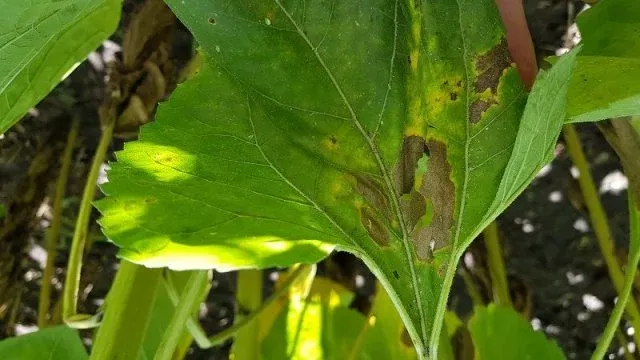
Symptoms begin as necrotic spots with a distinct yellow halo on the leaves. These spots enlarge rapidly, leading to the browning and eventual death of the leaf blade.
The infection spreads from the leaf through the petiole to the main stem. This results in the characteristic greyish-brown "burn" or canker surrounding the point of petiole attachment.
Upon cutting the stem, the interior pith is found to be decomposed and hollow, which is a diagnostic indicator of Phomopsis infection compared to other stem diseases.
Small black fruiting bodies, known as pycnidia, eventually emerge on the surface of the stem lesions. These pycnidia are essential for identifying the pathogen in the field.
- Dark leaf lesions with yellow margins.
- Large, greyish-brown cankers on stems at leaf nodes.
- Internal degradation of stem pith (hollow stems).
- Sudden wilting and death of the plant before maturity.
- Visibility of small, black pycnidia on dead stem tissues.
Control measures
The primary control strategy involves growing resistant or tolerant sunflower hybrids. Genetic resistance is the most sustainable and cost-effective approach to managing Phomopsis.
Proper crop rotation is vital. A break of at least 6-8 years between sunflower crops is recommended to reduce the inoculum level in the soil significantly.
Sanitation practices, including deep plowing and burial of crop residues, help to accelerate the decomposition of infected tissues and prevent the fungus from surviving.
Fungicide applications are recommended in high-risk areas. Effective products often include systemic fungicides applied during the early vegetative stages to prevent the pathogen from reaching the stem.
Managing plant density helps improve airflow within the canopy, reducing the humidity levels that the fungus needs to thrive and successfully infect the crop.
Causes diseases · 1
Discussion
No discussions yet — be the first.