
Phomopsis stem canker
Diaporthe masirevicii
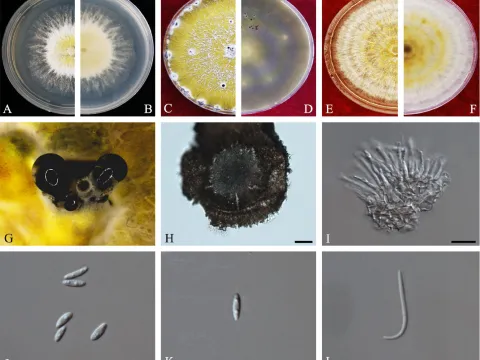
Diaporthe masirevicii is an ascomycete fungus that acts as the primary pathogen causing Phomopsis stem canker in sunflower crops. Taxonomically, it belongs to the kingdom Fungi, phylum Ascomycota, and family Diaporthaceae.
What the section contains
Phomopsis stem canker
The fungus exists in two forms: the asexual stage known as Phomopsis helianthi and the sexual stage, which produces perithecia. During spring, ascospores serve as the main source of primary inoculum in agricultural fields.
The mycelium colonizes the stem tissues, specifically the parenchyma and vascular bundles, leading to metabolic disruption. This pathogen persists in crop residues and soil, maintaining infectivity for several years.
Environmental conditions such as high humidity, rainfall, and moderate temperatures (20–25°C) are critical for spore dispersal and host colonization.
Advanced diagnostic methods, including PCR and specialized fungal culture media, are often required to differentiate D. masirevicii from other related Diaporthe species.
The main host is the sunflower (Helianthus annuus). The disease affects almost every organ, including leaves, petioles, stems, and flower heads.
Severe infection impacts the crop during the late vegetative and reproductive stages, hindering the transport of water and nutrients to developing achenes.
Weakened stems prone to lodging cause significant mechanical harvesting losses and a sharp decrease in overall crop yield.
The quality of harvested seeds is severely compromised, characterized by reduced oil content and higher levels of acidity, which lowers their market value.
In regions where the pathogen is well-established, it can cause catastrophic yield reductions if resistant varieties are not deployed.
Initial symptoms are characterized by brown or gray lesions on leaves that often exhibit a V-shape, progressing toward the petiole and then the stem.
The primary diagnostic sign is the appearance of large, grayish-brown necrotic lesions on the stem, typically centered around the point of petiole attachment.
Affected stems become brittle and hollow as the internal pith decomposes, making the sunflower plant susceptible to snapping under moderate wind conditions.
Small black fruiting bodies known as pycnidia develop on the necrotic areas, serving as indicators of the pathogen's active reproductive cycle.
In late stages, the foliage above the lesion often wilts and dies rapidly due to the complete severance of the vascular supply chain by the fungal mycelium.
The most effective strategy is the use of genetically resistant sunflower hybrids, which significantly limits the pathogen's success in colonizing tissues.
Implementing strict crop rotation programs, ensuring that sunflowers do not return to the same field for at least 7–8 years, is essential for managing soil-borne inoculum.
Deep plowing and proper residue management help accelerate the decay of plant matter, reducing the sites available for overwintering perithecia.
Fungicide applications are recommended as a preventative measure, particularly during the critical stages of rapid growth and pre-flowering periods.
- Control of weeds that act as alternative hosts.
- Optimizing planting density to improve airflow within the canopy.
- Balanced nutrient management to prevent excessive vegetative growth.