
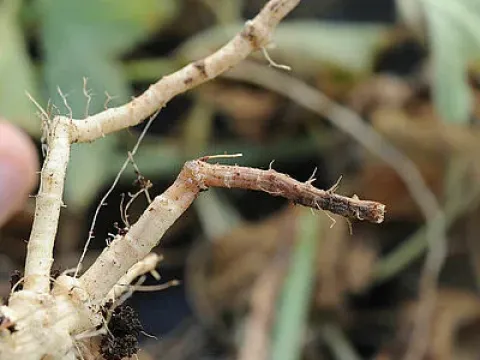
Phomopsis root rot
Phomopsis sclerotioides
Phomopsis root rot (causative agent Phomopsis sclerotioides) is a specialized fungal pathogen belonging to the class Sordariomycetes. It is primarily known for causing severe damage to the root systems of various cucurbitaceous plants.
What the section contains
Phomopsis root rot
The fungus develops a mycelium within the root tissues and produces small black sclerotia. These structures are crucial for the pathogen's survival in the soil, allowing it to remain viable for several years without a host plant.
Transmission occurs through contaminated soil, infected seeds, or debris. Because the fungus thrives in the root zone, it is often difficult to detect until significant damage to the plant's vascular system has already occurred.
Diagnostic identification requires careful examination of the root tissues. The presence of black microsclerotia within the decayed root cortex is a definitive sign of infection by Phomopsis sclerotioides.
Laboratory confirmation involves culturing the pathogen on agar media. Under these conditions, the fungus typically produces pycnidia and conidia, which allow mycologists to identify the species accurately.
The primary hosts for Phomopsis sclerotioides include cucumbers, pumpkins, squash, melons, and watermelons. This pathogen is a major concern in both open-field agriculture and greenhouse production systems.
The disease is most devastating for seedlings, which may collapse and die shortly after infection. In mature plants, root colonization leads to stunted growth, wilting, and a significant reduction in overall yield.
The damaged root system is unable to effectively transport water and nutrients to the aerial parts of the plant. This leads to characteristic daytime wilting even when soil moisture levels are adequate for healthy plants.
Economic losses are severe, stemming from total plant failure, the high cost of soil sterilization, and the labor involved in replanting affected areas. In hydroponic systems, the fungus can spread rapidly through water circulation.
Root rot also weakens the plant's natural defenses, making it highly susceptible to secondary pathogens such as bacteria, which further accelerate the decay of the root system and plant collapse.
The optimal conditions for the development of Phomopsis sclerotioides are moderate soil temperatures, typically ranging from +15°C to +22°C. During these conditions, the pathogen is most aggressive in colonizing host roots.
In greenhouse settings, infection can occur year-round if strict sanitation protocols and crop rotation practices are ignored. In outdoor crops, the highest risk period coincides with the spring planting season.
High soil moisture and poor drainage promote the germination of sclerotia and facilitate the rapid movement of mycelium through the soil. Waterlogging is a major factor that exacerbates the severity of the infection.
Conidia are spread through splashes of irrigation water, contaminated farming tools, and human activity. During dry spells, the fungus remains inactive in the soil as sclerotia, waiting for more favorable environmental conditions.
The incubation period for the disease is generally between 10 to 20 days. The speed of disease progression is heavily influenced by the initial vigor of the plant and the favorability of the soil environment.
Early symptoms include yellowing and wilting of the lower leaves during the hottest parts of the day. Plants may recover during the night, which often delays early diagnosis.
Upon inspecting the root system, dark brown necrotic lesions become visible. As the disease advances, the roots become soft, decay completely, and the fine feeder roots are lost, leaving only a stunted main root.
Internal root tissue will reveal the presence of tiny, pin-point black sclerotia. These are diagnostic features that distinguish Phomopsis root rot from other common root-decaying fungi.
The base of the stem at the soil line may show a brownish discoloration. In severe cases, the stem becomes soft, causing the plant to lodge or collapse completely under the weight of its fruit.
Overall plant growth is significantly stunted, and the development of flowers or fruits is halted. If untreated, the entire crop can show symptoms of decline, leading to total failure in heavily infested patches.
The most effective strategy is a strict crop rotation program, excluding cucurbits from the field for at least 3–4 years to deplete the soil's reservoir of sclerotia.
Using certified, disease-free seed and sterilized potting media is essential for seedling production. Steam sterilization of greenhouse soil is the most reliable method for eliminating the pathogen before planting.
- Maintain proper irrigation to avoid saturated soil conditions.
- Thoroughly sanitize all tools and equipment between use.
- Promptly remove and destroy infected plants, including the surrounding soil.
- Select cultivars known for their tolerance or resistance to root rot pathogens.
Chemical control involves the application of fungicides to the soil zone. Applications should be performed preventively or at the earliest sign of disease to minimize the pathogen's spread.
Biological control, particularly the use of Trichoderma species, has shown promise in suppressing Phomopsis sclerotioides. These antagonistic fungi compete for space and nutrients, effectively limiting the pathogen's ability to infect the roots.