
Phthirusa
Phthirusa
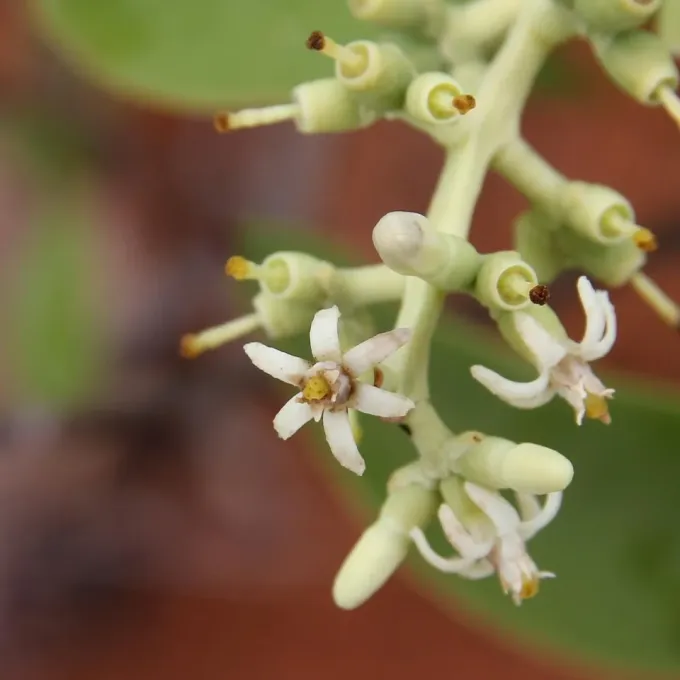
Description
How to identify
Phthirusa is a genus of semi-parasitic plants belonging to the family Loranthaceae. These plants are commonly known as mistletoe relatives and often colonize the branches of woody species in tropical and subtropical climates.
As hemiparasites, they possess green leaves and perform photosynthesis, yet they rely on a host plant for essential water and mineral nutrients. This is achieved through the formation of haustoria, specialized root-like structures.
The haustorium invades the xylem of the host plant, creating a vascular connection. This connection allows the parasite to extract sap directly from the host's conductive tissues, weakening the tree over time.
There are numerous species within the genus, many of which are geographically restricted. They are recognized by their characteristic bushy appearance within the host's crown, often forming dense, dark green clusters.
Identification is usually confirmed by observing these clusters throughout the year, especially when the parasite produces flowers or berries, which are distinct from the host's botanical features.
##damage##Phthirusa affects a wide variety of trees, including economically important fruit trees and ornamental garden specimens. The damage is cumulative and often results in long-term decline.
By siphoning off water and nutrients, the parasite causes significant resource depletion in the host. This reduces the tree's growth rate, yield, and overall vigor.
Heavy infestations can lead to dieback of entire branches, as the flow of water to the distal parts of the tree is restricted or blocked by the parasite's invasive haustoria.
The parasite also serves as a vector for stress, making the tree more susceptible to secondary attacks by wood-boring insects, fungi, and other opportunistic pathogens.
In severe cases, if left uncontrolled, the structural integrity of the branch may be compromised, and the host tree might eventually die due to extreme physiological stress.
##season##The life cycle of Phthirusa is heavily dependent on the dispersal of seeds by birds. Birds feed on the sticky, energy-rich berries of the plant and deposit the seeds onto tree branches.
The sticky coating ensures the seed adheres firmly to the bark. Once conditions are favorable—usually involving high humidity and active sap flow in the host—the seed germinates and the radicle develops into a haustorium.
Active growth and reproduction cycles often align with the wet season, as high water availability facilitates the rapid development and expansion of the parasite colony.
In equatorial regions, these processes can happen throughout the year. The parasite does not have a strict dormancy period if the environment remains warm and sufficiently moist.
Dispersal is most active during the fruiting season of Phthirusa, which varies by species but generally corresponds to times of high avian activity in the forest or garden.
##signs##The most evident sign of infestation is the presence of atypical shrubby growths lodged in the tree canopy, differing from the host's foliage in texture and color.
The presence of dense clusters that remain green even when the host tree is deciduous (or has shed leaves due to stress) is a diagnostic characteristic of mistletoe-like parasites.
Visible stress symptoms in the host, such as yellowing leaves, premature leaf drop, or branch tips drying out, indicate that the parasite is significantly impacting the host's metabolism.
- Local swellings or cankers at the site of attachment.
- Diminished flowering or fruiting on the infected branch.
- An abnormal density of foliage at specific spots in the canopy.
Advanced stages often show a decline in the bark's condition, sometimes accompanied by sap leakage near the point where the parasite entered the host tissue.
##control##The primary control measure is the physical removal of the parasite. This must include cutting the host branch several inches below the point of infection to ensure the entire haustorial system is removed.
Sterilizing pruning tools between cuts is essential to prevent the spread of latent infections or sticky seed residues to other parts of the tree or different trees.
Early detection is crucial. Regular monitoring of the canopy, especially during the off-season when the parasite is easier to spot against bare branches, allows for prompt intervention.
Maintaining tree health through proper fertilization, irrigation, and pest management helps the host better tolerate the presence of minor infestations, though it does not prevent them.
In plantation management, removing highly infected trees may be necessary to serve as a quarantine measure, preventing the further spread of seeds throughout the orchard.
Causes diseases · 1
Discussion
No discussions yet — be the first.