
Phomopsis stem canker
Diaporthe helianthi
Description
How to identify
The pathogen responsible for this disease is the fungus Diaporthe helianthi (anamorph Phomopsis helianthi), which is a destructive ascomycete specifically targeting sunflowers.
The fungus overwinters primarily as mycelium or fruiting bodies (perithecia and pycnidia) on infected sunflower residues left on the soil surface after the previous harvest.
Infection is triggered by high moisture levels and warm temperatures, allowing spores to disperse via rain splashes and wind onto the leaves of emerging sunflower plants.
The disease cycle is highly dependent on environmental conditions, with temperatures between 20°C and 25°C being optimal for the rapid germination of fungal spores.
The fungus penetrates host tissues through natural openings like stomata, after which it colonizes the internal tissues, disrupting the plant's structural integrity.
What it damages
Phomopsis stem canker causes severe systemic damage by colonizing the stem and causing the collapse of the plant's internal vascular network.
By interfering with the transportation of water and nutrients, the fungus causes premature leaf wilting, stunted growth, and death of the entire plant.
Seed quality and yield are significantly impacted, as the plant becomes unable to properly fill the achenes during the seed-filling stage.
Stems affected by the pathogen become hollow and brittle, which frequently results in lodging, making mechanical harvesting extremely difficult and wasteful.
In severe infestation years, growers may face yield losses exceeding 50% due to both reduced kernel weight and field harvest failure.
Signs of infestation
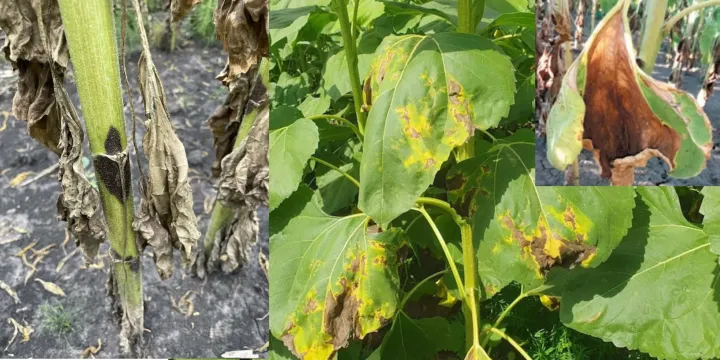
Initial symptoms are characterized by brown, wedge-shaped necrotic lesions starting on the margins of lower leaves, often surrounded by a chlorotic halo.
The necrosis spreads rapidly from the leaf blades through the petioles and finally reaches the stem, where the most severe damage occurs.
Large, gray or silver-colored lesions develop on the stem, typically surrounding the leaf attachment point, and these lesions expand to encircle the stem.
The central pith of the infected stem tissue turns dark and disintegrates, transforming the stem into a hollow structure that loses its structural strength.
Small, dark, speck-like pycnidia appear on the surface of the stem lesions as the fungus matures, serving as a sign for identifying the presence of D. helianthi.
Control measures
The primary control strategy involves selecting and planting sunflower hybrids that possess proven genetic resistance to Phomopsis stem canker.
Strict crop rotation is necessary, ensuring a minimum interval of 7 years before planting sunflowers in the same field to allow for the decomposition of old stalks.
Deep tillage practices are highly recommended to bury infected crop residues, which helps accelerate the biological breakdown of the pathogen's inoculum.
Fungicide applications during the V4–V6 and R1 growth stages can provide significant protection against the initial spread of the fungus into the plant tissues.
- Utilizing clean, fungicide-treated seeds to prevent early-season infection.
- Managing weed populations that may harbor the fungus outside of the cropping season.
- Applying balanced nitrogen fertilization to avoid excessive succulent tissue development.
Causes diseases · 1
Discussion
No discussions yet — be the first.