
Phomopsis seed decay of soybean
Diaporthe phaseolorum
The causal agent is the ascomycete fungus Diaporthe phaseolorum (anamorph Phomopsis sojae). It belongs to the Diaporthaceae family, Diaporthales order.
What the section contains
Phomopsis seed decay of soybean
The pathogen overwinters as pycnidia and perithecia on crop residues, in seeds, and in the soil. Its high genetic plasticity allows for rapid adaptation to changing environments.
During the growing season, the fungus spreads via conidia, transported by rain splashes and wind. Spread within fields typically occurs in patches, starting from infested debris.
The fungus invades host tissues through stomata, small wounds, or direct penetration of the epidermis. Systemic infection impairs the plant's metabolic and transport functions.
The life cycle encompasses both asexual and sexual reproduction phases, which provide the pathogen with multiple survival mechanisms in varying conditions.
Soybean is the primary host, but the fungus can affect other legumes. It causes root rot, stem lodging, and premature plant death.
Damage results in reduced stand density and lower thousand-kernel weight. Infected seeds often fail to germinate or produce weak seedlings that perish shortly after emergence.
The disease causes tissue necrosis, which disrupts water and nutrient transport. Economic losses can be severe, often reaching 30-50% in epidemic years.
Seed quality is significantly degraded due to shriveling, cracking, and discoloration. Infected seeds serve as the primary vector for spreading the disease to new locations.
Pod infection leads to poor grain filling and reduces the overall market value of the crop.
Symptoms typically appear during the flowering and pod-filling stages, especially under warm and humid conditions.
Optimal development occurs at temperatures between 20–25°C and relative humidity above 80%. Prolonged rainy periods during grain fill promote disease outbreaks.
Secondary infection cycles are fueled by high humidity, dew, and fog during the latter half of the growing season.
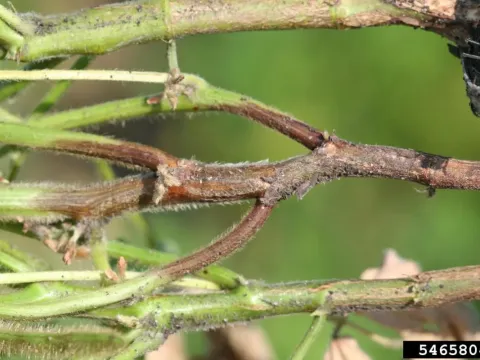
As the plant approaches maturity, a characteristic ash-grey discoloration on stems becomes visible, marking advanced stages of the infection.
Pathogen activity continues post-harvest if the grain is stored with high moisture content and poor aeration.
Early symptoms include the development of brown lesions on the lower stem, which gradually expand to encircle it.
Small black pycnidia, appearing as tiny dots, emerge on dead stem tissues. Stem weakening often leads to lodging before harvest.
Foliage tends to yellow from the margins inward, eventually leading to premature senescence. Cracking of the stem tissue is a frequent observation.
- Darkening and shrinking of the pods.
- Fungal mycelium growth on tissues during high humidity.
- Reduced seedling emergence in laboratory tests.
- Chlorotic and necrotic areas on leaves and stems.
Internal stem inspection often reveals dark discoloration and fungal colonization of the pith, which is a key diagnostic feature.
Effective control relies on crop rotation, ensuring a 3–4 year gap between soybean crops. Using certified, disease-free seeds is the first line of defense.
Cultural practices should focus on deep burial of crop residues to accelerate their decomposition and eliminate the primary inoculum source.
Seed treatments with appropriate fungicides are essential to protect the germinating seedling from soil-borne and seed-borne infection.
Foliar fungicide applications during the R2 (flowering) and R3 (pod initiation) stages are effective in managing the disease spread.
Selecting tolerant or resistant soybean varieties is the most cost-effective and sustainable strategy for long-term management of Phomopsis.