
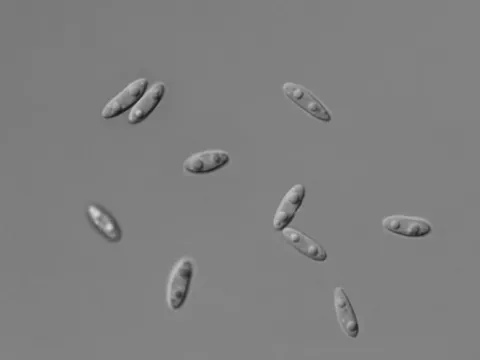
Phomopsis columnaris
Phomopsis columnaris
Phomopsis columnaris belongs to the Ascomycota phylum and the Diaporthales order. It is a microscopic fungus acting as a serious phytopathogen that affects the vegetative organs of various plants.
What the section contains
Phomopsis columnaris
This species is closely related to the genus Diaporthe. The fungus reproduces by forming pycnidia, which contain alpha and beta-conidia, serving as the primary infectious propagules for spreading within a field.
As a pathogen, it is highly persistent, capable of surviving as a saprophyte on plant debris for extended periods. Its ability to remain dormant in soil makes it a challenging threat to long-term crop rotation cycles.
Microscopic identification is crucial, focusing on the morphology of conidia and the structure of pycnidia. In culture, the fungus produces greyish or white mycelium, often developing characteristic black fruiting bodies over time.
The fungus invades host tissues through natural openings like stomata or physical wounds. Once established, it secretes enzymes that break down plant cell walls, leading to tissue necrosis and systemic weakness.
Phomopsis columnaris is known for causing severe damage to various legume and aster family crops. By colonizing the stem and vascular tissues, it disrupts the flow of water and nutrients throughout the host plant.
Infected crops show signs of premature wilting and reduced vigor. The destruction of stems leads to severe lodging, which poses a significant threat during mechanized harvesting, resulting in substantial yield loss.
Besides structural damage, the pathogen affects seed quality. Infected seeds often show reduced germination rates and may carry the fungus to the next growing season, acting as a source of primary inoculum.
The overall productivity of the crop is severely impacted as the plant diverts energy to defend against the fungus instead of developing seeds or fruit. This results in smaller, lower-quality produce.
Increased susceptibility to secondary infections is another consequence of Phomopsis damage. Damaged tissues become entry points for other fungal and bacterial pathogens, exacerbating the overall decline of the crop.
The development of Phomopsis columnaris is highly dependent on environmental conditions, specifically moisture and temperature. The fungus thrives at temperatures between +18°C and +25°C and high humidity.
Infection cycles begin in the spring, triggered by rainfall. Rain splashes distribute conidia from overwintered plant debris to young tissues of healthy crops, starting the primary infection phase.
Summer rainfall events often trigger disease outbreaks, as the moisture facilitates the release and spread of spores. Repeated infection cycles can occur throughout the growing season if weather conditions remain wet.
During the fall, the fungus enters a survival mode by forming pycnidia in dead stems. These structures protect the pathogen from winter temperatures, ensuring it is ready to re-emerge in the following spring.
Agro-technical practices that limit airflow within the crop canopy, such as high plant density or poor weed control, significantly increase the risk of disease propagation by maintaining high localized humidity.
The first symptoms of infection are small, light-colored spots on the stems. Over time, these spots expand, turning brown or grey and often becoming sunken or elongated along the stem surface.
A diagnostic sign is the appearance of tiny black dots — the pycnidia — within the necrotic areas. These are often grouped and are easily visible upon close inspection of the stem surface.
Systemic symptoms include the yellowing of leaves from the bottom up, as the plant struggles to transport water through the damaged vascular system. The leaves may eventually dry out but remain attached.
The stems become fragile due to the internal decay of tissues. In severe cases, the structural integrity of the plant is completely compromised, leading to stem breakage under mild stress or wind.
- Necrotic, sunken lesions on plant stems.
- Formation of visible black pycnidia on the surface.
- Premature wilting and yellowing of the foliage.
- Increased susceptibility to mechanical stem breakage.
- Deterioration of seed vitality and viability.
Effective control starts with crop rotation. Avoiding the planting of susceptible crops in the same field for at least 3-4 years helps reduce the inoculum density in the soil significantly.
Deep plowing of crop residues is essential to bury infected material, which hastens decomposition and prevents the fungus from successfully overwintering near the soil surface.
Choosing resistant or tolerant crop varieties is a cornerstone of integrated pest management (IPM). Genetic resistance significantly reduces the need for frequent chemical fungicide applications.
Preventive fungicide spraying during the growing season is recommended in areas with a history of the disease. Fungicides from the triazole or strobilurin classes have shown efficacy in suppressing the pathogen.
Seed treatment with systemic fungicides is crucial to protect young seedlings from early infection. This initial defense strategy helps ensure uniform plant development and protects the crop from soil-borne pathogens.