
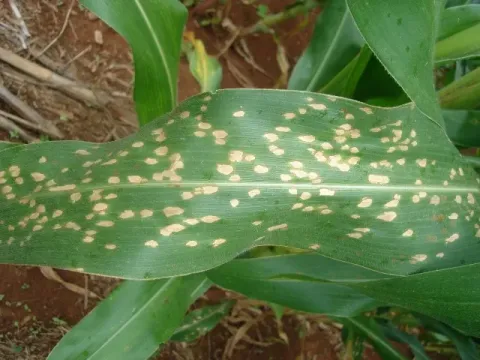
Phoma tropica
Phoma tropica
Phoma tropica is a species of fungi within the Kingdom Fungi, Phylum Ascomycota, and Genus Phoma. This microscopic fungal pathogen is responsible for various necrotic diseases and spots across a wide range of agricultural crops and tropical plants.
What the section contains
Phoma tropica
The fungus produces a septate mycelium that colonizes host tissues. Its lifecycle includes the formation of pycnidia, which are small, dark, flask-shaped structures embedded within the plant tissue, serving as the sites for the production of asexual conidia.
As a facultative parasite, Phoma tropica exhibits significant survival capabilities. It can persist in soil and crop debris for extended periods in the form of chlamydospores or dormant pycnidia, making it a persistent threat in agricultural environments.
Dissemination primarily occurs via rain splash, irrigation water, and wind dispersal over short distances. The conidia readily adhere to plant surfaces and enter through natural openings or small wounds caused by mechanical damage.
Laboratory identification involves isolating the fungus on selective media, such as potato dextrose agar. Under controlled conditions, Phoma tropica develops characteristic colonies with abundant pycnidia, allowing for precise taxonomic confirmation.
This pathogen impacts a broad array of botanical families, including Solanaceae and Fabaceae. The impact is significant, as it can attack almost every part of the plant, including roots, stems, leaves, and fruits.
Seedling infection is particularly devastating, leading to damping-off (also known as black leg). This results in reduced plant stand density and significant initial yield losses, often requiring costly re-sowing.
In mature plants, the pathogen causes necrotic leaf spots that eventually merge, killing the leaf tissue and severely hindering photosynthesis. This loss of vitality reduces the plant's overall energy reserves and resilience.
Stem infection leads to tissue decay and potential lodging, where the plant collapses under its own weight. This physical damage disrupts nutrient and water transport, leading to irreversible wilting and eventual death of the organism.
Fruits infected with Phoma tropica lose their marketability due to unsightly lesions and accelerated rot. Even if the damage is localized, the fruits are highly susceptible to secondary infections by bacteria and other saprophytic organisms during storage.
The development of Phoma tropica is heavily favored by warm temperatures (18–25°C) and high humidity. Persistent wetness on plant surfaces is a strict requirement for spore germination and successful infection.
Primary inoculum sources include infested seeds and overwintering plant residue in the soil. As the growing season begins, the fungus initiates its cycle, multiplying rapidly under the right environmental conditions.
Peak disease pressure is typically observed during periods of frequent rainfall or heavy dew. These conditions facilitate the rapid spread of conidia across the field, leading to potential epidemics in susceptible cultivars.
In protected cultivation (greenhouses), the pathogen can maintain activity year-round if humidity control and sanitation protocols are neglected. Continuous cropping systems are especially vulnerable to outbreaks.
The incubation period—the time from inoculation to symptom development—varies based on host susceptibility and environmental stress, typically ranging from 5 to 12 days under optimal conditions.
The initial symptoms present as small chlorotic spots on leaves, which gradually enlarge and turn brown or grayish-brown, often exhibiting concentric ring patterns characteristic of Phoma infections.
The presence of minute, black, pimple-like structures in the center of these lesions, which are the pycnidia, is a key diagnostic feature of Phoma tropica activity on the host plant.
Stem lesions usually appear as dark, sunken areas near the soil line. As the tissue decays, it may crack open, and in severe cases, the stem interior may become hollowed out or discolored.
Fruit symptoms manifest as depressed, necrotic patches. These lesions may be covered by a fine grayish mycelial mat, especially if the fruit is kept in high-humidity conditions post-harvest.
Systemic symptoms include overall stunting, chlorosis of the foliage, and poor fruit development. Affected plants appear sickly and often succumb prematurely to environmental stresses that healthy plants would otherwise withstand.
The most effective strategy for managing Phoma tropica is the implementation of a rigorous crop rotation program. Avoiding the cultivation of susceptible crops in the same field for at least three years significantly reduces the soil-borne inoculum.
Using certified, fungicide-treated seeds is mandatory to prevent the introduction of the pathogen into new fields. Seed treatment provides an essential barrier for germinating seedlings during their most vulnerable stage.
Sanitation is critical; all crop residues should be deeply plowed or removed from the field immediately after harvest to speed up the decomposition of the pathogen's substrate.
In greenhouse settings, climate control is paramount. Reducing relative humidity through effective ventilation and avoiding overhead irrigation can prevent the leaf wetness necessary for fungal spore transmission.
Chemical control via foliar application of fungicides, particularly those containing triazoles or strobilurins, is recommended when environmental conditions are conducive to disease outbreaks. These products effectively inhibit fungal mycelial growth and pycnidia production.