
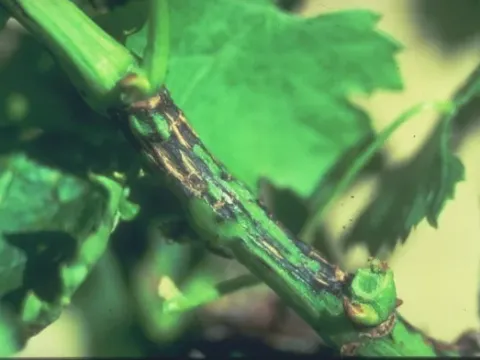
Phomopsis cane and leaf spot
Phomopsis viticola
Phomopsis viticola is a fungal pathogen belonging to the Diaporthales order. It is an anamorphic fungus that causes cane and leaf spot, a common disease in grapevines. The pathogen persists in the infected bark and wood of the vine throughout the winter.
What the section contains
Phomopsis cane and leaf spot
The disease cycle begins in spring when the pycnidia (fruiting bodies) release spores under conditions of high humidity and rainfall. These spores are splashed by raindrops or carried by the wind to susceptible young shoots and leaves, initiating the infection.
Optimal development for the pathogen occurs at temperatures ranging from 10°C to 15°C in a moist environment. Once established, the fungus colonizes the plant tissues, eventually producing new pycnidia that serve as a source for secondary infections.
The fungus is highly resilient and can adapt to various climatic conditions, making it a persistent challenge in viticulture. Monitoring meteorological data during the early growth stages is crucial for predicting potential outbreaks.
Proper identification in the field relies on observing the characteristic necrotic lesions on canes and leaves. In laboratory settings, specialists confirm the presence of Phomopsis viticola by incubating affected plant parts in high-humidity chambers to induce sporulation.
Phomopsis viticola causes significant damage by infecting leaves, shoots, inflorescences, and fruit clusters. The most severe impact is the weakening of canes, which reduces the vine's hardiness and leads to lower yields over subsequent seasons.
Infected inflorescences often shrivel and fall off before flowering, causing immediate crop loss. When fruit is infected, the berries develop rot, which compromises the quality of the yield and makes the fruit unmarketable for winemaking or fresh consumption.
The pathogen causes deep cracking and necrosis on the bark of young shoots, which disrupts the vascular system of the grapevine. Over time, these structural damages can lead to the death of entire cordons or even the complete loss of the vine.
Economic damage is substantial, encompassing both direct yield losses and increased management costs for intensive fungicide programs. Moreover, the need to replace dead vines increases labor and material expenses for vineyard maintenance.
The disease also facilitates the entry of other opportunistic pathogens into the vine through the necrotic wounds. This cumulative effect significantly reduces the lifespan and overall productivity of the vineyard blocks.
Early symptoms include small black spots with chlorotic halos on the young leaves. As the leaf expands, these spots often cause the tissue to tear, leading to a deformed and ragged appearance of the foliage.
On the shoots, lesions appear as elongated dark brown or black spots, primarily at the base. As the season progresses, these lesions turn into deep cracks in the bark, which becomes bleached or silvery-gray, with visible small black pycnidia.
Inflorescences show signs of infection by turning brown and desiccating. If the fruit is infected, berries may shrivel, turn brown or purple, and become covered in black fruiting bodies, eventually leading to fruit rot.
- Dark spots with yellow borders on young leaves.
- Bleached, cracked bark on basal internodes of canes.
- Deformation and premature shedding of leaf tissue.
- Browning and drying of inflorescences during spring.
- Rotting berries with visible black pycnidia on the surface.
A classic diagnostic sign is the breakage of fruit clusters due to the necrotic girdle formed by the fungus on the rachis. This usually happens as the berries gain weight, causing the cluster to hang by a thin, weakened vascular connection.
The primary control strategy involves preventative fungicide applications during the bud-break and early leaf-development stages. Copper-based fungicides are highly effective in managing the primary inoculum when applied at the right time.
Cultural practices are essential, specifically the removal and burning of infected wood during winter pruning. Eliminating sources of inoculum within the vineyard significantly reduces the pressure of the disease for the following growing season.
Maintaining good airflow and sunlight exposure through proper trellis training and canopy management is vital. Drier conditions within the vine canopy inhibit the development and spread of the fungus, enhancing the efficacy of chemical controls.
Choosing disease-resistant cultivars and ensuring the use of certified, disease-free planting material prevents the introduction of the pathogen into new vineyard sites. This is the foundation of long-term sustainable disease management.
In cases of high disease pressure, an integrated chemical program alternating systemic and contact fungicides is necessary. Regular monitoring and timing treatments according to local weather forecasts ensure maximum protection during the most vulnerable stages of vine growth.