
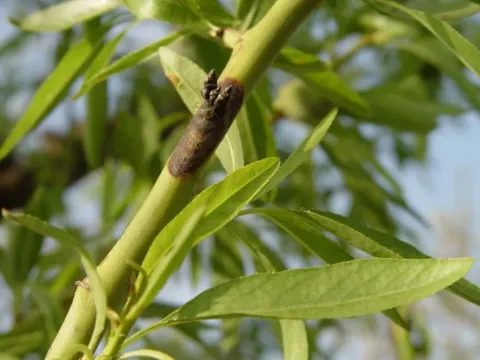
Phomopsis amygdali
Phomopsis amygdali
Phomopsis amygdali is a fungal pathogen classified as an ascomycete, specifically a coelomycete. It is a major causal agent of twig blight in almond and other Prunus species.
What the section contains
Phomopsis amygdali
The fungus produces two types of conidia: alpha-conidia (oval) and beta-conidia (filiform). These spores serve as the primary inoculum for spreading the disease throughout the orchard.
The pathogen overwinters as mycelium and pycnidia within diseased twigs, branches, and mummified fruits that remain attached to the tree canopy.
Spore release is primarily triggered by moisture, including rain and overhead irrigation, which washes the spores onto new susceptible shoots.
Modern laboratory diagnostics utilize PCR-based methods or specialized culture media to distinguish Phomopsis amygdali from other closely related fungal species.
The primary impact of the disease is twig dieback. When the fungus girdles a branch, the foliage distal to the infection point withers and dies.
In addition to twig damage, the pathogen can infect blossoms, causing them to collapse and leading to reduced fruit set during the growing season.
Fruit infection manifests as decay, which is particularly problematic if conditions are humid during the harvest period, leading to post-harvest losses.
Continuous infection weakens the trees, making them susceptible to stress-related disorders and other secondary pests or pathogens.
Severe infestations can lead to substantial yield losses, significantly impacting the economic viability of almond orchards worldwide.
Early symptoms appear as small, brownish lesions on current-season shoots, which eventually enlarge and become necrotic as the fungus grows.
The development of pycnidia, appearing as small black pimples on the surface of infected bark, is a definitive characteristic of Phomopsis infection.
Leaves on affected branches lose their green color, turn yellow, and eventually brown as the branch dies due to restricted water and nutrient flow.
Dark, sunken lesions on the fruit surface are common, often appearing as circular spots that may eventually spread to cover the entire fruit skin.
Internal wood discoloration, visible when cutting into a branch, confirms the extent of the vascular colonization by the fungal mycelium.
Sanitation is the cornerstone of management; pruning out and destroying infected wood significantly reduces the amount of inoculum present in the orchard.
Effective orchard management includes maintaining adequate spacing and pruning to promote airflow, thereby reducing humidity levels favorable to the fungus.
Chemical control programs involving copper-based sprays or systemic fungicides should be timed with critical tree growth stages, such as bud break and blooming.
- Application of protective fungicides before predicted wet weather events to prevent initial infections.
- Monitoring pest populations that may cause wounds, allowing easier entry for fungal pathogens.
- Adopting integrated pest management (IPM) practices to maintain overall orchard health and vigor.
In regions where the disease is endemic, selecting varieties with higher tolerance levels can be a strategic component of a sustainable control plan.