
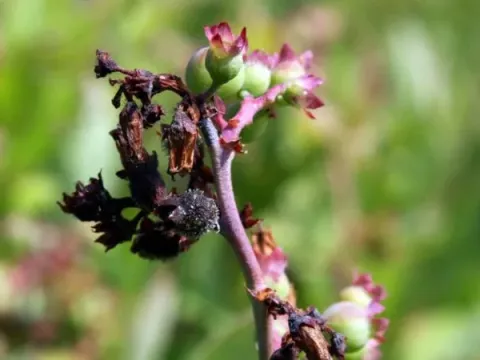
Phomopsis blight of blueberry
Diaporthe vaccinii
The causal agent of this disease is the ascomycete fungus Diaporthe vaccinii (anamorph Phomopsis vaccinii). It is a major pathogen affecting cultivated blueberries and cranberries worldwide.
What the section contains
Phomopsis blight of blueberry
The pathogen utilizes two modes of reproduction: asexual (conidia produced in pycnidia) and sexual (ascospores produced in perithecia). This dual cycle allows the fungus to survive and spread efficiently under various environmental conditions.
The fungus overwinters in dead or infected twigs and crop debris. When spring temperatures rise, the pycnidia release spores that are disseminated primarily by splashing rain, dew, and wind to new succulent growth.
Infection occurs mainly through wounds caused by mechanical damage, pruning, or insect feeding. The fungus invades the vascular tissues, blocking water transport and leading to characteristic dieback symptoms.
Development is heavily dependent on humidity. Extended periods of rain and high humidity during the early growing season significantly increase the risk of massive infection events on plantations.
Blueberries and cranberries are the primary hosts. The pathogen can infect all aerial parts of the plant, but the most severe damage is observed on canes and shoots, which may lead to plant death.
The disease causes significant yield losses by reducing the plant's vigor and its ability to produce high-quality fruit. In severe cases, the infected branches die entirely, requiring removal.
By attacking the vascular system, the fungus disrupts nutrient flow, causing shoots to wilt and eventually die. This leads to a decline in overall plantation productivity over several seasons.
Winter hardiness of infected plants is drastically reduced. Weakened bushes are more susceptible to cold injury and secondary pathogens, making the recovery of affected plantations difficult.
Economic damage is substantial, encompassing lost fruit production and the costs associated with increased fungicide usage and intensive pruning labor required to keep the infection under control.
The most recognizable sign is the wilting of young shoots, which often bend in a shepherd's crook shape. The affected areas gradually turn gray or brown and become brittle.
Necrotic lesions develop on the stems, often causing the bark to crack. These cankers can girdle the stem, leading to the death of all parts above the infected area.
Small black pycnidia (fruiting bodies) become visible on the surface of dead stems and necrotic leaves. These spots are crucial for field diagnosis, especially under high moisture levels.
Leaf infection manifests as irregular brown spots with a reddish-brown halo. Severe infection leads to premature leaf drop, which significantly stresses the plant during the critical summer months.
Internal tissue browning is a definitive diagnostic feature. When a cross-section of a suspected stem is made, the darkened vascular ring confirms the presence of the Diaporthe mycelium.
Sanitation is the most effective management strategy. All infected branches must be pruned at least 15 cm below the visible necrosis and immediately removed from the field to be destroyed.
Good orchard hygiene is essential. Removing debris, including dead leaves and twigs from the ground, significantly reduces the initial inoculum pressure in the spring.
Fungicide applications are recommended during the early spring and bloom periods to protect new succulent growth from infection. Using systemic fungicides can provide both preventive and curative benefits.
Improving air circulation within the canopy is crucial. This can be achieved through proper pruning techniques, weed management, and appropriate plant spacing to ensure rapid foliage drying after rain.
Balanced fertilization prevents excessive succulent growth that is overly susceptible to infection, while avoiding overhead irrigation during peak disease pressure periods helps minimize moisture-driven spore dispersal.