
Beet phoma leaf spot
Phoma betae
Beet phoma leaf spot is caused by the fungus Phoma betae (teleomorph Pleospora betae). It is a significant phytopathogen within the family Didymellaceae, affecting various beet cultivars including sugar, garden, and fodder beets.
What the section contains
Beet phoma leaf spot
The fungus is characterized by the formation of pycnidia, which produce conidia, and pseudothecia, which produce ascospores. This sexual and asexual cycle allows the pathogen to survive adverse conditions.
The pathogen is primarily soil-borne and seed-borne. It possesses a high degree of survival, remaining viable in crop debris for several years without the need for a host plant.
The infection process is facilitated by wet conditions, where spores are splashed from the soil surface onto leaves or infect the roots directly through small lesions.
Identification is typically performed through cultural morphology on agar media, where the fungus produces distinctive dark, pycnidia-rich colonies, or through microscopic inspection of plant lesions.
The disease affects the plant at all growth stages. In seedlings, it is a primary cause of "damping-off" or "root rot," which can devastate entire stands early in the season.
In mature plants, the fungus causes necrotic leaf spots, reducing the photosynthetic capacity of the canopy and causing premature senescence of the foliage.
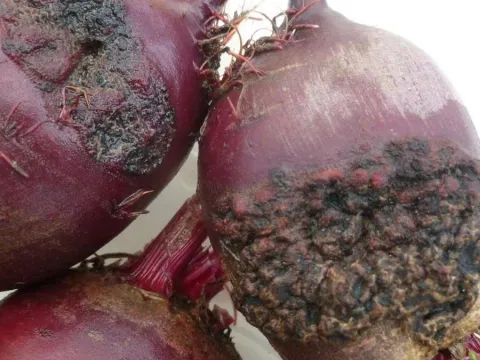
Root damage manifests as a dry rot. This type of damage is particularly severe as it affects the quality of the beet, lowering sugar content and marketability.
The pathogen significantly contributes to post-harvest losses, as infected roots serve as centers of decay that spread rapidly through storage piles (clamps).
Economic losses arise not only from reduced yield but also from the increased cost of sorting and discarding rotten roots during processing.
Spring is the critical period for seedling infection, especially when soil is cold and damp, which slows down plant development and leaves seedlings vulnerable.
During the summer months, the fungus spreads between plants via air-borne or water-borne spores. Frequent rainfall and high humidity are the primary drivers of disease progression.
Autumn infection of the roots often occurs shortly before harvest. The pathogen exploits mechanical damage incurred during lifting, colonization starting rapidly in these areas.
Winter conditions in storage facilities allow for slow but steady mycelial growth. If ventilation is poor and humidity remains high, the disease can spread throughout a storage pile.
The ability of the fungus to survive across the entire growing season makes it a persistent threat that requires season-long vigilance.
Seedlings affected by the pathogen show darkening and thinning of the hypocotyl, leading to the collapse of the plant (damping-off).
On leaves, lesions appear as light-brown, circular spots with concentric rings. Black pycnidia, appearing as tiny pinpoints, are visible within these necrotic areas.
Root lesions are typically dark and depressed. The underlying tissue becomes dry, spongy, and corky, sharply delimited from the healthy tissue surrounding the infection.
Severely affected root crowns may show signs of foliage necrosis, with the youngest leaves at the center of the rosette turning black and dying prematurely.
In humid storage environments, a grayish, fuzzy fungal growth may become visible on the surface of the rotted root tissue.
Using high-quality, fungicide-treated seeds is the most effective way to prevent seedling mortality and establish a healthy plant population.
Crop rotation is essential. By avoiding host crops in the same field for at least 3-4 years, the pressure of soil-borne inoculum is significantly decreased.
- Deep tillage to bury crop residues and accelerate their decomposition.
- Effective weed management to remove alternative hosts and reduce humidity around the crop.
- Balancing fertilization to avoid excessive vegetative growth which can promote fungal spread.
Foliar application of fungicides during the growing season is recommended if weather conditions favor disease spread, specifically to protect the canopy.
Careful harvesting practices to minimize root bruising, coupled with maintaining cool and well-ventilated storage conditions, are vital to preventing rot during storage.