
Beet pseudoyellows
Beet pseudoyellows
Description
How to identify
Beet pseudoyellows is caused by the Beet pseudoyellows virus (BPYV), which is a member of the genus Crinivirus within the Closteroviridae family.
The virus is transmitted by the greenhouse whitefly Trialeurodes vaporariorum in a semi-persistent manner. The whitefly acquires the virus by feeding on infected phloem tissue and can transmit it for several days.
It is distinct from other yellowing viruses in beets, such as the Beet yellows virus, which is aphid-transmitted. This distinction is crucial for effective diagnosis and management.
The virus is restricted to the phloem, meaning it spreads systemically throughout the plant, impacting its overall metabolic functions and structural integrity.
Field identification is often based on symptom patterns, but confirmation via ELISA or RT-PCR is necessary for accurate diagnosis in agricultural monitoring programs.
What it damages
The virus affects sugar beet, table beet, and mangel crops. It also infects several weed species within the Amaranthaceae family, which act as reservoirs for the virus.
Infection leads to reduced photosynthetic efficiency, causing a significant reduction in biomass and, ultimately, lower sugar content in the root crops.
Yield losses can be substantial, especially when infection occurs early in the season, preventing the plants from reaching their full physiological potential.
Quality parameters for sugar extraction are often compromised, leading to economic losses for producers and processors alike due to decreased sugar accumulation.
By compromising the plant's metabolic health, the virus increases susceptibility to other environmental stressors, including drought and opportunistic root rot pathogens.
Signs of infestation
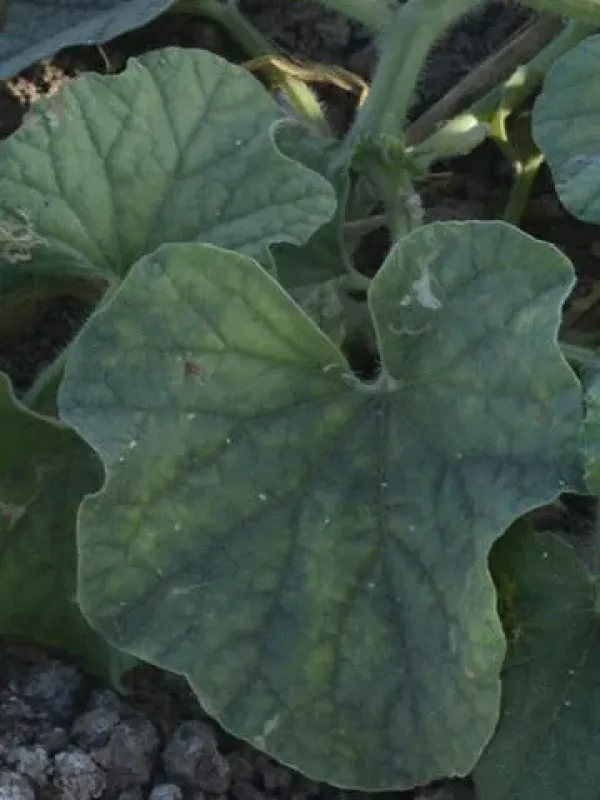
Symptoms appear primarily on older leaves, starting as interveinal chlorosis (yellowing) that progresses towards the leaf margins, while veins remain distinctively green.
The affected leaves become thicker and brittle, often snapping when folded. This structural change is a hallmark of carbohydrate accumulation due to phloem obstruction.
Systemic yellowing across the leaf canopy makes the affected area look distinctively different from healthy, dark green plant tissue in the field.
Stunting of the entire plant is commonly observed, particularly in crops that were infected at early development stages, leading to patchy growth in fields.
Symptoms often manifest more clearly as the season progresses and ambient temperatures rise, favoring the development and movement of whitefly populations.
Control measures
Management focuses on suppressing whitefly populations. Systemic insecticides are effective in reducing the number of vectors that can transmit the virus to healthy plants.
Weed control is essential, as many local weed species serve as year-round hosts for both the whitefly vector and the virus itself, sustaining the infection cycle.
Spatial separation between commercial beet fields and greenhouse facilities is strongly recommended to prevent whitefly migration into the open crops.
Monitoring whitefly activity using sticky traps is a standard practice to predict the potential risk of viral outbreaks and to time insecticide applications appropriately.
- Use of insecticides with systemic action against whitefly.
- Removing weed reservoirs in and around fields.
- Maintaining physical distance from protected cultivation areas.
- Crop rotation to reduce local insect pest pressure.
Causes diseases · 1
Discussion
No discussions yet — be the first.