
Beet mild yellowing virus
Beet mild
Description
How to identify
Beet mild yellowing virus (BMYV) belongs to the genus Polerovirus within the family Solemoviridae. It is a phloem-limited plant pathogen that affects vascular development.
The virus is not mechanically transmitted or seed-borne. It relies exclusively on insect vectors, primarily the green peach aphid Myzus persicae, to infect host plants.
Transmission occurs in a persistent manner, meaning the aphid must feed on an infected plant for a certain period to acquire the virus and then retain it throughout its lifespan.
BMYV has a relatively narrow host range, primarily infecting species within the Amaranthaceae family, including various sugar beet crops and wild weed species acting as reservoirs.
Identification is confirmed through molecular techniques such as RT-PCR or ELISA, which are essential to distinguish BMYV from other similar viruses causing chlorosis in beet crops.
What it damages
The primary economic damage is caused to sugar beet, fodder beet, and red beet crops. The virus impairs the translocation of sucrose from leaves to the taproot, significantly reducing yield.
Infected plants show reduced photosynthetic efficiency, leading to stunted growth and reduced accumulation of dry matter within the root system throughout the growing season.
Viral infection increases the susceptibility of the crop to secondary fungal pathogens, particularly Cercospora beticola, which can lead to premature leaf senescence.
Yield losses vary depending on the timing of infection; early-season outbreaks can result in severe reductions in both root weight and total sugar content at harvest time.
The processing quality of beets is also compromised, as the virus alters the chemical composition of the root, making sugar extraction more difficult for industrial facilities.
Signs of infestation
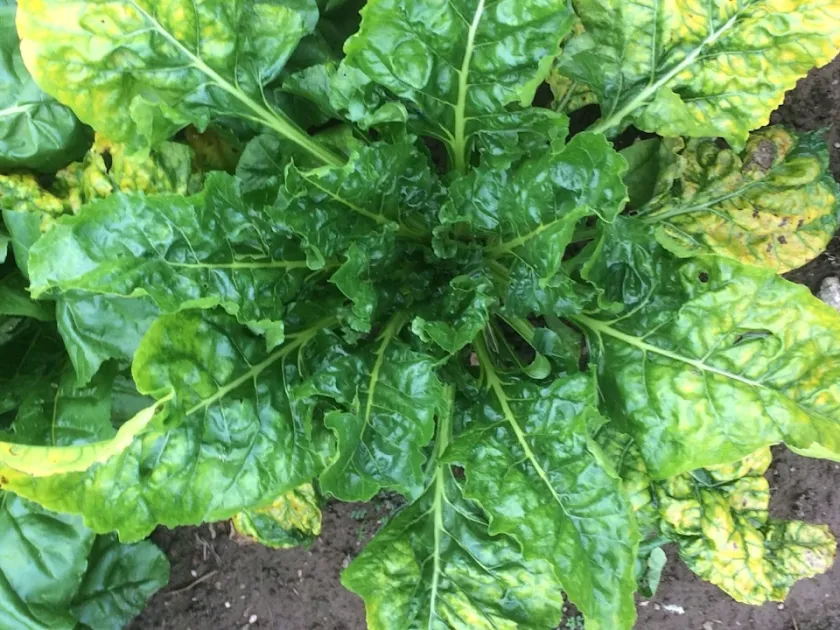
Symptoms typically manifest in mid-summer, starting with the older leaves at the bottom of the plant. A yellowing of the leaf blade occurs, moving from the margins towards the center.
A distinctive feature of BMYV is that the leaf veins remain green, and the leaves do not become brittle, maintaining a soft texture, which distinguishes it from other yellowing-inducing viruses.
Over time, the yellowing symptom spreads to the younger, middle-tier leaves, eventually covering much of the leaf rosette and giving the crop a discolored appearance.
No obvious symptoms are visible on the roots, but the overall growth rate of the plant is significantly inhibited compared to healthy individuals in the same field.
Under heavy viral pressure or mixed infections, the yellowing can be severe, resulting in reduced leaf canopy and an overall sickly appearance of the entire beet field.
Control measures
Effective control strategies focus on reducing the population of aphid vectors in and around the sugar beet fields during the critical early stages of crop development.
Good agricultural practices include the removal of potential weed reservoirs in surrounding areas that host the virus and the aphids during the inter-crop season.
The implementation of spatially isolated planting sites, far from last year's beet fields, significantly lowers the risk of primary viral infection via migrating aphids.
Breeding and utilizing genetically resistant or tolerant sugar beet varieties is the most sustainable and efficient approach to mitigate losses caused by BMYV.
- Monitor aphid migration using yellow sticky traps.
- Apply systemic insecticides during high aphid activity.
- Ensure spatial separation from older beet plantings.
- Control weeds in and near the field to reduce virus reservoirs.
Causes diseases · 1
Discussion
No discussions yet — be the first.