
Beet soilborne virus
Beet soilborne
Description
How to identify
Beet soilborne virus (BSBV) is a plant virus belonging to the genus Pomovirus, within the family Virgaviridae. It is a soil-transmitted virus that relies on the plasmodiophorid Polymyxa betae to infect its host plants.
The virus consists of rod-shaped particles. These particles are characterized by high stability, as they are protected inside the resting spores (cystosori) of the vector, allowing the virus to persist in the soil for over a decade even in the absence of a host crop.
Field identification is difficult due to the similarity of symptoms to other viral diseases, such as Beet necrotic yellow vein virus (BNYVV). Laboratory confirmation via ELISA or RT-PCR is essential for accurate disease diagnosis and farm management planning.
BSBV often occurs in mixed infections with other soilborne viruses. These complexes can significantly exacerbate the damage to the host plant, resulting in a more severe reduction in physiological health and agricultural yields.
The transmission process begins when soil moisture triggers the release of P. betae zoospores. These zoospores enter the root hairs of the beet plant, simultaneously inoculating the plant with the virus, which then moves systematically through the vascular tissues.
What it damages
The primary host for BSBV is sugar beet, although forage and table beet varieties are also susceptible. The infection causes significant disruption to root and shoot development, leading to lower crop productivity.
The infection leads to reduced root weight, diminished sugar content, and lower technical quality for processing. In cases of early infection, plant stands may become thin due to the stunted growth or death of young seedlings.
The economic impact is primarily driven by the reduction in sugar yield. Infected plants are also more susceptible to environmental stresses such as drought, and have a reduced ability to recover from other soil-borne pathogens or pests.
Yield losses vary depending on soil infestation levels and environmental conditions, ranging from 5% to 30%. In severe cases, the fields may become economically unviable for sugar beet production unless resistant varieties are used.
Nutrient uptake is impaired because the infected root system cannot efficiently extract essential minerals. This results in poor fertilizer utilization efficiency throughout the entire growing season.
When it appears
The most critical period for infection is the early growth stage, from seedling emergence through the four-to-six leaf stage. Optimal soil temperatures between 15–20°C and sufficient moisture are primary drivers for vector activity and virus transmission.
Since the virus is soilborne and carried by persistent spores, it remains a threat for years after initial contamination. Crop rotation alone is often insufficient to eliminate the pathogen from an infested field.
Heavy rainfall or excessive irrigation provides the necessary conditions for the mass release of vector zoospores into the soil water. This period represents the highest risk of spreading the virus within a field or between adjacent plots.
While visible symptoms may fade or become less distinct toward the end of the season, the virus continues to multiply within the host tissue, and the soil reservoir of P. betae continues to be replenished.
In regions with mild winters, the biological cycle of the virus can proceed year-round if weed hosts from the Amaranthaceae family are present, ensuring the continuous survival of the vector population.
Signs of infestation
Early signs of BSBV infection include chlorotic spots on the leaves, which often appear as rings or arc-shaped patterns. As the disease progresses, interveinal chlorosis becomes more pronounced across the leaf surface.
Yellowing of the leaf veins is a common diagnostic indicator. The areas near the veins become discolored, while the leaf margins may remain green for a longer period compared to the central parts of the lamina.
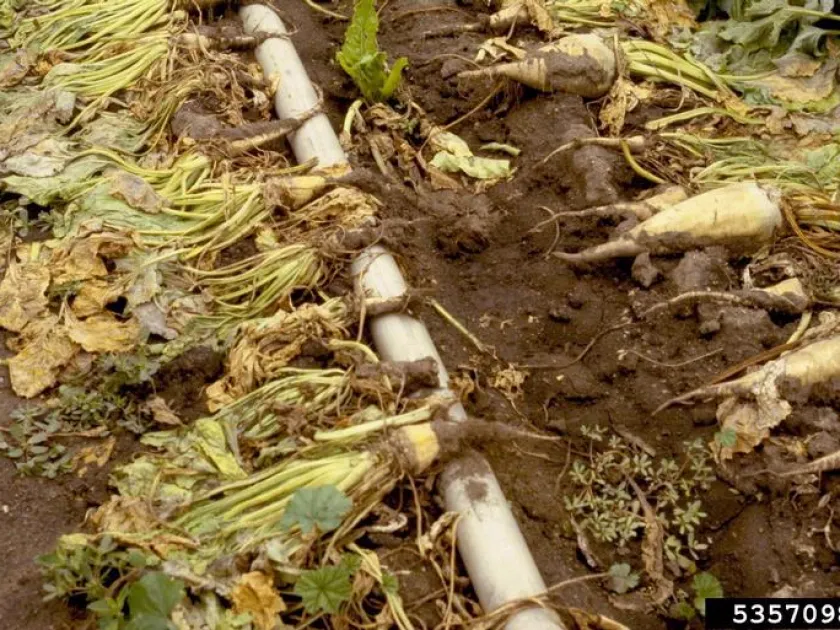
Below the surface, infected roots may exhibit symptoms such as proliferation of lateral roots (frequently described as a "bearded" appearance), alongside necrotic lesions on the fine root structures.
- Chlorotic spots and rings on the foliage.
- Interveinal chlorosis and yellowing of the veins.
- Overall stunting of plant growth.
- Root deformities and reduction in taproot size.
- Significant decrease in the quality of the raw sugar beet product.
Symptoms in the field are usually observed in patches, reflecting the distribution of the vector in the soil. These patches often align with areas that retain moisture longer or have a history of intensive cropping.
Control measures
The most effective strategy for managing BSBV is the use of resistant or tolerant sugar beet hybrids. Breeding efforts have successfully created cultivars that significantly suppress symptom development and yield loss.
Proper crop rotation is necessary to manage pathogen pressure. A break of 4–5 years between sugar beet crops helps to prevent the rapid buildup of Polymyxa betae populations in the soil.
Good agricultural practices are vital, including effective weed management to remove potential alternate hosts. Improving field drainage is also recommended to reduce the moisture levels required for vector swimming and infection.
Hygiene measures, such as cleaning agricultural machinery when moving from infested fields to clean ones, are critical to preventing the spread of infected soil and resting spores to new areas.
Chemical control of the soil-borne vector is not commercially viable due to cost and environmental concerns. Consequently, an integrated approach focusing on genetic resistance and field hygiene remains the standard for crop protection.
Discussion
No discussions yet — be the first.