
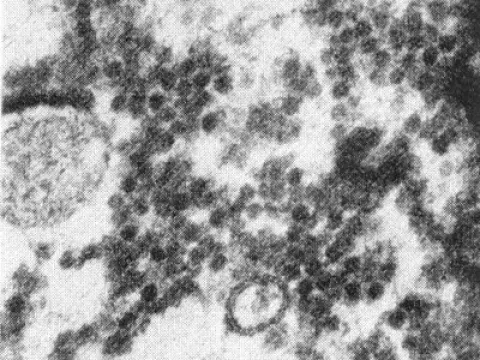
Beet western yellows virus
Beet western
Beet western yellows virus (BWYV) is a plant virus belonging to the genus Polerovirus within the family Solemoviridae. It is a phloem-limited virus that causes significant losses in various agricultural crops worldwide.
What the section contains
Beet western yellows virus
The virus is transmitted in a persistent, non-propagative manner by aphids, most notably the green peach aphid, Myzus persicae. It cannot be transmitted through mechanical inoculation or seeds.
Once an aphid acquires the virus from an infected plant, it remains viruliferous for the rest of its life. This efficiency in transmission makes it a highly destructive pathogen in regions with large aphid populations.
The virus particles are isometric, approximately 25–30 nm in diameter. Their survival outside the vector is limited, making the presence of the insect vector the primary factor for the disease cycle.
The pathogen is known for its wide host range, which complicates disease management strategies, as many weed species act as year-round reservoirs for the virus.
BWYV affects a wide array of economic crops including sugar beets, fodder beets, lettuce, spinach, radish, and various brassica species like oilseed rape. It is a major limiting factor in sugar beet production.
The virus interferes with the phloem transport system, preventing the movement of photosynthates from the leaves to the taproots. This physiological disruption leads to reduced root weight and lower sugar content.
Plants infected early in the season suffer the most damage, often exhibiting severe stunting and restricted growth. The yield reduction can range from 10% to over 50% in severe epidemic years.
Quality parameters of the harvested crops are also negatively impacted. In sugar beets, the reduction in sugar accumulation directly affects the profitability of the processing industry.
The disease can cause irregular crop maturity, making harvesting difficult and leading to further losses due to decreased uniformity across the field.
The hallmark symptoms include interveinal chlorosis, which usually starts at the margins of older leaves and progresses inwards. Unlike nutrient deficiencies, the veins typically remain green.
Leaves become thickened, leathery, and often curl downwards as the disease progresses. In advanced stages, the foliage may develop necrotic lesions, leading to premature senescence and leaf death.
Infected sugar beet plants may show a proliferation of younger leaves in the center, creating a bushy appearance. This often happens as the plant attempts to compensate for the loss of older photosynthetic tissue.
Symptoms are often more pronounced under drought conditions or periods of high plant stress. In large fields, infection often appears in clusters, reflecting the initial colonization patterns of aphid vectors.
- Interveinal yellowing of older leaves
- Retention of green veins
- Leaf brittleness and downward curling
- Stunted plant growth
- Significant reduction in root size and sugar content
Managing the aphid vector is the most effective way to control the virus. Systematic application of insecticides during the early growth stages is crucial to prevent the initial spread of the virus.
Cultural practices, such as the control of weed reservoirs, are essential. Removing wild hosts and managing volunteer plants significantly reduces the virus pool within the agricultural landscape.
Spatial isolation between vulnerable crops, such as sugar beets and oilseed rape, helps mitigate the risk of cross-infection by aphids migrating from one crop to another.
Planting resistant or tolerant cultivars is a long-term solution. Many breeding programs focus on developing sugar beet varieties that can withstand virus pressure without drastic yield losses.
Monitoring aphid activity using yellow sticky traps or field scouting allows for timely and targeted intervention, minimizing the need for unnecessary pesticide use.