
Beet rust
Uromyces betae
Description
How to identify
Beet rust is caused by the fungus Uromyces betae, an obligate biotroph belonging to the Basidiomycota phylum. This pathogen requires living host tissue to complete its complex life cycle, which includes several spore stages.
The fungus is classified within the order Pucciniales. It is known for its ability to produce urediniospores, which allow for rapid secondary infections throughout the growing season, and teliospores, which facilitate survival during winter.
The primary inoculum consists of spores overwintering on crop debris or infected mother beets stored in cellars. In mild climates, the fungus may persist on winter-grown beets or wild species of the Amaranthaceae family.
Dissemination is primarily through airborne dispersal. Urediniospores are light and can be carried by wind currents over long distances, leading to widespread infection within a region under favorable conditions.
Environmental conditions play a crucial role in disease establishment. High relative humidity and temperatures ranging from 15°C to 22°C are optimal for spore germination and mycelial penetration into the beet leaves.
What it damages
Beet rust affects sugar, fodder, and table beets. The primary impact is on the foliage, which is essential for sugar synthesis and storage in the taproot.
Heavy infection causes premature yellowing and necrosis of the leaves. This reduction in photosynthetic area significantly limits the plant's ability to store carbohydrates, directly reducing root yield.
The damage is twofold: a reduction in total root weight and a decline in sucrose percentage. Affected crops often show poor technological quality, complicating the extraction process in sugar refineries.
Compromised leaf health makes the crop more susceptible to secondary pathogens. Often, beet rust occurs alongside other leaf spot diseases, creating a cumulative stress effect on the plant.
In seed production, the pathogen can infect seeds, leading to reduced germination rates. This makes phytosanitary control during the vegetative stage critical for seed quality maintenance.
Signs of infestation
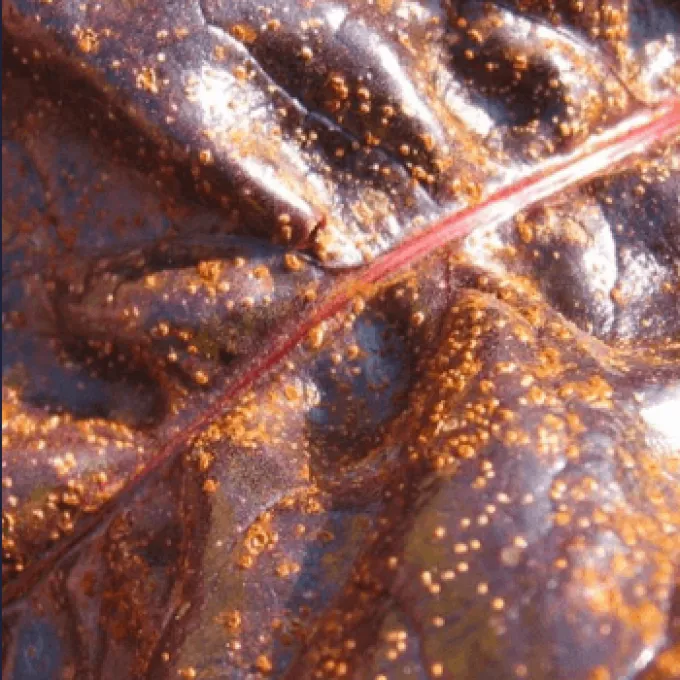
Early symptoms appear as small, pale yellow spots on both sides of the leaf. As the fungus develops, these spots transform into small, raised pustules (uredinia) that break through the leaf epidermis.
During the peak of the growing season, these pustules release a rusty-brown powder, which consists of millions of urediniospores. This gives the leaf a characteristic dusty appearance.
Towards the end of the season, the color of the pustules shifts to dark brown or black as teliospores are formed. This signifies the preparation of the fungus for the dormant winter phase.
- Circular yellow-to-orange leaf spots.
- Visible rust-colored powdery deposits.
- Premature senescence of the lower foliage.
- Leaf curling and deformation in severe cases.
- Stunting of the overall plant development.
While often starting on older, lower leaves, the infection can rapidly move upward under favorable weather, eventually covering the entire canopy of the beet field.
Control measures
A sound crop rotation strategy is the foundation of management. Avoiding sugar beets on the same ground for at least three years helps deplete the soil-borne inoculum.
Sanitation practices, such as the deep burial of crop residues, are essential to break the survival cycle of the pathogen. Removing wild beet species from field margins also reduces the infection source.
Balanced fertilization, particularly adequate potassium supply, increases host tissue resistance. Conversely, excessive nitrogen should be avoided as it creates succulent growth susceptible to fungal penetration.
When the economic threshold of infection is reached, the application of systemic fungicides, such as triazoles or strobilurins, is recommended. Rotational use of fungicides helps prevent the development of resistant fungal strains.
Selecting and planting resistant beet hybrids is the most sustainable management tool. Breeding programs continue to prioritize resistance to leaf rust to ensure stable yields in endemic areas.
Causes diseases · 1
Discussion
No discussions yet — be the first.