
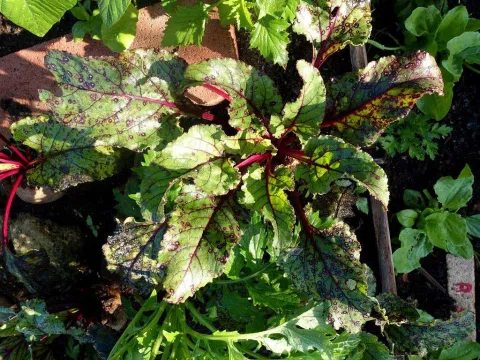
Beet leaf spot
Cercospora beticola
The causative agent of beet leaf spot is the fungus Cercospora beticola, a member of the Deuteromycetes class. It is a highly destructive phytopathogen that survives primarily as a saprophyte on plant debris.
What the section contains
Beet leaf spot
The fungus develops mycelium within the leaf tissues, eventually emerging through the stomata in fascicles (bundles) to produce conidia. These spores are then dispersed by wind, rain splashes, and insects.
The pathogen overwinters as mycelium in infected plant debris left in the field, as well as on infested seeds. When weather conditions improve in late spring, the fungus resumes its cycle.
Infection is highly dependent on environmental conditions, specifically high humidity and temperatures ranging between 20°C and 30°C. Once established, the fungus can complete its life cycle in 7 to 15 days.
Frequent rain events or heavy dew periods create ideal conditions for the rapid spread of spores throughout the sugar beet canopy, often leading to severe disease outbreaks in mid-to-late summer.
Cercospora leaf spot affects all types of beet crops, causing significant yield losses. The primary impact is the destruction of the leaf surface area, which is vital for the plant's photosynthetic process.
As the foliage dies, the plant experiences a significant reduction in sucrose accumulation. This leads to smaller, lower-quality roots, which are less profitable for processing facilities.
In cases of severe infection, plants are forced to utilize their energy reserves to regenerate leaves, further exhausting the taproot. This metabolic strain severely stunts the overall growth of the beet.
The disease also affects the post-harvest storage quality of the roots. Infected beets, having lower nutritional reserves, become more susceptible to storage rots when placed in commercial piles.
Economic losses arise not only from reduced tonnage but also from lower sugar percentages and difficulties in factory refining, caused by impurities that accumulate in diseased tissue.
The symptoms initially appear as small, circular spots on older leaves, usually measuring 2 to 5 mm in diameter. These spots are typically gray to tan in color with a distinctive reddish-purple border.
Under humid conditions, the center of the spot displays a velvety, grayish appearance, which consists of masses of conidia. In dry conditions, the spots may appear distinct and brittle.
As the infection progresses, the spots coalesce and cover large areas of the leaf blade. Eventually, the entire leaf turns yellow, curls at the edges, and prematurely dies.
On severely infested fields, the foliage turns black and collapses, creating a characteristic "burned" appearance. The plant may exhibit a "tufted" look as it tries to grow new leaves from the crown.
Regular field scouting is essential to catch these symptoms early. If left untreated, the pathogen can quickly overwhelm an entire field, resulting in almost total defoliation.
Integrated Pest Management (IPM) is crucial. A mandatory rotation of 3 to 4 years away from beets helps reduce the primary inoculum load in the soil. Deep plowing helps bury infected leaf litter.
Selecting tolerant or resistant varieties is the most effective long-term strategy for managing Cercospora leaf spot. This reduces the dependency on chemical fungicides and provides a baseline of protection.
Fungicide application is the primary method of intervention. Growers should apply products at the first signs of the disease, ensuring complete coverage of the canopy for maximum efficacy.
- Use weather-based models to time fungicide applications precisely.
- Control alternative hosts and weeds in the Chenopodiaceae family.
- Rotate fungicide classes to minimize the risk of fungicide resistance development.
Effective control requires consistent monitoring. If the disease reaches the economic threshold, multiple fungicide applications may be necessary throughout the growing season to maintain healthy foliage.