
Beet soil-borne virus
Beet soil-borne
The Beet soil-borne virus (BSBV) is a plant pathogen classified within the Benyvirus genus. It is structurally similar to other soil-borne viruses and relies entirely on a specific vector for transmission.
What the section contains
Beet soil-borne virus
The virus particles are rod-shaped and consist of multiple RNA strands. It is categorized as an obligate soil-borne pathogen, meaning it cannot survive long-term outside its host or vector.
The primary vector for BSBV is the soil-dwelling organism Polymyxa betae, which is a plasmodiophorid protist. The virus resides in the resting spores of this protist.
Once the resting spores of the protist are present in the soil, they can act as a permanent reservoir for the virus, remaining infective for many years regardless of crop rotation.
The virus is exclusively transmitted through the soil via the motile zoospores of Polymyxa betae, which navigate in water films to infect the plant's root hairs.
BSBV primarily targets sugar beets and table beets. The infection impacts the root system, causing significant physiological stress that hinders nutrient and water uptake.
Economic damage is characterized by a reduction in total root yield and a measurable decrease in sucrose content, which directly impacts sugar processing efficiency.
Secondary damage often occurs as the infected roots become more susceptible to soil-borne fungal pathogens, leading to late-season rot or post-harvest storage losses.
The overall crop quality is reduced, and fields often show patchy growth, leading to inconsistent plant stands that complicate harvesting and field management.
The virus systemically colonizes the plant, meaning it moves throughout the vascular system, ensuring that once a plant is infected, the entire organism is compromised.
Infection typically initiates in early spring when soil temperatures reach the threshold required for Polymyxa betae zoospore activity, usually around +10°C.
High soil moisture is the primary driver of disease spread, as zoospores require water-saturated soil conditions to swim and reach the host roots effectively.
Symptoms are most frequently observed during the early growth stages of the sugar beet plant, often becoming visible in late spring or early summer.
During hot and dry mid-summer months, the visual symptoms may temporarily fade as the metabolic activity of the vector and the virus in the roots slows down.
As the season ends and the crop is harvested, the virus enters a state of dormancy within the spores left in the soil, enduring the winter conditions until the next cycle.
The hallmark symptom of BSBV infection is the appearance of yellowing leaf veins, which often manifest as intricate zigzag patterns or bright yellow spots on young foliage.
Infected plants often show signs of stunting and reduced leaf expansion, which can be mistaken for nitrogen or magnesium deficiency during routine field assessments.
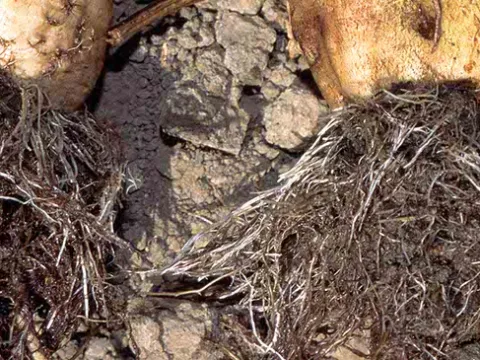
Root systems may exhibit abnormal branching, a condition known as "rhizomania-like" root proliferation, although this is more characteristic of severe combined infections.
- Yellowing of leaf veins (veinal necrosis or chlorosis).
- General stunting of the plant height and canopy size.
- Reduced root weight and lower sugar content.
- Leaf chlorosis observed in the early growing season.
Diagnosis is challenging because the virus often occurs in mixed infections with other pathogens, requiring molecular testing for accurate identification.
Implementing a strict crop rotation schedule, avoiding sugar beets for at least 4-5 years, is essential to reduce the viable spore population of the vector in the soil.
Selecting and planting genetically resistant or tolerant sugar beet varieties is currently the most effective strategy for managing BSBV in highly infested areas.
Improving soil drainage and soil structure helps mitigate the conditions that favor the movement of Polymyxa betae zoospores, thereby limiting new infections.
Sanitation of farm machinery is crucial; cleaning equipment after use in infected fields prevents the transfer of spore-laden soil to healthy, uninfested agricultural lands.
Integrated pest management strategies focusing on reducing the presence of weed hosts, such as various Amaranthaceae species, can further suppress the viral reservoir.