
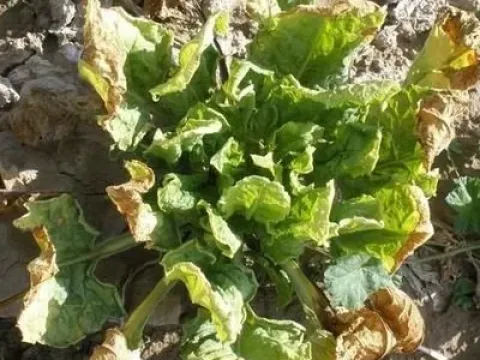
Beet mosaic
Beet mosaic
The causative agent of the disease is the Beet mosaic virus (BtMV), which is a member of the genus Potyvirus in the family Potyviridae. It is a single-stranded RNA plant virus that infects a wide range of host plants.
What the section contains
Beet mosaic
The virus is transmitted in a non-persistent, non-circulative manner by various aphid species, with the green peach aphid Myzus persicae being the most important vector in agricultural systems.
BtMV does not persist in the soil or in seeds. Instead, it overwinters in infected beet stecklings, biennial crops, or perennial weeds that serve as reservoirs for the virus until the next growing season.
Transmission occurs very rapidly: an aphid acquires the virus during brief probes into the epidermis of an infected plant and immediately transmits it to healthy tissue. The virus remains active in the aphid's mouthparts for only a short period.
Modern diagnostics include Enzyme-Linked Immunosorbent Assay (ELISA) and reverse transcription-polymerase chain reaction (RT-PCR) to distinguish this pathogen from other viral and non-viral disorders affecting beet crops.
The virus primarily affects sugar beet, table beet, and fodder beet. It also has a host range that includes spinach and various weeds in the family Amaranthaceae, which can sustain the virus in the field.
Infection leads to systemic disease, where the virus moves through the phloem to all plant parts, interfering with key physiological processes such as photosynthesis and nutrient translocation.
In sugar beet production, the disease results in a significant reduction in root yield and a decrease in sugar content (sucrose percentage). This represents a major economic loss for growers and processing plants.
In seed crops, BtMV causes flower stalk malformation and reduced seed viability. This can lead to decreased vigor in subsequent generations, emphasizing the need for healthy planting material.
The severity of damage is heavily influenced by the timing of the initial infection; earlier infections in the season result in more pronounced stunting and lower overall crop quality.
Disease development typically begins in the spring and early summer, coinciding with the migration of winged aphids into beet fields. This is the primary period for initial spread.
Environmental conditions, particularly warm and dry weather, accelerate aphid population growth, which in turn leads to rapid transmission of the virus across the crop canopy.
The spread of the virus within a field often occurs in patterns or patches, reflecting the activity and movement of the aphid vectors. Over time, these patches can coalesce into widespread infection.
As the season progresses toward autumn, aphid activity declines, but the virus remains established in the beet plants, effectively using them as a bridge to survive until the following season.
Proximity to overwintering sites, such as old beet fields or uncultivated land with host weeds, significantly increases the likelihood of early-season outbreaks and severe field-wide infection.
The most characteristic symptom of Beet mosaic is the development of light and dark green mosaic patterns on the foliage. These are often most visible on the younger, developing leaves.
Vein clearing, where the small veins of the leaf appear translucent or yellowish, is frequently an early diagnostic indicator before the full mosaic pattern becomes apparent.
Leaf deformation is common in infected plants; leaves may appear crinkled, wavy along the margins, or even narrow and elongated, which reduces the effective leaf surface area.
The overall growth of infected plants is typically stunted compared to healthy counterparts. This lack of vigor is often uniform across infected segments of the field.
- Mosaic mottling on leaves;
- Translucent vein clearing;
- Leaf distortion and curling;
- General plant stunting and reduced biomass.
Management focuses primarily on controlling the aphid vectors. Systemic insecticides can be used to reduce aphid populations, although they must be applied according to local regulations and migration monitoring.
Spatial isolation is a critical cultural practice. Keeping first-year sugar beet fields physically separated from second-year seed-producing crops helps prevent the influx of the virus from mature plants.
Sanitation is vital; managing weeds, especially those in the family Amaranthaceae, within and around the field edge eliminates secondary hosts and reduces the environmental reservoir of the virus.
Optimal planting dates can help ensure that young, vulnerable plants develop enough strength to withstand aphid attacks, potentially reducing the impact of early-season infection.
While resistant cultivars are the gold standard for disease control, they are not always available for every region; therefore, integrated management combining chemical control and sanitation remains the most reliable approach.