
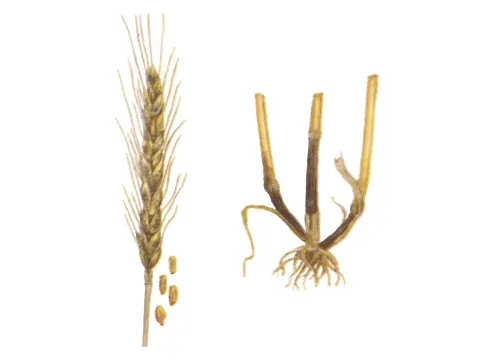
Gaeumannomyces graminis
Gaeumannomyces graminis
Gaeumannomyces graminis is an ascomycete fungus and the causative agent of the infamous "take-all" disease in cereals. It belongs to the kingdom Fungi and is recognized as one of the most destructive soil-borne pathogens in agriculture worldwide.
What the section contains
Gaeumannomyces graminis
The fungus develops its mycelium within the root system and stem bases of host plants. During its lifecycle, it produces perithecia, which are small black fruiting bodies containing spores that are dispersed to infect new host plants.
The pathogen survives in the soil and on crop residues for several years. Its ability to remain dormant makes it highly persistent, especially in fields where cereals are grown in short rotations without sufficient intervals.
It thrives in moist soil conditions, particularly in areas with neutral or slightly alkaline pH levels. The infection cycle often begins when the mycelium from infested crop debris comes into contact with the roots of susceptible young seedlings.
Spread is mainly facilitated by the movement of infested soil particles during cultivation and the interconnected growth of mycelium through the root zone of dense cereal crops.
Gaeumannomyces graminis primarily targets wheat, barley, rye, and oats. Many wild grass species also act as alternative hosts, harboring the fungus and contributing to its widespread presence in agricultural landscapes.
The damage caused by this pathogen is centered on the roots and the base of the stem. By destroying the root system and blocking vascular tissues, the fungus prevents the plant from absorbing essential water and nutrients.
Infected crops often exhibit severe stunting and reduced tiller development. The inability of the plant to maintain its nutritional needs leads to premature wilting and, in extreme cases, total crop failure before the grain-filling stage.
Economic losses can be substantial, often exceeding 30-50% in highly infested fields. Beyond yield quantity, the grain produced is typically poor in quality, light in weight, and unsuitable for market standards.
The pathogen creates patches of diseased plants that tend to expand over time if the crop rotation remains dominated by susceptible cereal species.
A diagnostic sign of take-all disease is the characteristic blackening of the roots, which become brittle and easily detach from the plant. This is due to the dense growth of the dark fungal mycelium on the root surface.
The most visible symptom at the end of the season is "whiteheads"—plants that ripen prematurely and appear bleached. These ears are usually empty or contain only shriveled, stunted grains, standing out starkly in the field.
A black, velvet-like fungal mat is often present at the base of the stems. If the stem is cut open, internal tissue browning can be observed, indicating that the fungus has successfully invaded the plant’s vascular system.
Diseased patches appear as irregular areas of stunted or dead plants. These areas often appear to be "thinned out" due to the high mortality of seedlings or young plants during the early vegetative stages.
- Blackening and rotting of the secondary root system.
- Premature bleaching of ears (whiteheads).
- Presence of a dark mycelial mat on the stem base.
- Significant stunting and uneven crop development.
Crop rotation is the most effective cultural control method. By alternating wheat or barley with non-host crops like canola, legumes, or mustard, the inoculum levels in the soil can be significantly reduced.
Proper soil management is essential, including deep plowing to bury crop residues, which helps speed up the decomposition process and eliminates the food source for the pathogen.
Seed treatment with high-quality fungicides is necessary to provide early-season protection to the emerging root system, effectively limiting initial infection by the soil-borne mycelium.
Controlling grassy weeds in and around the field is crucial, as they serve as reservoirs for the fungus, allowing it to survive and propagate even during periods when the main crop is absent.
Optimizing fertility and soil pH levels can improve overall plant vigor, making the crop more resilient against the stress caused by root pathogens. Biological control agents, such as Trichoderma species, are also being studied for integrated pest management.