
Ganoderma zonatum
Ganodermazonatum
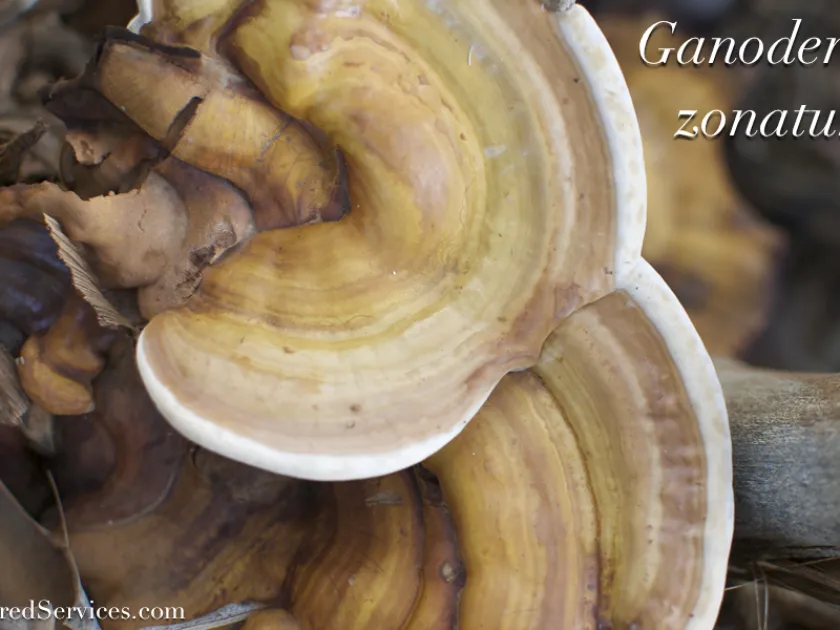
Description
How to identify
Ganoderma zonatum is a wood-decay fungus belonging to the kingdom Fungi. It is widely recognized as a serious phytopathogen that causes root and butt rot in various tree species, particularly in warmer climates.
The fungus is characterized by the production of woody, perennial fruiting bodies, often called brackets or conks. These structures are typically found at the base of the trunk or on the exposed roots of the host plant.
The fungus functions as a white-rot pathogen, which means it decomposes both lignin and cellulose in wood. This process leads to the degradation of the internal structure of the tree, rendering it structurally unstable over time.
Biologically, Ganoderma zonatum is well-adapted to surviving as a saprotroph on stumps and dead roots, which serves as a reservoir for infection in plantations and landscapes. Spore dispersal is primarily mediated by wind, allowing for significant geographic spread.
Understanding the life cycle of this fungus is crucial for arborists and foresters, as early detection is rare due to the internal nature of the wood decay process.
What it damages
The primary hosts for Ganoderma zonatum include various palm species, as well as several hardwood trees. The pathogen aggressively targets the root system, severely impeding the tree's ability to uptake water and nutrients.
Structural damage is a major consequence of infection. As the fungus consumes the lignin, the wood loses its tensile strength, which often leads to the sudden collapse of the tree during high-wind events, posing a significant safety risk.
In ornamental and agricultural settings, the decline of the tree is often progressive. Foliage may become chlorotic, thin, and sparse, while branch dieback starts from the periphery and moves toward the center of the crown.
Economic losses in nurseries and plantations are substantial, as the pathogen can persist in the soil for years, making replanting of the same or susceptible species highly risky without prior soil treatment.
The cumulative damage often results in the premature death of the host, as the destruction of the cambium and conductive tissues prevents the tree from performing essential physiological functions.
When it appears
Ganoderma zonatum remains active throughout the growing season, with its development heavily influenced by humidity and soil temperature. Optimal conditions for fungal growth typically occur in moist, temperate to tropical environments.
Fruiting body production is most prolific during the late summer and autumn months, coinciding with increased rainfall. These conditions favor the maturation and release of spores, which are then disseminated throughout the environment.
During the winter, the fungus persists as mycelium within the infected woody tissues. It does not require a dormant period and can continue to decay wood whenever temperatures are above the freezing point of the plant tissue.
Spore dissemination can occur throughout the year, but wet weather significantly increases the rate of release. Raindrops splashing onto the fruiting bodies help to dislodge spores, promoting their local spread to adjacent host trees.
The persistence of the pathogen in the soil and woody debris means that the infection cycle is continuous. There is no specific "off-season" for the pathogen, as the internal decay process continues as long as the host material is available.
Signs of infestation
The most visible sign of infection is the emergence of bracket-shaped fruiting bodies at the base of the tree. These can be singular or clustered, often displaying distinct concentric zones of color, ranging from tan to dark brown.
Progressive crown thinning and yellowing of the leaves are characteristic symptoms. This indicates that the root system is no longer capable of supplying sufficient resources to the upper canopy, leading to general plant decline.
When investigating the trunk, the wood may exhibit signs of white rot, appearing bleached, fibrous, and spongy. In advanced stages of decay, internal voids may develop, filled with white fungal mycelia.
Bark cracking or the presence of lesions near the soil line may indicate that the fungus has breached the tree's defensive barriers. In some cases, localized weeping or sap exudation can be observed around the points of infection.
- Hard, zoned fruiting bodies at the base of the trunk.
- Premature leaf yellowing and crown thinning.
- Dieback of terminal branches and limbs.
- Internal wood decay characterized by white, stringy rot.
- Decreased tree stability during high winds.
Control measures
Effective management begins with strict sanitation practices. Infected trees should be removed, including as much of the root system as possible, to eliminate the primary inoculum source from the site.
Preventative measures focus on avoiding mechanical damage to tree trunks and roots during landscaping or farming activities. Proper wound care using antiseptic sealants can help protect trees from opportunistic infections.
Promoting tree health through appropriate irrigation and nutrient management is key to enhancing the tree's natural defense systems. A well-nourished tree is better equipped to compartmentalize early infections.
While chemical fungicides may have limited efficacy in stopping established internal decay, they can be used to treat surrounding soil or prevent new infections in high-value trees if applied preventatively.
The use of biological control agents, such as beneficial fungi (e.g., Trichoderma spp.), can provide an ecological barrier against the colonization of roots by Ganoderma, offering a sustainable alternative for long-term protection.
Causes diseases · 1
Discussion
No discussions yet — be the first.