
Fusarium virguliforme
Fusarium virguliforme
Fusarium virguliforme is a soil-borne fungal pathogen classified within the Ascomycota phylum. It is specifically recognized as the primary agent of Sudden Death Syndrome (SDS) in soybean crops, causing significant yield losses globally.
What the section contains
Fusarium virguliforme
The life cycle of this pathogen involves the production of microconidia and macroconidia, which facilitate its spread within the soil profile. The fungus also produces thick-walled chlamydospores, allowing it to survive for extended periods in the absence of a host.
The fungus infects the roots of the soybean plant, colonizing the vascular tissues. It acts by producing systemic toxins that are translocated to the foliage, which are responsible for the characteristic leaf symptoms observed in affected plants.
Laboratory identification of F. virguliforme is complex due to the morphological similarities it shares with other Fusarium species. Precise diagnostics often require molecular methods, such as PCR, or specialized selective media.
The pathogen is primarily spread through the movement of contaminated soil, irrigation water, and the movement of agricultural equipment across different fields. Plant residues left in the field post-harvest serve as a reservoir for the fungus.
The primary host plant for this pathogen is soybean (Glycine max). While there have been reports of infection on other legumes, soybean remains the only crop where the impact of the disease reaches epidemic proportions.
The infection begins with root rot, which destroys the plant's ability to uptake water and nutrients. This damage leads to severe moisture stress, especially during the reproductive phases of plant growth.
Beyond the roots, the systemic toxins produced by the fungus destroy the chloroplasts in the leaves. This causes rapid chlorosis and necrosis, effectively halting the plant's photosynthetic production and drastically reducing yield.
The economic impact of F. virguliforme is substantial. In environments favorable to the fungus, yield losses can range from 30% to 80%, depending on the timing of the infection and the environmental conditions.
In addition to volume reduction, the quality of the harvested seeds is compromised. Factors such as lower protein and oil content further decrease the market value of the crop in affected fields.
Infection typically initiates early in the season, soon after planting, when soil temperatures are cool and moisture levels are high. These conditions are optimal for the germination of spores and the subsequent colonization of root tissues.
While infection begins early, symptoms often remain dormant until the reproductive stages. The disease typically peaks during flowering and pod development, as these phases place high metabolic demands on the root system.
Environmental conditions play a critical role in the severity of the disease. High soil moisture during the summer months acts as the primary trigger for the systemic expression of SDS symptoms on the soybean foliage.
As the season nears its end, the fungus shifts its reproductive strategy to produce chlamydospores. These resting spores remain in the soil debris, serving as the inoculum source for the following growing seasons.
Extended dry spells during the summer can suppress the progression of symptoms on the plant foliage, but they do not eliminate the fungus from the root zone, where it waits for moisture levels to rise again.
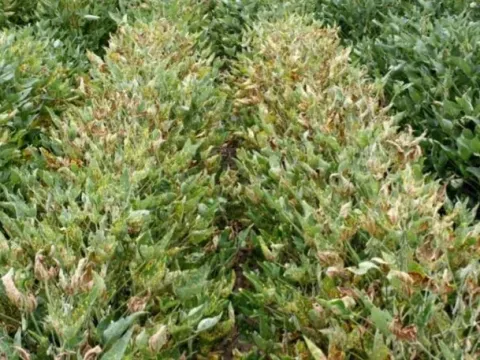
The first foliar signs appear as yellow patches between the leaf veins (interveinal chlorosis). Over time, these patches turn necrotic, creating a scorched appearance while the primary veins remain green.
Root system examination reveals distinct symptoms: the taproot and lateral roots show dark, brown discoloration and decay. The outer cortical tissue of the roots easily sloughs off, which is a key diagnostic feature.
In humid conditions, a light blue or white mold can sometimes be seen on the taproot surface, representing the sporodochia of the fungus. This is a clear indicator of active colonization.
Severe infections lead to the premature shedding of leaves. Interestingly, the leaf petioles often remain attached to the stem, a symptom that distinguishes this disease from others like stem canker.
- Interveinal chlorosis on leaves;
- Brown root rot with cortical decay;
- Premature leaf drop with persistent petioles;
- Stunted plant height and reduced pod set;
- Presence of blue-tinted sporodochia on roots.
Managing F. virguliforme requires an integrated pest management approach. The most effective strategy is the selection of soybean varieties with documented genetic resistance to Sudden Death Syndrome.
Crop rotation is a vital management practice. Extending the rotation cycle to include non-host crops for at least three to four years helps to reduce the primary inoculum load within the soil.
Soil management, particularly improving field drainage, is essential. Reducing soil compaction and standing water significantly decreases the risk of rapid disease spread across the field.
Seed treatments with broad-spectrum fungicides can provide a degree of protection during the critical early stages of germination, helping to establish a healthy stand despite the presence of the pathogen.
Finally, field sanitation is crucial. Cleaning equipment thoroughly before moving between fields is a simple but highly effective measure to prevent the mechanical transfer of contaminated soil.