
Fusicladium
Fusicladium
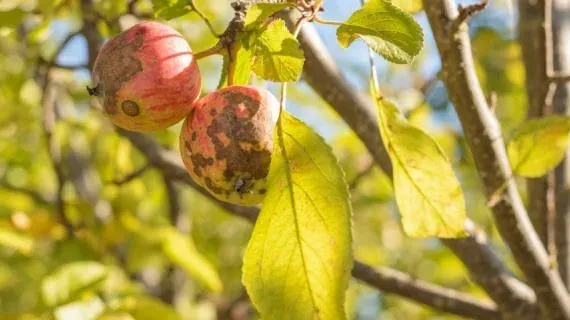
Description
How to identify
Fusicladium is a genus of anamorphic fungi within the Dothideomycetes class. These fungi are well-known as the causal agents of various "scab" diseases, which significantly impact pomaceous fruits and other ornamental or agricultural plants.
The fungus typically develops beneath the plant's cuticle. As it matures, the dense mat of mycelium (stroma) breaks through the epidermal layer to produce conidia, which are the primary spores responsible for spreading the disease during the growing season.
The life cycle involves an asexual (conidial) stage and, in many cases, a sexual stage (teleomorph, often Venturia spp.). This dual-stage life cycle allows the pathogen to survive harsh winters and rapidly colonize susceptible tissues during the spring.
Fusicladium species are highly adapted parasites that utilize specific nutrients from living host tissues. They rely on host-pathogen specificity, meaning certain strains are strictly associated with specific host species, such as apples or pears.
The presence of two distinct stages of development ensures high genetic diversity and evolutionary flexibility, making these pathogens challenging to manage in intensive orchard environments.
What it damages
The primary damage caused by Fusicladium includes foliage loss, fruit blemishing, and weakened tree vigor. In severe cases, the pathogen affects all aerial parts of the plant, including leaves, buds, flowers, and young fruits.
Fruit quality is severely compromised; infections result in unsightly spots, cracking, and surface deformations, rendering the produce unsuitable for commercial sale or long-term storage due to secondary decay risks.
Loss of foliage due to premature leaf drop reduces the tree's photosynthetic capacity. This exhaustion directly leads to poor fruit bud development for the following year, causing cyclical production patterns.
Stems and young shoots can also become infected, developing lesions that inhibit sap flow and structure, which can cause twig dieback and provide entry points for secondary bacterial or fungal infections.
Overall economic impact includes both direct yield reduction and increased costs associated with repeated fungicide applications and specialized orchard maintenance tasks.
When it appears
Fusicladium becomes active in early spring, triggered by rising temperatures and prolonged periods of leaf wetness. Rain is essential for the dispersal of spores from the previous year's leaf litter.
The infection period typically aligns with the bud break and flowering stages. Once established, the fungus can produce new generations of conidia throughout the summer, provided the environment remains sufficiently humid.
Temperature plays a critical role in the rate of disease progression. Optimal development usually occurs within a range of 15°C to 20°C, combined with high relative humidity or frequent rain showers.
During dry summers, the infection rate may decrease, but it never fully disappears. Even minor precipitation events can restart the spore production cycle, potentially causing late-season damage to maturing fruits.
The autumn season serves as the preparation phase for survival. The fungus continues to develop saprophytically on fallen leaves, forming overwintering structures that will release the first generation of spores in the following spring.
Signs of infestation
The first signs of infection appear as small, pale, or olive-green spots on the undersides of young leaves. These spots gradually expand and darken as the mycelium produces spore masses.
A distinctive velvety texture often develops over the infected areas. In some plant species, the leaf tissue may become necrotic and brittle, eventually tearing or causing the leaf to curl and drop prematurely.
On fruits, lesions appear as well-defined, dark, scab-like patches. As the fruit grows, the infected tissue stops expanding, often leading to deep cracks or physical distortion of the fruit's shape.
Infection of flowers or pedicels often leads to blossom blight. This results in mass shedding of blossoms and young fruitlets, significantly impacting the overall potential harvest volume early in the season.
Twig infections appear as rough, cracked, or ulcer-like patches on the bark. These lesions are often dark in color and may remain visible on the tree for multiple seasons, acting as local reservoirs for the fungus.
Control measures
Cultural control is the first line of defense. Removing and destroying leaf litter is essential, as it disrupts the primary inoculum source of the fungus for the following season.
Chemical control relies on strategically timed fungicide applications. Protective applications are most effective before and during bloom to prevent initial infection, followed by systemic products if disease pressure increases.
Breeding and selecting resistant or tolerant cultivars is the most sustainable approach. Genetic resistance significantly reduces the need for frequent chemical interventions.
Integrated Pest Management (IPM) incorporates biological controls and monitoring systems, such as weather tracking, to predict infection windows and optimize the timing of treatments.
Good orchard hygiene, including proper pruning for sunlight and air circulation, creates an environment that inhibits the fungus by reducing the duration of leaf wetness.
Causes diseases · 4
Discussion
No discussions yet — be the first.