
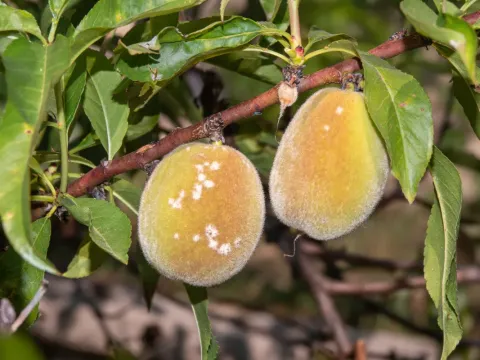
Fusicoccum canker of almond
Fusicoccum amygdali
Fusicoccum amygdali is a fungal pathogen, the teleomorph of which is Phomopsis amygdali. It belongs to the Ascomycota division and acts as a significant parasite on almond trees, causing severe cankers and shoot blight.
What the section contains
Fusicoccum canker of almond
The life cycle of this fungus involves the production of pycnidia within infected tissues. These structures release conidia (both alpha and beta types), which serve as the primary inoculum disseminated by rain splash, wind, and insects during spring and summer months.
The fungus overwinters in the bark of infected branches, in dead wood, and within mummified fruits. It is capable of survival under various environmental conditions, remaining dormant during cold winters and becoming active during mild, wet spring weather.
Biological fitness of this pathogen is enhanced by its ability to enter host tissues through natural openings like lenticels, leaf scars, and wounds caused by frost or pruning. It colonizes the cambium, disrupting nutrient transport.
The economic impact of the disease is severe, as it causes limb dieback and can eventually lead to tree death. Orchards under stress from abiotic factors are particularly susceptible to widespread infections.
The pathogen primarily affects almonds (Prunus dulcis). However, it is also known to cause similar canker symptoms and shoot dieback in other members of the Prunus genus, including peaches and nectarines.
Infection begins as small, reddish-brown circular spots around buds or leaf scars. As the pathogen spreads, these spots enlarge and coalesce, eventually girdling the affected shoots and leading to wilting of the leaves above the infection site.
Mature cankers exhibit cracked and sunken bark, often with a gummy exudate. Closer inspection reveals numerous tiny, black pycnidia erupting through the epidermis of the infected bark, confirming the presence of the fungus.
Management involves rigorous sanitation measures. Pruning out infected branches at least 15-20 cm below the visible canker and destroying the material is essential to reduce the inoculum levels within the orchard.
Chemical control focuses on applying protective copper-based fungicides during the dormant season and early spring. These applications are critical to cover potential infection sites before the onset of wet weather.
Maintaining tree vigor through proper irrigation and balanced fertilization helps the tree develop callus tissue, which limits the spread of the pathogen. Pruning should be avoided during periods of high rainfall to prevent fungal colonization of fresh wounds.