
Garlic mite
Garlic mite-borne
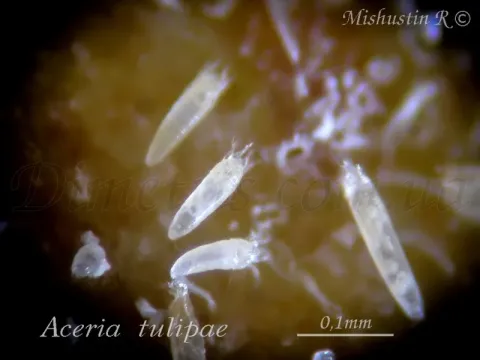
The garlic mite, scientifically known as Aceria tulipae, belongs to the family Eriophyidae. It is a microscopic, worm-like pest that is invisible to the naked eye, measuring only about 0.2 mm in length.
What the section contains
Garlic mite
The mite has a whitish, translucent, elongated body with only four legs. It thrives in humid conditions and warm temperatures, which allow it to complete its reproductive cycle in as little as 7-10 days.
These mites overwinter inside the cloves of stored garlic or onion bulbs. As spring arrives and temperatures rise, they emerge from the dormant state to begin feeding on the young tissues of emerging plants.
They are primarily spread through the movement of infested planting stock. Once in a field, mites can be dispersed by wind, irrigation water, or farm equipment, making them difficult to contain once established.
Because they spend most of their life cycle in sheltered areas like the leaf axils or between the scales of bulbs, they are protected from direct exposure to many environmental factors and chemical treatments.
The garlic mite infests garlic, onions, and various bulbous ornamentals like tulips. The damage is twofold: direct feeding damage and the transmission of viral diseases, most notably the Garlic Mosaic Virus.
Direct feeding causes the plants to become stunted and deformed. By sucking the cell sap, the mites drain the energy required for proper bulb development, leading to significantly lower yields.
The virus transmitted by the mite causes long-term degeneration of the crop, resulting in mosaic patterns on leaves, reduced bulb size, and a significant decrease in the shelf life of the harvested product.
Infested bulbs become soft and prone to secondary infections from fungi and bacteria. These secondary pathogens often finish the destruction of the bulb in storage, turning it into a mushy, rotten mass.
Total crop failure can occur in regions with poor management practices, where the mite population is allowed to build up over several years in the same field or within seed stocks.
Visible signs of infestation often include twisted, curled, or distorted leaves in early spring. These leaves may show yellowish streaking or a general mosaic pattern due to viral infections.
Plants affected by a high mite population show stunted growth and poor vigor compared to healthy crops. In severe cases, the tips of the leaves dry out and wither prematurely.
When inspecting harvested bulbs, look for sunken brown spots, indentations, or an overall dull appearance. Healthy bulbs should be firm and compact; infested ones feel spongy or soft when squeezed.
Cutting open a bulb often reveals the presence of dry, brown, or discolored tissue between the scales, which indicates where the mites have been feeding.
- Curled, twisted foliage.
- Mosaic or striped patterns on leaves.
- Soft, spongy texture of stored bulbs.
- Premature yellowing and drying of the crop.
The most important control measure is to plant only certified, mite-free seed cloves. Careful inspection of planting stock before placing it in the ground is essential for preventing outbreaks.
Thermal treatment of seed bulbs is a highly effective non-chemical control. Soaking or heating the bulbs at approximately 35-40°C for a specific duration helps kill the mites without damaging the cloves.
Strict crop rotation is necessary to break the pest cycle. Avoid planting garlic or onions in the same soil for at least four years, as the mites can survive in the soil debris for some time.
Chemical control is difficult due to the mite's protected location inside the plant tissues. If chemical application is required, specialized acaricides must be applied precisely during the active migration phase.
Effective post-harvest storage management is crucial. Keep garlic in a cool (2-4°C) and dry environment to minimize mite activity and prevent the rapid spread of rot and secondary decay.