
Ganoderma orbiforme
Ganoderma orbiforme
Description
How to identify
Ganoderma orbiforme is a significant wood-decaying fungus within the Basidiomycota division. It is a known phytopathogen responsible for severe structural damage in various woody plants.
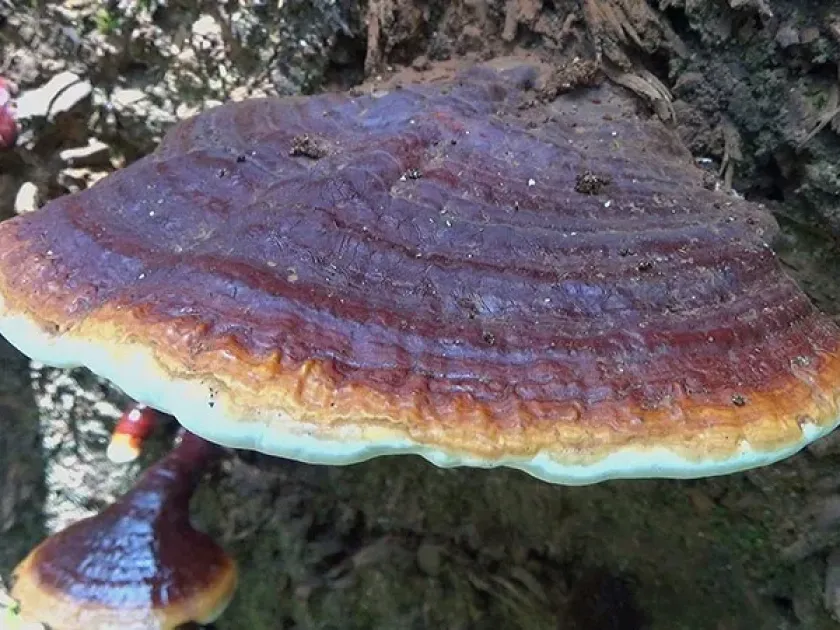
The fungus is characterized by its perennial fruiting bodies, which appear as hard, woody brackets on the lower parts of infected tree trunks or roots.
At the microscopic level, the mycelium secretes enzymes that break down lignin and cellulose, effectively turning the dense wood into a friable, decayed mass.
The fungus is primarily a necrotroph, often colonizing wounded trees and gradually consuming their internal structure until the host plant is unable to support itself.
Systematically, it is a member of the Ganodermataceae family, a group recognized worldwide for their ecological role in nutrient recycling and their capacity to act as destructive plant pathogens.
What it damages
The fungus affects a variety of perennial crops, with a notable impact on oil palm plantations and various broad-leaved forest trees in tropical regions.
It causes basal stem rot and root rot, leading to a restricted intake of water and nutrients, which ultimately results in the decline of the tree's physiological health.
Severe infestations weaken the structural integrity of the base of the trunk, frequently leading to the toppling of mature trees during high-wind events.
The disease spreads primarily through root contact or via airborne spores that settle on bark injuries, allowing the fungus to colonize the woody tissue.
Economically, the impact is severe, as the infection often goes undetected until the host tree begins to show obvious signs of terminal decline.
Signs of infestation
Early indicators of Ganoderma orbiforme infection include wilting of the younger leaves in the canopy and a general yellowing, indicating root malfunction.
The presence of distinct shelf-like fruiting bodies (conks) at the base of the trunk is the most diagnostic feature of an advanced stage of infection.
Internal wood decay is characterized by a bleached appearance and a soft texture, which can be verified during inspection by extracting core samples from the stem.
Affected tissues near the root collar may show evidence of necrotic lesions or mycelial mats between the bark and the wood surface.
- Wilting and yellowing canopy
- Visible conks at the base of the trunk
- Soft, spongy wood texture
- Spontaneous tree failure
Control measures
Sanitation is the most critical control measure, involving the complete removal and destruction of infected stumps and root systems to prevent spread to adjacent healthy trees.
Preventing physical damage to tree trunks during agricultural operations is essential, as these injuries act as primary entry points for fungal spores.
Regular visual monitoring of plantation trees for the presence of fruiting bodies allows for early identification and removal of focal infection points.
Implementing a trenching strategy around identified outbreaks can physically restrict the spread of the fungus through soil contact.
Research into integrated pest management continues, focusing on biological controls that can suppress the growth of Ganoderma in the soil environment.
Causes diseases · 1
Discussion
No discussions yet — be the first.