
Fusicoccum rot
Fusicoccum putrefaciens
Description
How to identify
The pathogen is classified within the Fungi kingdom, belonging to the genus Fusicoccum. It is commonly identified as the anamorph of the discomycete fungus Godronia cassandrae.
This microscopic plant pathogen is a parasitic organism that attacks plant tissues during the active growing season and can also persist in harvested fruit, causing storage rot.
The fungus produces pycnidia, which serve as asexual fruiting bodies. These structures release spores that are responsible for spreading the infection to healthy plant parts under favorable conditions.
The fungus demonstrates high plasticity regarding environmental conditions, allowing it to maintain metabolic activity and survival across various temperature ranges common in temperate climates.
The mycelium of the pathogen penetrates deep into host tissues, secreting enzymes that degrade cell walls, eventually leading to necrosis and the death of affected plant sections.
What it damages
The primary host of economic importance for this pathogen is the large-fruited cranberry (Vaccinium macrocarpon), where it causes severe fruit rot.
In addition to fruit, the fungus targets vegetative organs, causing stem cankers and dieback. This weakens the plant structure and severely reduces overall field productivity.
The economic damage is two-fold: direct yield losses in the field and post-harvest losses, as infected berries quickly spoil, becoming unsuitable for fresh markets or processing.
Severe infestations often lead to barren patches in fields where plants have succumbed to systemic infection, significantly reducing the density and uniformity of the crop.
Farmers face significant financial burdens due to the necessity of intensive fungicide programs required to prevent widespread infection during high-pressure seasons.
When it appears
Infection activity typically begins in early spring when warming temperatures trigger the germination of dormant spores that survived the winter on plant debris.
Periods of high humidity and rainfall are critical for the dispersal of conidia. Water splashes and wind act as the primary vectors for moving spores from infected stems to healthy tissues.
The pathogen can undergo multiple cycles of sporulation during a single growing season, leading to rapid disease spread if environmental conditions remain persistently damp.
As autumn approaches, the fungus transitions into a resting state, surviving the winter within infected stems or fallen debris as mycelia or specialized fruiting structures.
Winter survival is highly effective because the pathogen stays embedded within the woody tissues of the host plant, ready to re-emerge as soon as spring temperatures rise.
Signs of infestation
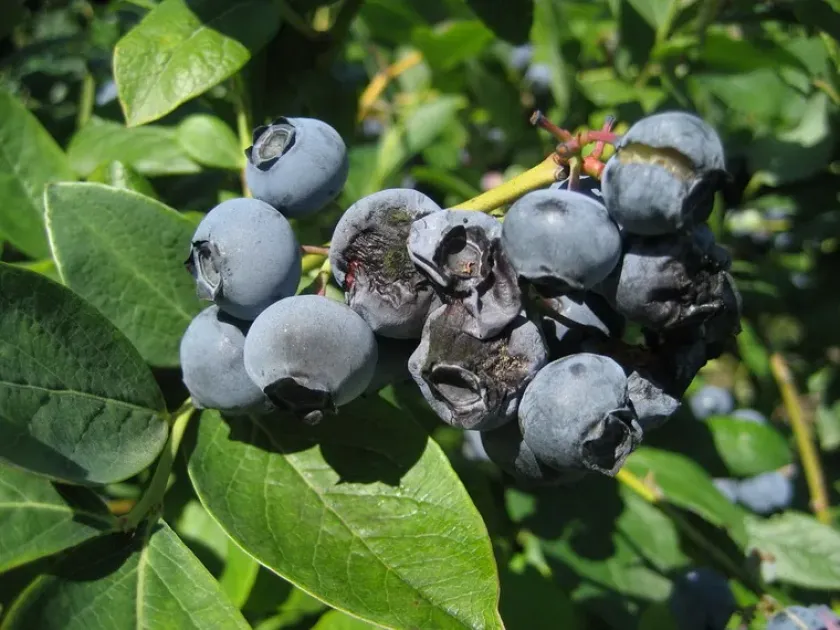
Symptoms on fruit appear as soft, watery lesions that expand rapidly, eventually collapsing the entire berry and often resulting in a grey or tan spore mass on the surface.
On stems, the disease manifests as discolored areas, turning brown or grey. These cankers can eventually girdle the stem, leading to the death of distal portions of the plant.
Tip dieback is a common observation, where the apical growth of cranberry runners curls and dries out, giving the plant a scorched or withered appearance.
In high-humidity environments, a fine, whitish to grey fungal growth may become visible on the surface of the cankers, signaling active spore production.
Internal tissue examination of infected stems often reveals significant necrosis spreading into the vascular bundles, which effectively shuts down the plant's nutrient and water transport.
Control measures
The primary defense strategy involves strict sanitation, such as removing and destroying infected plant material to reduce the total inoculum load in the field.
Management of water levels is crucial; growers should aim to avoid prolonged standing water and improve field drainage to create less hospitable conditions for the fungus.
Chemical control relies on the application of approved fungicides during critical periods of plant development, particularly during bloom and fruit set, to protect sensitive tissues.
The use of certified, disease-free planting material is essential for establishing new beds to prevent the introduction of the pathogen into clean areas.
- Implement a regular scouting program to detect early disease foci.
- Provide rapid cooling of harvested berries to inhibit rot development in storage.
- Apply preventative copper-based sprays in the early spring before new growth starts.
Causes diseases · 1
Discussion
No discussions yet — be the first.