
Peach scab
Fusicladium carpophilum
Peach scab is caused by the fungus Fusicladium carpophilum (teleomorph: Venturia carpophila). This pathogen belongs to the Ascomycota phylum and is a significant threat to stone fruit production worldwide.
What the section contains
Peach scab
The fungus overwinters primarily as mycelium in the bark of infected twigs. As the season progresses, it produces conidia that are disseminated by rain and wind to initiate infections on foliage and fruits.
The life cycle of the pathogen is highly dependent on humidity. The conidia require film of water on the plant surface to germinate and penetrate the host tissue.
It is a polycyclic disease, meaning it can produce multiple generations of spores within a single growing season, leading to rapid spread if weather conditions are favorable.
The disease affects a wide range of stone fruits, but is particularly problematic in peach, nectarine, and apricot orchards where it causes both cosmetic and physical damage.
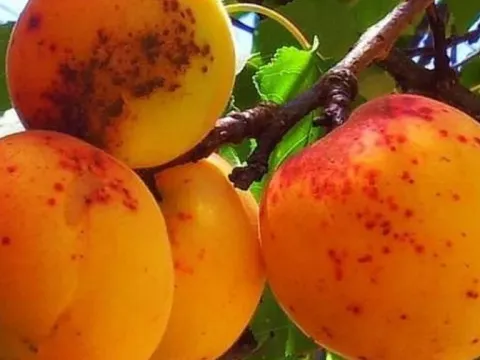
##damage##The most visible damage occurs on fruit, where small, circular, olive-green to black spots appear. These spots may coalesce as the fruit matures, creating large, necrotic areas.
Because the fungus restricts growth in the affected tissue, the fruit often becomes misshapen, lopsided, or develops deep, unsightly cracks that render it unmarketable.
In addition to direct injury, the cracks provide easy entry points for secondary pathogens like Monilinia species, which cause brown rot and post-harvest decay.
Shoot infection manifests as brownish or reddish lesions on the current year's growth. These spots can girdle small twigs, leading to dieback and reducing the tree's vigor.
While leaf damage is usually less severe, heavy infections can cause premature defoliation, which negatively impacts the tree's ability to store carbohydrates for winter dormancy.
The disease development begins in the spring when temperatures rise and moisture is abundant. The critical window for primary infection is typically the period following petal fall.
High relative humidity and frequent rainfall are the primary drivers of scab epidemics. The pathogen is most active in temperatures between 18°C and 25°C.
Secondary infections continue throughout the summer, especially in orchards with poor air circulation or where fruit remains wet for extended periods.
The disease severity varies year by year depending on the rainfall patterns during the fruit development stage. Dry, hot summers can significantly inhibit the progress of the infection.
By late summer and autumn, the fungus prepares for winter by colonizing the dormant wood, ensuring its survival for the next growing season.
- Small, dark, olive-colored spots that appear on the skin of young fruit.
- Velvety growth on the surface of the lesions, representing the fungal conidia.
- Deformation and localized stunting of fruit tissue due to inhibited cell expansion.
- Cracking of the fruit surface at the sites of the most severe lesions.
- Lesions on shoots which often progress into overwintering cankers.
Effective management starts with strict sanitation. Pruning and removing infected twigs during the dormant season significantly reduces the primary inoculum source in the orchard.
Improving orchard ventilation through proper canopy management is essential. A more open canopy allows for faster drying of fruits and leaves, discouraging spore germination.
Chemical control is the mainstay of scab management. Protective fungicide applications should begin early in the season, typically starting at petal fall.
It is crucial to maintain a consistent spray schedule, particularly during wet weather periods when infection risk is at its highest.
Integrated Pest Management (IPM) practices, including the rotation of fungicide modes of action, should be employed to prevent the development of resistance in the fungal population.