
Pea streak
Pea streak
Pea streak virus (PSV) is a plant pathogenic virus belonging to the genus Carlavirus within the Betaflexiviridae family. It primarily infects leguminous crops, causing significant physiological disruption.
What the section contains
Pea streak
The virus is characterized by a positive-sense single-stranded RNA genome. It is known for its high efficiency of transmission by various aphid species in a non-persistent, stylet-borne manner.
Identification often relies on molecular techniques such as ELISA or RT-PCR, as symptoms can vary depending on the host cultivar and environmental conditions.
The virus does not persist in the soil, but it survives in alternative hosts, particularly perennial legumes, which act as a reservoir for the primary inoculum.
Because aphids can transmit the virus within seconds of feeding, traditional contact insecticides may have limited effect once the virus has already entered the plant.
Pea streak causes systemic infection in pea plants, leading to severe stunting and substantial reductions in overall plant biomass and vigor.
The economic impact is manifested through reduced pod set, deformed seeds, and lower grain quality, which can lead to significant financial losses for growers.
Infected plants exhibit reduced photosynthetic efficiency, causing premature yellowing and necrosis, which further weakens the plant's ability to produce a viable harvest.
Seed germination rates and seedling vigor are often compromised in seeds harvested from heavily infected plants, affecting future crop cycles.
Under favorable conditions for the vectors, the virus can spread rapidly through a field, resulting in widespread yield losses that can exceed 30-50% in sensitive varieties.
Initial symptoms are characterized by chlorotic spotting and streaking on young leaves, which subsequently evolve into reddish-brown or dark necrotic streaks.
Stems and leaf petioles often show distinct dark-brown or violet-colored stripes, which is the most diagnostic feature of the disease.
Terminal growth is frequently distorted, with shortened internodes leading to a bunched or rosette-like appearance of the top of the plant.
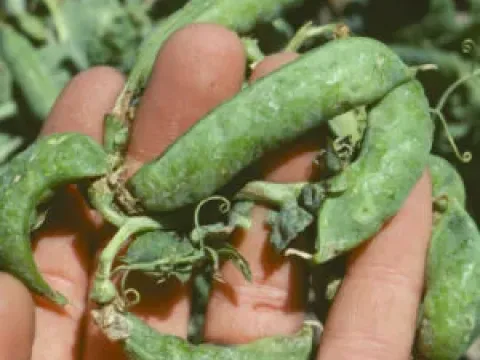
Pod development is severely hindered, often resulting in misshapen, small pods that may exhibit necrotic lesions on their surface.
- Necrotic streaking on stems and petioles.
- Leaf chlorosis and distortion.
- Severe plant stunting and rosetting.
- Poor pod formation and grain development.
Effective management begins with spatial isolation of pea crops from perennial legume pastures or hedgerows that harbor both the virus and its aphid vectors.
Integrated Pest Management (IPM) strategies focusing on aphid control are essential, although timing of insecticide application is critical to prevent initial inoculation.
Weed management, specifically the removal of wild host plants around the perimeter of the field, is vital to reducing the source of the primary virus inoculum.
Breeding and utilizing resistant or tolerant pea cultivars remains the most sustainable and efficient long-term solution for managing pea streak virus.
Proper sanitation practices and avoiding early-season planting in high-risk areas can help the crop escape the peak migration periods of aphid vectors.