
Pea streak
Pea streak
Pea streak is a plant disease caused by the Pea streak virus (PSV), which is classified under the genus Carlavirus and primarily affects plants in the Fabaceae family.
What the section contains
Pea streak
The virus consists of filamentous particles that spread systemically through the plant tissues once introduced by insect vectors or mechanical means.
The pea aphid (Acyrthosiphon pisum) is the most significant vector, transmitting the virus in a non-persistent manner during its feeding activities.
Perennial legume species, such as alfalfa and various clovers, act as the primary overwintering reservoirs, allowing the virus to persist from one season to the next.
While mechanical transmission via infected plant sap is possible, the spread in commercial fields is overwhelmingly driven by the movement of aphid populations.
The disease primarily impacts pea crops (Pisum sativum), leading to significant physiological stress and reduced growth potential throughout the growing cycle.
Damage results in stunted growth, lower grain quality, and a marked decrease in total yield, which can be devastating for commercial producers.
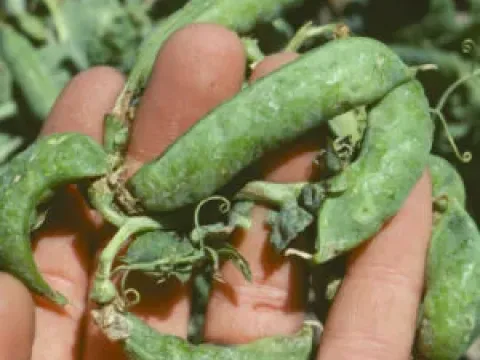
In addition to yield loss, the infection alters the development of pods and seeds, often resulting in shriveled or underdeveloped grains that are unsuitable for market.
Plants affected early in the season suffer more severe consequences, as the virus inhibits the development of reproductive organs, leading to poor flowering and fruit set.
The virus also predisposes infected crops to secondary infections, further weakening the plants and increasing the reliance on chemical inputs.
The infection cycle typically begins in the spring when aphids migrate from overwintering perennial weeds and forage crops onto emerging pea seedlings.
Peak infection periods usually align with the flowering and pod-filling stages, during which the plants are most susceptible to rapid virus accumulation.
Weather conditions play a crucial role, with moderate temperatures favoring high aphid activity and, consequently, a higher rate of viral transmission.
During the mid-summer months, hot and dry conditions may limit aphid populations, which can lead to a stabilization or slowing of the spread within the field.
Late-season spread is often associated with volunteer plants, which keep the virus active in the environment until the first killing frost occurs.
The hallmark symptoms of pea streak are dark brown or purple necrotic streaks appearing on the stems, leaf petioles, and stipules of the plants.
Leaf symptoms often manifest as mosaic patterns, chlorosis, or curling, which significantly reduce the photosynthetic surface area of the plant.
In severe cases, the terminal shoot may show distortion, necrosis, or premature death, giving the plant a wilted or blighted appearance.
- Necrotic streaking on stems.
- Mosaic and chlorotic leaf patterns.
- Severe plant stunting.
- Distorted terminal growth.
Affected plants often display reduced internode length, creating a bushy or dwarfed appearance that distinguishes them from healthy, vigorous specimens.
The primary control strategy involves maintaining sufficient spatial isolation between pea fields and permanent stands of perennial legumes.
Insecticide applications targeted at controlling pea aphid populations in the early stages of development are vital for preventing secondary spread within the crop.
Cultural practices, such as rigorous weed control, help eliminate potential virus reservoirs that reside in or around the field borders.
Choosing resistant or tolerant cultivars developed through professional breeding programs is the most effective long-term solution for managing the disease.
Implementing proper crop rotation and timely removal of volunteer plants effectively breaks the disease cycle and reduces the initial viral inoculum for subsequent years.