
Peanut clump virus
Peanut clump
Description
How to identify
Peanut clump virus (PCV) is a plant pathogenic virus belonging to the genus Peanut clump virus within the Virgaviridae family (formerly classified under the Furovirus genus). It is a rod-shaped, RNA-containing virus characterized by a bipartite genome.
The pathogen is transmitted primarily through the soil-borne plasmodiophorid vector Polymyxa graminis, which inhabits the root zone. PCV exhibits extreme stability in the soil, as it can persist within the resting spores of its vector for several years.
Taxonomically, it is categorized as a soil-borne pathogen affecting mainly legumes. Its development is strictly dependent on soil moisture levels and temperature regimes that favor the activity of the vector, which facilitates the transmission of the virus to host roots.
The virus induces a systemic infection that spreads from the root system to the aerial parts of the host plant. Due to its long-term survival outside the living host, it creates persistent infection hotspots in fields that are challenging to eradicate using conventional methods.
Identification of the virus is typically achieved through serological assays such as ELISA or molecular diagnostics including PCR, which are essential for detecting viral proteins or RNA sequences in the tissues of infected plants.
What it damages
The primary host for this virus is the peanut plant (Arachis hypogaea). Infections can devastate large areas of agricultural land, leading to mass plant death or significant reductions in total pod yield.
In addition to peanuts, the virus can infect various cereal crops such as sorghum, maize, and millet, which serve as reservoirs for the pathogen within crop rotation cycles. This makes management difficult, as the infection remains present even after removing peanuts from the field.
The damage extends beyond reduced yield; it also negatively impacts crop quality. Plants infected at an early growth stage often fail to produce marketable pods entirely, leading to severe economic losses for growers.
The level of crop damage is highly correlated with the timing of the initial infection: early infection by vector-carrying nematodes results in more pronounced stunting and lower overall biomass production.
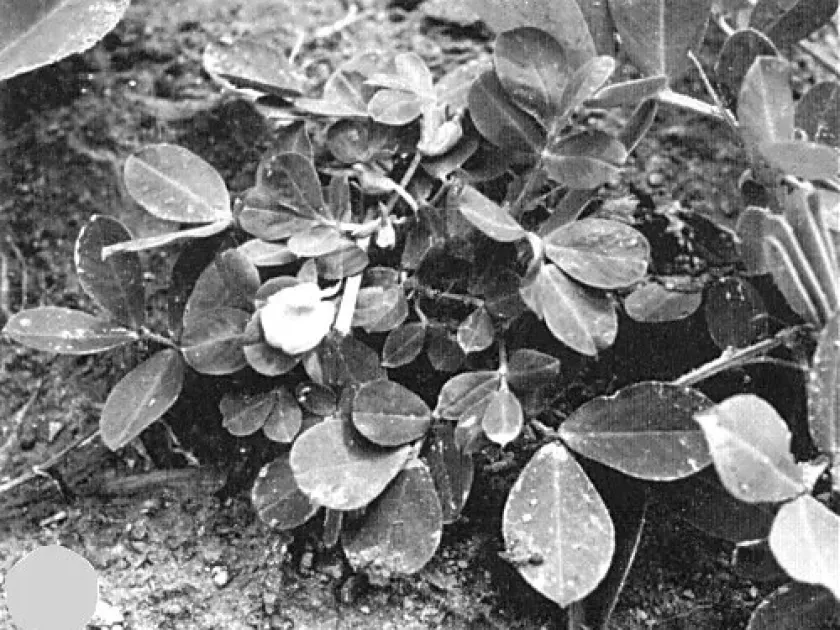
Fields with heavy infestation display a characteristic mottled pattern, where patches of healthy plants are interspersed with stunted, clump-like clusters of diseased individuals, justifying the common name of the disease.
When it appears
The disease manifestation typically begins at the start of the growing season immediately after seed germination. The virus attacks the root systems of young seedlings, as the vectors infiltrate the vascular tissues.
Favorable conditions for virus development include periods of high soil moisture and moderate temperatures, which promote the movement and reproduction of the Polymyxa graminis vector within the soil substrate.
During periods of hot, dry weather, the development of the virus in aerial plant parts may decelerate, but the pathogen remains active in the root zone and the soil, waiting for the return of optimal environmental conditions.
The development cycle of the virus is closely synchronized with the lifecycle of the nematode vector. Without the vector, the viral particles are unable to move through the soil or infect new plant hosts.
At the end of the season, the virus concentrates in the decaying root remnants left in the soil. It remains in a latent state within the spores of the vector, effectively overwintering to infect the next season's crop.
Signs of infestation
The most prominent sign of infection is severe plant stunting. Internodes are significantly shortened, causing the leaves to cluster into dense, rosette-like formations, which creates the "clump" appearance.
Leaf blades often exhibit mosaic patterns with alternating light and dark green patches. Chlorosis on leaf margins and premature leaf senescence are also frequently observed symptoms of the disease.
Root systems of infected plants appear underdeveloped and display fewer nitrogen-fixing nodules, or these nodules may be deformed, which further suppresses the physiological growth and development of the plant.
During the flowering stage, infected plants produce fewer flowers, and those that do form are often sterile or yield deformed pods that fail to fill with seeds, resulting in a drastically lower harvest.
- Drastic shortening of plant stems.
- Rosette-like clusters of leaves at the shoot tips.
- Chlorotic mosaic patterns on foliage.
- Significant reduction in pod count and weight.
- Overall growth delay compared to healthy counterparts.
Control measures
The primary control strategy involves the use of resistant peanut cultivars. Breeding programs focusing on genetic resistance remain the most effective approach for mitigating losses in endemic areas.
Preventing the movement of infested soil from infected fields to clean areas is critical. Cleaning agricultural machinery thoroughly after operations in affected fields is a mandatory hygiene requirement for containment.
Implementing crop rotation with non-host species can help reduce the infectious pressure, though the wide host range of the virus makes this method challenging and requires careful selection of substitute crops.
Chemical soil disinfestation using fumigants is technically possible but is often economically unfeasible and environmentally discouraged, restricting its use to experimental plots or breeding nurseries.
Agronomic measures include deep plowing to alter soil structure, creating less favorable conditions for vector survival, as well as optimizing planting dates to avoid the peak activity of the nematode vector during the most vulnerable early growth stage.
Causes diseases · 1
Discussion
No discussions yet — be the first.