
Pea septoria blight
Septoria pisi
Description
How to identify
The causal agent of this disease is the fungus Septoria pisi, which belongs to the kingdom Fungi. It is a highly specialized pathogen that specifically targets pea plants and closely related legume species.
The fungus produces pycnidia, which are flask-shaped fruiting bodies embedded in plant tissues. Inside these structures, numerous spores are formed, which are released during humid weather to spread the infection.
Primary inoculum survives the winter on crop debris in the soil or on infected seeds. With the arrival of warm, wet spring weather, these spores trigger the initial infection of young pea seedlings.
Septoria pisi thrives in environments with high humidity and moderate temperatures, typically between 15°C and 22°C. Frequent rainfall and heavy dew significantly promote the spread of the pathogen.
As an obligate and opportunistic parasite, it exploits weakened plants, completing its life cycle rapidly once the infection is established within the host plant tissues.
What it damages
The damage caused by Septoria blight is primarily due to the reduction of the leaf surface area available for photosynthesis. This leads to impaired plant development and reduced biomass production.
Severe infestations result in premature leaf drop and the drying of stems. This weakens the entire plant, which in turn leads to the abortion of flowers and a significant decrease in the number of developed pods.
The seeds from infected plants are often small, shriveled, and exhibit poor germination rates. This negatively affects both the marketable yield and the quality of the harvested seed for future planting.
Economic losses can be substantial, often ranging from 15% to 30% of total yield. In regions with persistent wet conditions, the disease can cause total crop failure in highly susceptible varieties.
Stems damaged by the fungus become brittle, which can lead to lodging. Lodging complicates mechanical harvesting, further increasing harvest losses and grain contamination.
Signs of infestation
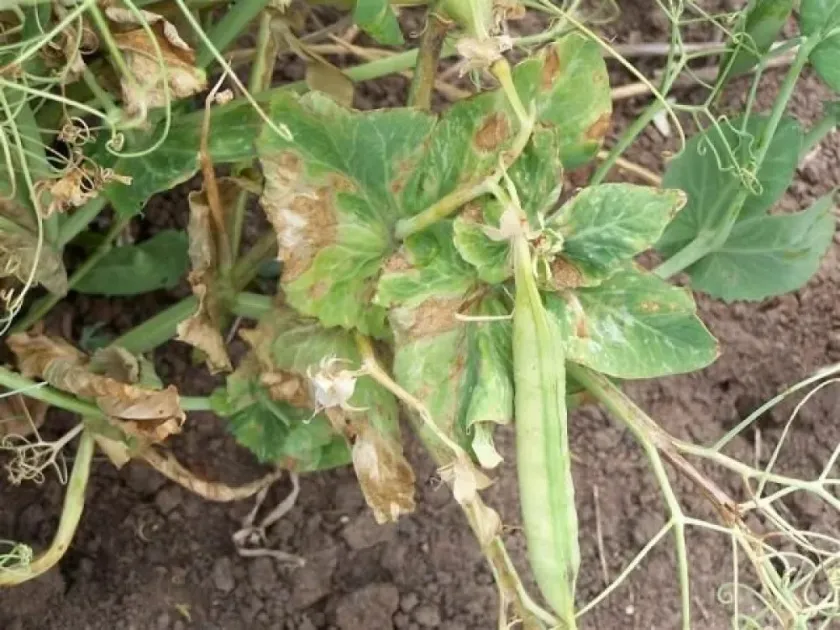
The disease first manifests as small, yellowish, or light brown spots appearing on the lower leaves. As the disease progresses, these spots expand and turn into larger, greyish-brown necrotic patches.
A definitive diagnostic sign of Septoria pisi is the appearance of tiny, black, dot-like pycnidia within the center of the necrotic spots. These are clearly visible even to the naked eye.
On stems, the symptoms appear as elongated, darkened lesions that may girdle the stem, causing the tissues above the infection point to yellow and eventually die off completely.
Pods show similar symptoms with irregular, sunken spots. If the infection reaches the pods, the fungus can directly infect the seeds, resulting in visible discoloration or mold-like growth on the surface.
In highly infested fields, the crop may appear yellowish and stunted. The disease typically moves from the lower foliage upwards as the growing season progresses and the humidity remains favorable for the fungus.
Control measures
A rigorous crop rotation schedule, ensuring a break of at least 4 years before replanting peas on the same ground, is the most effective way to reduce soil-borne inoculum pressure.
Deep plowing in the autumn is recommended to bury infected crop residues, which hastens the decomposition of organic matter and destroys the overwintering sites of the fungus.
Choosing resistant or tolerant pea varieties is a cornerstone of integrated pest management. Breeding programs continue to focus on improving the disease resistance of commercial pea cultivars.
Chemical control involving fungicides should be initiated at the first signs of disease, especially during the budding and flowering stages, to protect the developing pods from infection.
- Utilize high-quality, certified, and disease-free seeds for planting.
- Apply systemic fungicides (such as triazoles or strobilurins) to manage active infections.
- Practice consistent weed management to remove alternative legume hosts from field margins.
Causes diseases · 1
Discussion
No discussions yet — be the first.