
Eutypella canker
Eutypella parasitica
Eutypella canker is a serious disease of maples caused by the fungus Eutypella parasitica, a member of the kingdom Fungi and phylum Ascomycota. This pathogen specifically targets various maple species, most notably sugar and red maples.
What the section contains
Eutypella canker
The fungus is a specialized parasite that colonizes the inner bark and sapwood of host trees. It is characterized by its ability to cause slow-growing, perennial stem cankers that can eventually girdle and kill the tree.
Identification is primarily based on the presence of black, pimple-like fruiting bodies (perithecia) that emerge through the dead bark of the canker. These structures are often clustered and give the surface a roughened, soot-like appearance.
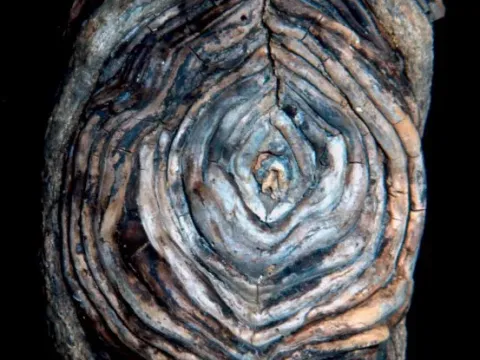
Microscopically, the fungus is identified by the size and shape of its ascospores. In the field, the concentric ridges of callus tissue formed by the tree around the infection site are a hallmark of this disease.
The disease is relatively slow-moving compared to other fungal cankers, allowing the host tree to attempt repair through repeated cycles of callus growth, which creates the distinctive target-like pattern on the stem.
The primary impact of Eutypella parasitica is the physical degradation of maple stems. The perennial cankers weaken the trunk, making the wood brittle and prone to structural failure during high winds or heavy snow load.
Economic damage is severe in commercial forests as infected trees suffer from reduced lumber quality and volume. Cankers located near the base of the tree are particularly dangerous as they threaten the tree's stability.
When the infection progresses sufficiently, it eventually girdles the stem, interrupting the flow of water and nutrients. This leads to canopy dieback, loss of vigor, and the eventual death of the tree.
In addition to timber loss, the disease can cause significant aesthetic damage to ornamental maple trees in parks and urban landscapes. The persistent, unsightly scars are difficult to remove without removing the tree.
Young trees are more susceptible to rapid girdling due to their smaller diameter. Once a sapling is infected, the likelihood of survival over the long term is significantly diminished.
The most visible sign of Eutypella canker is a localized, sunken area on the bark, often appearing as a dark or discolored patch on the smooth bark of younger trees or the rougher bark of older specimens.
As the infection persists, the tree creates callus tissue to isolate the fungus, resulting in a series of concentric ridges. This target-like shape is a classic symptom of this specific fungal pathogen.
Black, carbonaceous stromata, which contain the fruiting bodies, break through the bark in the central, dead area of the canker. These are often present even years after the tree has been colonized.
Internal wood staining, ranging from dark brown to black, is typically found beneath the canker. This decay spreads deeper into the heartwood, often causing the stem to become hollow over time.
During the growing season, a tree with a significant canker may exhibit premature foliage discoloration, drooping leaves, or sudden wilting of individual branches located above the point of infection.
Control of Eutypella canker is heavily reliant on forest sanitation. Infected trees should be identified and removed from the stand as early as possible to reduce the local inoculum load of fungal spores.
Proper silvicultural practices, such as maintaining appropriate tree density, are essential. Good airflow and sunlight penetration help to minimize high humidity levels around the stems, which inhibits spore germination.
Avoiding mechanical injuries during logging or landscaping is critical. Since the fungus primarily enters through wounds, keeping the stems intact significantly reduces the chances of initial infection.
Chemical treatments are not effective for treating existing cankers in a forest setting. Fungicides might only be considered for protective purposes on high-value ornamental maples if the disease pressure in the area is known to be high.
Monitoring for signs of the disease should be part of any routine forest or landscape inspection program. Early detection of small cankers can sometimes allow for minor surgical interventions if the infection has not yet girdled the trunk.