
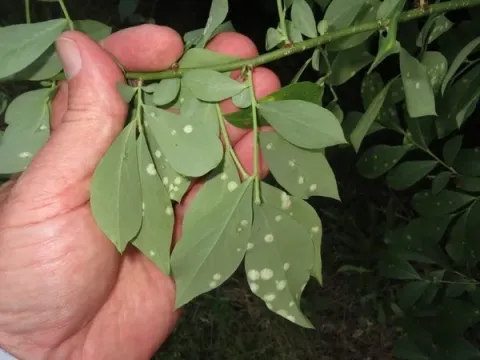
Exobasidium maculosum
Exobasidium maculosum
Exobasidium maculosum is a basidiomycetous fungus within the Exobasidiales order. It functions as an obligate parasite, specifically targeting various species of the Vaccinium genus.
What the section contains
Exobasidium maculosum
The fungus exists primarily as an endophytic mycelium within the host tissue, meaning it completes much of its life cycle internally without immediate outward symptoms.
It reproduces through the formation of basidiospores on the surface of infected leaves, which are dispersed primarily by wind and rain splash during favorable conditions.
The mycelium is perennial, capable of surviving through winter within the host plant buds and stems, which ensures its persistence in the orchard year after year.
Identification of this pathogen relies on its characteristic sporulation layer, which appears as a diagnostic white coating on the underside of infected leaves.
The primary hosts of Exobasidium maculosum are ericaceous plants, with highbush and wild blueberries being the most significant agricultural victims.
The infection causes leaf spot disease, characterized by localized tissue damage that disrupts the leaf's normal metabolic and photosynthetic functions.
Severe infections can lead to the widespread necrosis of foliage, which weakens the plant and decreases its overall vigor and growth rate.
Impact on the fruit yield is significant, as the reduction in healthy leaf surface area directly correlates with lower sugar content and smaller berry size.
Long-term colonization by the fungus can lead to premature leaf drop, which reduces the plant's ability to store energy for the subsequent growing season.
Initial infection typically occurs during the early spring when the leaf tissue is young and succulent, coinciding with warming temperatures and high moisture.
The fungus shows a strong preference for high-humidity environments, and its spore production is heavily influenced by extended periods of rainfall.
The incubation period varies depending on temperature and host susceptibility, but the primary symptoms usually appear within a few weeks of infection.
Active progression of the disease is most pronounced during the vegetative growth phase of the blueberry shrubs.
While the disease slows down during the drier summer months, the pathogen remains viable within the host tissues throughout the entire season.
The most common symptom is the development of distinct reddish or brownish spots on the upper side of the leaf blade.
On the lower side of these spots, a white, powdery bloom forms, which is the site of active basidia production and spore release.
Infected leaves often undergo hypertrophy or deformation, appearing thickened or curled compared to healthy, flat leaves.
- Reddish-brown spotting on leaves.
- White fungal bloom on the underside of lesions.
- Hypertrophy and curling of leaf tissue.
- Premature yellowing and leaf abscission.
The lesions may eventually coalesce, causing large portions of the foliage to wither and die if left untreated.
Sanitation is a critical control measure, involving the systematic pruning and disposal of infected shoots to reduce the primary inoculum load.
Copper-based fungicides applied as a preventative treatment during the dormant or early bud-burst stage can effectively limit the initiation of the infection.
Improving air circulation through proper canopy management and pruning helps keep foliage dry, thereby hindering the germination of fungal spores.
Fungicide programs should be timed to coincide with the most vulnerable stages of plant development and periods of high risk for moisture-driven infections.
Selecting resistant cultivars remains the most sustainable approach to long-term management of this pathogen in blueberry plantations.