
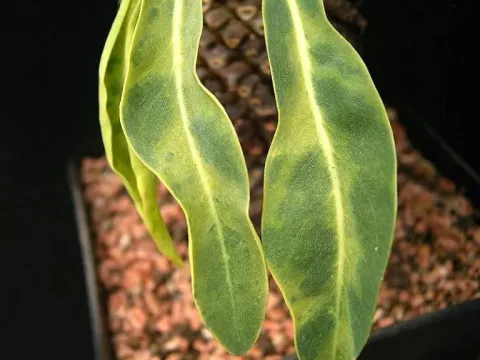
Euphorbia mosaic
Euphorbia mosaic
The Euphorbia mosaic virus (EuMV) is a viral pathogen classified within the genus Begomovirus, part of the Geminiviridae family. It is a plant virus containing a circular single-stranded DNA genome that specifically targets plants in the Euphorbiaceae family.
What the section contains
Euphorbia mosaic
This virus is primarily transmitted by the whitefly (Bemisia tabaci), which serves as a vector, acquiring the virus during feeding and transmitting it to healthy plants during subsequent feeding events.
The replication process occurs within the host cell nucleus, where the virus utilizes the host's machinery to synthesize its own proteins and replicate its genome, leading to systemic infection throughout the plant.
Because it is a systemic disease, once a plant is infected, the virus spreads through the phloem to all tissues, including the roots, stems, and leaves, making it a persistent and difficult-to-manage pathogen.
Wild euphorbia species often act as reservoirs for the virus, allowing it to survive and propagate in the ecosystem even when cultivated crops are not present.
Euphorbia mosaic primarily affects ornamental Euphorbia species, particularly Poinsettia (Euphorbia pulcherrima). It causes significant aesthetic damage, making plants unsuitable for commercial sale.
The virus impacts the overall health of the plant by disrupting metabolic pathways, which leads to stunted growth, reduced leaf size, and a general loss of vigor.
In addition to cosmetic issues, the virus interferes with flowering, often resulting in delayed or aborted blooms, which is a major concern for commercial greenhouse flower production.
The physiological stress caused by the infection makes the plants more susceptible to secondary infections and environmental stressors like drought or salinity.
Financial losses for growers are high, as entire crops may need to be destroyed to prevent the spread of the virus to healthy specimens in the greenhouse environment.
The most prominent symptom is the development of a mosaic pattern on the leaves, characterized by a mix of light green, yellow, and normal green patches. This creates a speckled appearance.
Leaf deformation is very common; the leaves may appear crinkled, puckered, or twisted. Edges may become distorted, and the overall symmetry of the foliage is often lost.
- Interveinal chlorosis (yellowing between veins).
- General stunting of the entire plant.
- Reduced leaf size compared to healthy specimens.
- Necrotic spots occurring in advanced stages of infection.
Symptoms are most visible on the younger, rapidly developing leaves, while older leaves may show more subtle signs of the infection as the disease progresses.
Management of Euphorbia mosaic is centered on controlling the insect vector, the whitefly. Implementing a rigorous Integrated Pest Management (IPM) program with chemical and biological controls is essential.
Rogueing or the immediate removal and destruction of symptomatic plants is critical to eliminate the source of the virus within the growing area and prevent further spread.
Weed control is a necessary practice to remove potential reservoir hosts in and around the growing area, thereby reducing the probability of whitefly migration into the crop.
Utilizing virus-indexed, certified disease-free propagation material is the most effective long-term strategy for preventing the introduction of the virus into a greenhouse.
Physical exclusion methods, such as insect-proof netting on greenhouse vents and doors, can significantly reduce the pressure of whitefly infestation and lower the risk of viral transmission.