
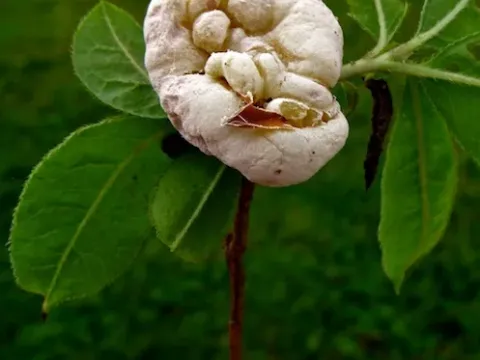
Exobasidium azalea
Exobasidium azalea
Exobasidium azalea is a highly specialized fungal pathogen belonging to the Basidiomycota division. This organism is an obligate parasite that specifically targets plants within the Ericaceae family.
What the section contains
Exobasidium azalea
Systematically, this fungus is classified within the Exobasidium genus. It has evolved to parasitize the tissues of azaleas and rhododendrons, triggering a characteristic hypertrophy of the host plant tissues.
The fungus does not produce traditional macroscopic fruiting bodies. Its mycelium develops directly within the intercellular spaces of the infected organs, eventually erupting through the epidermis to form a layer of spores.
The external manifestation of the pathogen's activity is linked to a disruption in the plant's hormonal balance, resulting in anomalous tissue proliferation. Infections typically occur in localized clusters.
Identification is primarily based on distinct visual symptoms, as the fungus creates unique morphological changes that are easily distinguishable from other azalea pests or nutrient deficiencies.
The primary hosts are various species and hybrids of azaleas (Rhododendron). The pathogen actively attacks leaves, petioles, and occasionally young shoots, causing severe deformation.
The infection leads to the formation of fleshy galls or swellings. These affected areas lose their photosynthetic capacity, significantly weakening the plant's overall immune system.
In cases of severe infestation, premature leaf drop occurs, which drastically reduces the aesthetic value of the shrub. In extreme cases, the plant may lose all foliage and fail to survive the winter.
Damaged tissues become susceptible to secondary opportunistic infections, such as various types of rots that enter through necrotic lesions.
For nurseries and landscape gardens, the economic impact is significant due to the loss of marketable quality in the affected plants.
Disease progression is closely tied to the plant's growing season. Active symptoms typically appear in the spring when new leaves emerge from buds.
The fungal life cycle is activated by cool and humid weather conditions. High atmospheric humidity is the critical factor required for spore germination and infection.
At the start of the season, pale green or yellowish spots appear on the leaves, which gradually develop into fleshy, swollen galls. Sporulation usually occurs in late spring.
After the sporulation phase, affected tissues often darken and necrotize. The fungus can persist as mycelium within the buds and stems of the host plant, overwintering internally.
Spore dispersal is facilitated by rain splashes, dew, and wind, allowing the infection to spread rapidly among neighboring plants in dense settings.
The first sign of infection is the emergence of pale green or yellowish spots on young leaves. Over time, these spots transform into fleshy, raised galls.
A white, powdery coating forms on the surface of these galls. This coating consists of fungal spores ready to be dispersed by environmental factors.
As the disease progresses, the leaf tissue in the affected areas may develop a pinkish or reddish hue. Leaves become asymmetrical, curled, and brittle.
Unlike pest infestations, there are no traces of insect activity, such as gnawing marks or excrement, when the plant is infected with Exobasidium.
- Development of whitish, fleshy galls on young leaves.
- Deformation and curling of the leaf blade.
- White, powdery spore masses on the underside of leaves.
- Reddish discoloration of infected tissue.
- Premature yellowing and leaf abscission.
The primary control method is cultural, involving rigorous sanitary pruning. All affected plant parts must be removed before sporulation begins and discarded away from the garden.
To prevent infection, avoid overhead irrigation for azaleas. Watering should be directed strictly at the base of the plant to keep the leaf surface dry.
Chemical control involves the application of copper-based fungicides or appropriate systemic treatments. Preventive spraying should begin in early spring before symptoms appear.
Maintaining proper spacing between plants is essential. Improved air circulation prevents moisture buildup, significantly reducing the risk of fungal recurrence.
When acquiring new plants, a period of quarantine and thorough inspection is recommended to prevent the introduction of the pathogen into an established garden.