
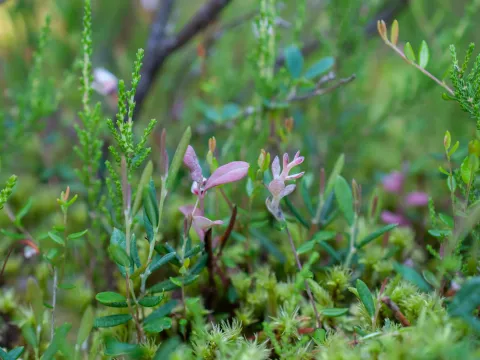
Exobasidium oxycocci
Exobasidium oxycocci
Exobasidium oxycocci is a specialized fungal pathogen belonging to the Exobasidiaceae family. It specifically targets plants of the Ericaceae family, with cranberries (Vaccinium macrocarpon) being its primary host. It acts as an obligate parasite.
What the section contains
Exobasidium oxycocci
The pathogen does not develop visible fruiting bodies like mushrooms; instead, its mycelium penetrates the host's tissues systemically. This fungal growth is perennial and can survive within the plant's stems through harsh winter conditions.
Taxonomically, it is classified within the Basidiomycota phylum. Its ability to manipulate host cells distinguishes it from common molds, as it forces the plant to create abnormal growths that serve as a nutrient source for the fungus.
Under a microscope, the fungus displays specific basidia on the underside of leaves and deformed stems. These structures are responsible for the production of spores that facilitate the spread of the disease across commercial fields.
Correct identification is vital, as early symptoms can be confused with nutritional deficiencies or environmental stress. Diagnosis typically involves observing the characteristic hypertrophy of the plant parts and laboratory confirmation.
The primary symptom of infection is the severe deformation of cranberry shoots. Infected shoots become fleshy, thickened, and stunted, losing their structural integrity and ability to function properly as vegetative organs.
Photosynthesis is significantly impaired in the hypertrophied tissues. Because the plant diverts its energy to sustain the fungal growth, the production of fruit buds is halted, leading to massive yield losses in affected areas.
The pathogen causes the foliage to change color, often presenting a pale yellow or reddish hue. This discoloration is a sign of metabolic disruption, as the fungus interferes with the plant’s nutrient transport systems.
When the infection becomes systemic, it can weaken the entire plant, making it highly susceptible to secondary pathogens such as bacterial rot or other fungal infestations that thrive in damaged tissue.
In cases of high infection pressure, large sections of a cranberry bog may be lost. The decreased cold hardiness of the infected plants means they are more likely to die during winter, resulting in significant gaps in the crop stand.
The lifecycle of Exobasidium oxycocci is highly dependent on environmental conditions. The primary infections usually occur in early spring when the plant begins its active growth phase, coinciding with warming temperatures.
High humidity is the most critical factor for spore germination and spread. Periods of frequent rainfall, morning dew, or heavy fog provide the necessary moisture for the fungus to colonize new shoots effectively.
During the summer months, the disease progression may slow down under hot and dry conditions. However, the mycelium remains active internally, sequestering nutrients and preparing the plant for subsequent phases of the fungal cycle.
Autumn marks the transition into dormancy. The fungus retreats into the dormant buds and deeper tissues of the stem, ensuring its survival during the colder months when the cranberry plant itself is not growing.
Understanding this seasonal timing allows for precise management. Monitoring should be most intense during the spring flush, as this is the window when the pathogen is most vulnerable to preventive treatments.
The most recognizable sign is the "witch's broom" effect, where shoots appear abnormally thickened and bunched. The leaves on these shoots are small, curled, and often exhibit a pale or pinkish discoloration.
A thin, whitish powdery coating is frequently visible on the underside of affected leaves. This layer is actually the sporulation site of the fungus, releasing millions of microscopic spores into the air.
Infected plants display a lack of vigor and an inability to produce flowers. These patches stand out in a healthy field because they do not participate in the normal growth rhythm of the rest of the cranberry bog.
Localized patches often expand outwards. If not addressed, the infection spreads to neighboring healthy plants through water runoff or wind-dispersed spores, gradually increasing the size of the diseased area.
Unlike insect damage, there are no chew marks or frass present. The structural changes are purely physiological, caused by the host plant’s uncontrolled cell division induced by fungal toxins.
The first line of defense is the use of disease-free planting material. Establishing a bog with infected runners will lead to uncontrollable outbreaks, making early selection of healthy stock essential for success.
Improving bog drainage is critical. Since the pathogen thrives in moist environments, reducing surface water and improving airflow among the cranberry canopy significantly lowers the likelihood of infection.
Mechanical removal of infected plants should be performed during dry weather to prevent spore dissemination. All infested plant debris must be destroyed, preferably by burning or burying outside the production area.
Chemical control focuses on applying fungicides during the early spring before the infection manifests. Copper-based compounds are commonly used, though integrated management plans should rotate chemicals to prevent resistance.
- Rigorous sanitation of tools used in infected zones.
- Regular inspection for early symptoms of shoot hypertrophy.
- Maintaining optimal plant density to encourage rapid canopy drying.
- Strategic nutrient management to strengthen plant immunity.