
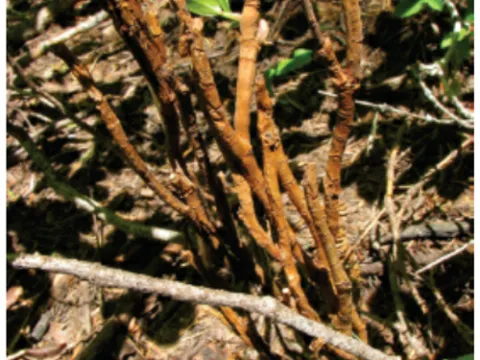
Eupropolella vaccinii
Eupropolella vaccinii
Eupropolella vaccinii is an ascomycete fungus that acts as a specialized pathogen primarily targeting members of the Ericaceae family, particularly the genus Vaccinium. It is a fungus that completes its cycle within the plant tissues.
What the section contains
Eupropolella vaccinii
The pathogen develops fruiting bodies called apothecia directly within the host leaves. These structures release ascospores, which are dispersed by wind and rain, initiating the infection process during the growing season.
The mycelium grows intercellularly, extracting nutrients from the host. Over time, this interaction leads to the degradation of leaf tissue and the formation of characteristic necrotic spots.
Survival of the fungus is strictly tied to the leaf litter. In late autumn and winter, the fungus persists as dormant mycelia or immature fruiting bodies on fallen leaves, ready to reactivate when spring moisture arrives.
Systematically, this organism is categorized within the order Rhytismatales. It is widely recognized as a pathogen capable of impacting wild berry populations and commercial plantations.
The primary hosts affected by Eupropolella vaccinii are blueberry and cranberry plants. The pathogen specifically attacks the leaves, leading to severe physiological stress for the entire shrub.
Damage involves significant reduction in photosynthetic capacity, which leads to stunted growth and reduced vigor. Consequently, plants become less resilient to harsh winter conditions.
Yield loss is a major concern, as defoliated plants cannot produce enough energy to support fruit development. Severe infections can result in poor berry quality and reduced size.
In nursery settings, this pathogen is particularly problematic, as it can be easily transported with seedlings, threatening the viability of future commercial plantings.
If left unmanaged, the cumulative damage over several seasons can lead to the decline of entire production areas, requiring costly renovation of the infected fields.
Initial infection signs appear as small, subtle spots on the leaf surface, often visible during the early stages of the growing season. These spots eventually grow in size and darken.
As the infection progresses, the lesions turn dark brown or black. The presence of small, raised black dots — the fruiting bodies — within the necrotic area is a diagnostic key.
Affected leaves tend to wither and fall off prematurely. This premature defoliation is one of the most visible indicators that a plant is suffering from a pathogenic attack.
In some cases, the tissue around the spots might show chlorotic halos, indicating the plant's struggle against the spreading fungal mycelium.
Confirmation of Eupropolella vaccinii often requires microscopic examination to distinguish it from other leaf-spotting fungi that colonize Ericaceous plants.
Sanitation is the cornerstone of control. Removing and destroying fallen leaf litter is essential, as it eliminates the primary source of the fungus for the following season.
Cultural practices such as proper pruning and maintaining spacing between rows help improve airflow within the canopy. Lowering humidity levels inhibits the germination of fungal spores.
Chemical control programs involving copper-based fungicides or appropriate systemic treatments can be utilized during high-risk periods, such as wet spring weather.
Integrated Pest Management (IPM) strategies emphasize the importance of monitoring. Early detection of symptoms allows for targeted treatments, reducing the need for broad-spectrum chemical use.
Establishing new plantations with certified, disease-free stock is a vital prevention step, ensuring that the pathogen is not introduced into clean production fields.