
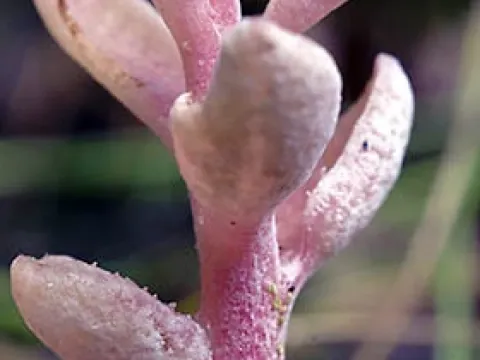
Exobasidium juelianum
Exobasidium juelianum
Exobasidium juelianum is a specialized fungal pathogen classified within the Exobasidiaceae family. It is known for inducing hyperplastic growth in its host plants, predominantly affecting species within the Ericaceae family.
What the section contains
Exobasidium juelianum
The fungus exists as a systemic mycelium within the host tissues. During its reproductive phase, it erupts through the plant epidermis to produce basidia and spores, which are then disseminated primarily via wind and splashing water.
The primary hosts for Exobasidium juelianum include various species of the Vaccinium genus, such as bilberries and lingonberries. The fungus infects the leaves, stems, and buds, causing significant structural changes to the plant organs.
This parasitic activity results in the formation of galls, which disrupt the plant's normal metabolic processes. Consequently, the affected plants show reduced vigor, poor fruit set, and increased susceptibility to secondary environmental stressors.
Development of the fungus is highly dependent on environmental conditions, specifically high humidity and moderate temperatures during the spring and early summer. Moisture is crucial for the germination of spores and subsequent infection of new shoots.
The fungus survives the winter season as mycelium dormant within the stems of the host plants. As temperatures rise in spring, the mycelium resumes growth, leading to the emergence of symptomatic infections on emerging leaf tissues.
Symptoms are distinct and typically involve the hypertrophy of plant tissue. Infected leaves exhibit localized thickening and significant color changes, often turning red, yellow, or ivory-white before necrotizing.
- Presence of a fine, powdery sporulation layer on the undersides of leaves.
- Irregular thickening and curling of leaves and young stems.
- Abnormal flower development leading to blossom drop.
- Premature senescence and necrosis of heavily infected plant parts.
Effective management requires a combination of strict sanitation practices and chemical intervention. The most important step is to prune and destroy all infected plant tissues to reduce the primary inoculum load.
Preventative applications of copper-based fungicides or appropriate systemic fungicides can be effective if applied before the spores germinate. Maintaining proper plant spacing is also essential to ensure adequate airflow and reduce the humidity levels that favor fungal growth.